


Biochar Industrial Group (BIG), a climate technology company engineering industrial-scale carbon removal solutions for Sub-Saharan Africa, has secured $1.5 million in pre-seed funding to scale its Biochar-as-a-Service model. The funding will accelerate partnerships with food processing factories to turn waste into carbon removal solutions, creating additional revenue for African food factories.
The round was led by BREEGA with participation from The Catalyst Fund. The Mulago Foundation also provided non-dilutive funding.
BIG operates at the intersection of three critical challenges – carbon emissions, industrial waste, and accelerated soil degradation. As the global climate crisis worsens, Africa produces 1 billion tons of non-edible agricultural biomass annually, a figure that will multiply as the continent’s population triples to 4 billion people over the coming decades. This agricultural waste – like nut shells, cobs, husks, and stalks – decomposes, releasing CO₂ stored by photosynthesis. Additionally, Africa’s cultivated land is being degraded by over-use and synthetic fertilizers, stripping 30-60 kilograms of nutrients from every hectare each year. By 2050, half of Africa’s arable land could be unusable, impacting more than 485 million people.
BIG partners directly with food processors to convert low or negative-value waste into biochar via continuous pyrolysis: the process of heating organic matter in a high-temperature (>600°C), oxygen-deprived environment. This process permanently traps carbon for hundreds to thousands of years – generating independently auditable, high-integrity carbon removal credits – while producing a vital soil amendment that restores depleted farmland.
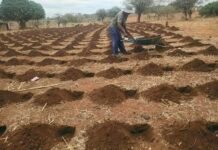
By co-locating pyrolysis units – modified for local feedstock and operational context – directly inside food factories and staffing them locally, BIG turns disposal costs into shared profit, creating skilled technical jobs in rural communities, and routing soil-restoring biochar back through existing agribusiness supply chains. Biochar is particularly potent when applied to Africa’s acidic, tropical soils. In controlled field trials, plots treated with BIG’s biochar led to yield increases of up to 50%.
Ikenna Nzewi, CEO of Biochar Industrial Group, said “Africa has natural advantages to lead the most scalable and cost effective biomass-based carbon removal globally. By forming true win-win partnerships with agricultural processors to produce biochar, we have the opportunity to turn localised waste liabilities into a transformative global solution.”
Tosin Faniro-Dada, Partner at BREEGA, said, “BIG is turning a real industrial waste problem into repeatable, audit-grade carbon credits, and doing it with a level of operational discipline that’s rare this early. It’s the product of a founding team – Ikenna, Uzoma, and Isaiah – who spent nearly a decade building and operating industrial infrastructure across Nigeria with Releaf Earth. We’re proud to back them as they scale that same execution discipline into carbon removal at a continental scale.”
Oluwatoyin Emmanuel-Olubake, Chief Investment Officer at Catalyst Fund, said, “We invested in BIG because it developed an innovative approach to solve multiple problems for agribusinesses critical to African and global economic growth with a single, self-reinforcing model. The company is early, and execution risk is real but the logic is compelling – grounded in how factories and farms actually operate, sharpened by a global rush toward durable carbon removal, and carried by a team that has already assembled the relationships and the technology the model depends on. That is why we are backing BIG, and why we believe the opportunity ahead of them is substantial.”
BIG was founded by Ikenna Nzewi (CEO), Uzoma Ayogu (CTO), and Isaiah Udotong (COO), who have built industrial-scale agriculture solutions for almost a decade with Releaf Earth, a Y Combinator-backed agro-processing company that designed patented nut-cracking machinery and sourced feedstock from thousands of smallholder farmers. Having operated 4 industrial factories, invented food processing equipment, and managed smallholder supply chains, the founders bring unique technical fluency and regional relationships to the carbon removal sector.