



The platform connecting technology and capital to make Angola the financial hub of African agribusiness.
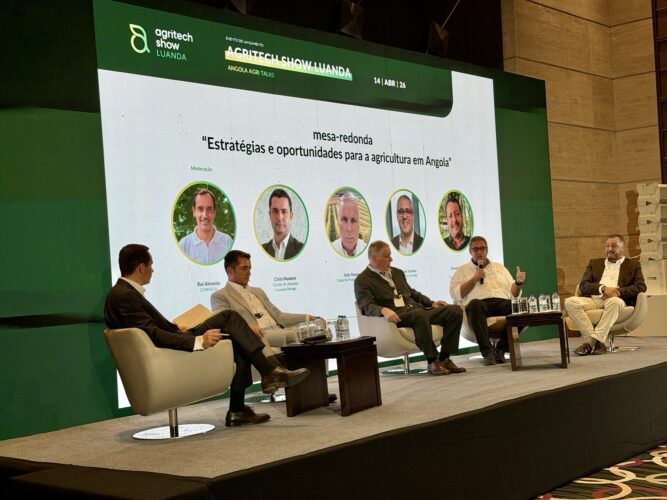
The Agritech Show Luanda was launched today, an initiative focused on developing agricultural production and structuring value chains linked to external markets, which contributes to reducing dependence on food imports at a time when economic diversification requires action on the ground.
The initiative has been launched to respond to market needs and revitalise the agricultural sector, which remains far below its productive potential despite its strategic importance. The small scale of production units, the lack of technical skills, low levels of technology and mechanisation, limited access to finance, logistical weaknesses, difficulties in marketing produce, investment, and attracting investors keen to bring a new dynamic to Angolan agriculture are the key factors driving the largest international agricultural fair in sub-Saharan Africa.
Agritech is a platform linking production, technology and investment, with a focus on finding practical solutions to these constraints. In this first edition, the event aims to bring together around 150 participating entities, ranging from producers, input suppliers, technical and operational consultants, financial and technology firms, to machinery and equipment manufacturers and institutional bodies from 15 countries, creating the conditions to accelerate the adoption of solutions applicable to the Angolan context.
“The Agritech Show Luanda was designed to connect producers, financiers and solution developers. The focus is on implementation and the ability to transform agricultural potential into actual production,” said Paulo Fardilha, Coordinator of Global Wide, the fair’s organising body.
The initiative also includes a market-linking component, focusing on the organisation of production and the creation of more efficient distribution channels, a necessary condition for ensuring scale and economic sustainability.
Among the key areas of action highlighted are new technologies integrated with information, monitoring and management systems, as well as financing models tailored to the reality of investments.
During the session, it was emphasised that the sector’s transformation depends less on studies and projects and more on well-structured operational implementation, with a focus on clearly defined strategies, whether for the domestic market or for export. Angola must break free from the vicious circle of not producing because there is no market or agro-industry, and there are no agro-industries because there is insufficient production!


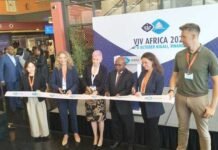

[…] Agritech Show Luanda opened today. Organizers describe it as a major agricultural fair in sub-Saharan Africa. Participants include […]
Comments are closed.