


By Beth Bechdol
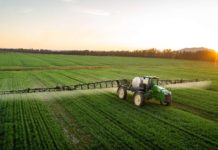
For decades, Africa’s agricultural mechanization has been guided by a stubborn assumption: if tractors transformed farming elsewhere, surely, they would do the same here. So, we shipped in large, expensive machines built for flat fields and industrial supply chains – and declared progress.
The results are visible across the continent – idle equipment, spare parts out of reach, maintenance costs that exceed farm incomes, and machines abandoned after just a few seasons.
This is not a failure of African agriculture or African farmers. It is a failure of approach.
Africa holds more than half of the world’s remaining uncultivated arable land, yet most food production still comes from small farmers cultivating less than two hectares of land. Too often, mechanization efforts have introduced oversized, capital-intensive equipment without financing, training, repair services or after-sales support. Without strong needs assessments and follow-up, these interventions proved ill-suited to local terrain and local growing conditions, disconnected from farmers’ realities, and ultimately unsustainable.
These technical shortcomings were compounded by exclusion. Women, who carry much of Africa’s agricultural workload, have routinely been left out of access to mechanization services, finance, leasing schemes, and training. Short-term, fragmented projects have failed to build the durable ecosystems of skills, financing, manufacturing and after-sales service that mechanization actually requires.
The consequences are clear. Millions of farmers – mostly women – still rely on hand tools. Productivity remains stubbornly low. And young people are leaving rural areas, seeing agriculture as physically exhausting, economically uncertain, and disconnected from opportunity.
This outcome is not inevitable. It is the predictable result of repeating the same failed approaches. At the Food and Agriculture Organization of the United Nations (FAO), we are working with African governments and partners to shift mechanization away from one-off equipment delivery toward locally driven systems that build skills, financing, and service ecosystems.
Sustainable mechanization offers a different path. It is not about replacing labour – it is about transforming it. It spans tools, equipment and machinery that reduce drudgery, increase productivity, improve market access, and strengthen resilience, while fitting local economic, social, and environmental realities. Women and youth are central to this transformation.
Done right, mechanization can transform lives
When women gain access to affordable, labour-saving technologies, productivity rises, incomes grow, and time is freed for education, entrepreneurship, and community life. When young people are equipped with modern tools, training, and financing, agriculture becomes skilled, dignified work – from equipment operators and technicians to agribusiness entrepreneurs and farm managers. But this only happens when mechanization is locally adapted, properly financed, and designed to include those who have historically been excluded.
I have seen this transformation firsthand. Growing up on my family’s grain farm in rural Indiana, I watched agriculture shift from long days of manual labour to data-enabled, precision farming. What once depended primarily on physical strength increasingly relies on GPS-guided equipment, soil sensors, field imagery, and real-time decision tools that improve efficiency, reduce input waste, and boost yields. Today, that farm is run by my sister – a woman farmer using modern technology to make smarter production decisions every season. Mechanization did not eliminate livelihoods, it reshaped them into more skilled, productive, and sustainable work across generations.
That experience shapes how I view Africa’s agricultural future. Done right, mechanization combined with digital tools can transform millions of lives here too – boosting yields, cutting back-breaking labour, and lifting rural communities.
This is why the Africa Conference on Sustainable Agricultural Mechanization (ACSAM, 3-6 February) in the United Republic of Tanzania matters. It is not just another gathering – it is a chance to move beyond scattered pilot projects toward a coherent, continent-wide system. One of the most important outcomes under discussion is the creation of a permanent, Africa-owned hub for mechanization – a platform to align national plans, accelerate local innovation, strengthen research partnerships, and scale technologies that are environmentally sound and farmer-centred.
Across Africa, early results show what is possible when this approach is applied. In Tanzania, locally designed compact tractors and precision tools are enabling smallholders to farm smarter, not harder. In Benin, women’s cooperatives are using small-scale processors to turn soybeans and cassava into higher-value products. In Ghana, adapted machinery has reduced fonio processing from days of manual labour to just hours, boosting incomes while improving food safety and quality.
These aren’t isolated successes. They are practical blueprints for what can be scaled.
Africa cannot afford another decade of fragmented mechanization that wastes resources and fails farmers. Governments, investors, and partners must act now – backing locally driven innovation, building service and manufacturing ecosystems, and expanding access to finance for farmers but especially for women and youth. From my own farm roots, I know agriculture thrives when people see a future worth investing in. The choice is clear: repeat outdated models, or commit to inclusive, African-led mechanization that delivers productivity, opportunity, and food security.
Beth Bechdol is the Deputy Director-General, Food and Agriculture Organization of the United Nations (FAO)
The Africa Conference on Sustainable Agricultural Mechanization (ACSAM) is being held 3-6 February in Dar Es Salaam, United Republic of Tanzania.
#AgriculturalMechanization