@MoLFR_SO
African ministers have called for the harmonisation of trade systems, stronger political leadership and increased investment to unlock the vast potential of the continent’s pastoral livestock economy under the African Continental Free Trade Area (AfCFTA).
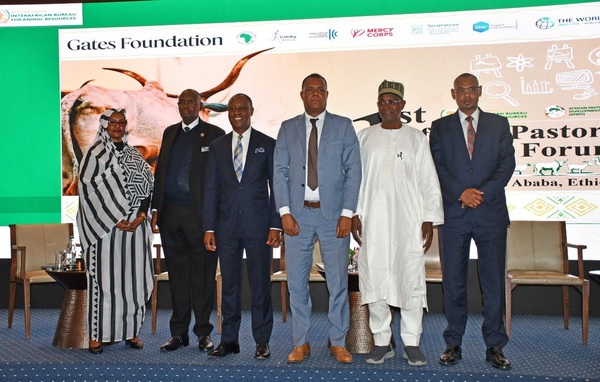
Talking during the ministerial session of the 1st African Pastoral Markets Forum held in Addis Ababa, the ministers said fragmented markets, non-tariff barriers and weak enabling systems continue to hinder the growth of Africa’s livestock sector, despite the continent possessing one of the world’s largest livestock resources.
They urged governments to accelerate policy reforms, modernise trade systems and improve market infrastructure to facilitate cross-border livestock trade.
Opening the ministerial panel, Director of the African Union Interafrican Bureau for Animal Resources (AU-IBAR), Dr Huyam Salih, stressed that Africa’s livestock potential would remain underutilised unless governments addressed trade barriers and established interoperable animal identification and traceability systems alongside harmonised sanitary and phytosanitary standards.
African Union Commissioner for Agriculture, Rural Development, Blue Economy and Sustainable Environment, Moses Vilakati, described pastoralism as a strategic economic system rather than a marginal activity.
He noted that pastoral economies rely on livestock mobility, rangelands, water systems, animal health services and cross-border markets.
“The challenge before us is not the absence of economic value. The challenge is how we organise, finance, govern and trade that value,” Vilakati said.
He added that the AfCFTA presents a historic opportunity to create an integrated African livestock market, provided countries simplify certification processes and strengthen animal health systems and trade arrangements.
Uganda’s Minister of State for Animal Industry, Dr Rwamirama Bright Kanyontore, called for the harmonisation of veterinary certification and sanitary measures across regional economic communities and under the AfCFTA.
He warned that investments in animal health and food safety systems would yield limited benefits if African countries continued imposing unnecessary non-tariff barriers.
“We have to dismantle our colonial border mentality. We must stop working in silos. African countries must work together,” he said.
Nigeria’s Minister of Livestock Development, Idi Mukhtar Maiha, urged countries to formalise and modernise livestock markets by improving access to water, electricity, banking services and animal identification systems.
“Our borders should not be walls; they should be bridges. We need to organise, formalise and modernise livestock trade across the continent,” he said.
Kenya’s Principal Secretary for Livestock Development, Jonathan Mwangangi Mueke, emphasised that trust, built through quality standards, traceability and regional cooperation, was essential for accessing premium export markets.
“Let us move from subsistence to commercialisation, from fragmented markets to one integrated African livestock market, and from exporting live animals to exporting premium African livestock brands,” Mueke said.
The ministers also called for increased investment in roads, livestock markets, abattoirs, cold-chain facilities, laboratories, digital systems and disease surveillance infrastructure.
They agreed that livestock should receive a greater share of national agricultural budgets to support market activation and attract private investment.
The commitments made during the forum will be incorporated into a policy-to-action framework and monitored ahead of the next African Pastoral Markets Forum.
The ultimate goal, ministers said, is to build an integrated African livestock economy that retains more value on the continent, improves food and nutrition security and expands regional trade under the AfCFTA.