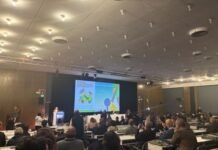


Safeguarding European industrial competitiveness, reciprocity in international trade, more effective import controls, and investment in innovation and digitalisation. These were the key themes of the meeting organised by FederUnacoma on the fourth day of EIMA International, the global exhibition of agricultural and gardening machinery, which closes tomorrow in Bologna. Moderated by Alessandro Malavolti, Vice-President of CEMA, the European Agricultural Machinery Association, the meeting brought together Members of the European Parliament Stefano Bonaccini, Carlo Fidanza, Stefano Cavedagna and Francesco Torselli. Opening the proceedings, FederUnacoma President Mariateresa Maschio focused on the difficult economic conditions facing the agricultural machinery sector in recent years, amid geopolitical instability, trade tensions and competitive pressure in international markets. “Agricultural machinery is one of the strengths of Italian industry and European manufacturing,” said the FederUnacoma President, “and must be protected in an increasingly challenging competitive environment.”
Competitiveness was central to Alessandro Malavolti’s address, which outlined the main concerns raised by the industry. In particular, the CEMA Vice-President focused on the growth in agricultural machinery imports from China and their increasing market share. According to Malavolti, companies’ concerns stem not only from differences in labour costs, but above all from a system of subsidies and public support that distorts competition. This calls for a more timely response from European institutions. Closely linked to competitiveness is the proper enforcement of single market rules. Malavolti highlighted differences between Member States in market surveillance and inspection activities, noting that, in some cases, products from third countries can enter the European market through particularly lenient type-approval procedures. The industry is calling for consistent standards and effective checks throughout the Union.
Addressing this issue, Stefano Cavedagna stressed the need to ensure full reciprocity between European and imported products: environmental, energy and regulatory costs that have no equivalent in major competing countries ultimately penalise European manufacturers. Cavedagna argued that Europe must equip itself with instruments capable of countering unfair competition and defending its industrial base.
The discussion then broadened to global developments and the need to strengthen European industry’s ability to compete in world markets. For Stefano Bonaccini, the central issue is Europe’s capacity to invest in innovation, research and development. According to the MEP, the agricultural machinery sector can retain its leadership only by continuing to innovate and maintaining a strong presence in the most technologically advanced market segments. “We must focus on quality,” he stated, stressing the need to support technological investment and help companies navigate the digital transformation.
The same need was reiterated by Francesco Torselli, who highlighted agricultural machinery’s growing reliance on electronic components, software and advanced digital systems. The sector is undergoing a profound transformation driven by precision farming, automation and artificial intelligence, yet Europe continues to lag behind its main international competitors in investment. According to Torselli, the Union should concentrate its available resources on sectors in which it still holds industrial and technological leadership. Agricultural machinery, he said, is one of them.
Technical regulation also received considerable attention. Carlo Fidanza highlighted the work carried out on the new Machinery Regulation, stressing the need to avoid overlapping requirements that can generate additional costs for companies without delivering tangible safety benefits. Particular reference was made to the risk of duplication between the obligations laid down in the Machinery Regulation and those under the Cyber Resilience Act. Fidanza also emphasised that European standards can become a competitive advantage only if they are applied just as rigorously to products from third countries. “We must make those standards a benchmark for incoming products,” he stated.
On trade, all speakers highlighted the need to expand European companies’ access to international markets through balanced trade agreements based on reciprocity. There was broad agreement on the need to safeguard the sector’s export potential and support companies in entering new markets, while maintaining high standards of quality, safety and sustainability. The meeting underscored the need for a European policy that recognises the agricultural machinery sector as a strategic asset for the continent’s industrial competitiveness, agricultural productivity and food security. Achieving this goal requires clear rules, fair conditions of competition and strong support for investment in innovation, digitalisation and advanced technologies