


The International Potato Center (CIP) and the Crop Trust have launched a new phase of the Biodiversity for Opportunities, Livelihoods and Development (BOLD) project aimed at developing climate-resilient potato varieties and strengthening seed systems to improve farmers’ access to quality planting material in Kenya.
The initiative will harness beneficial genetic traits from wild potato relatives originating in the Andes of South America to help breeders develop varieties capable of withstanding rising temperatures, unpredictable rainfall, pests and diseases.
The project will advance promising potato materials through breeding, testing and eventual commercial release, while strengthening the links between agricultural research, seed production, regulation and markets across East Africa.
According to the Crop Trust, the ultimate goal is to release at least one improved potato variety in Kenya that combines climate resilience and disease resistance with high yields, quality and characteristics valued by farmers, consumers and markets.
“Wild relatives contain options that agriculture may need as conditions change. BOLD is helping move that diversity from genebanks into breeding programs, through seed systems and ultimately into farmers’ fields,” said Dr Benjamin Kilian, BOLD Project Coordinator at the Crop Trust.
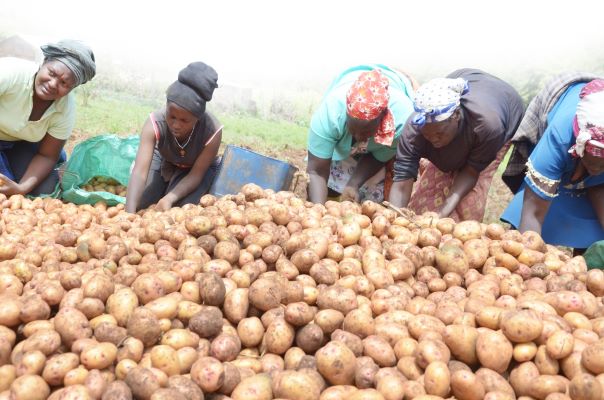
Potatoes are an important food and income crop across East Africa, despite originating in South America. In Kenya, the crop is the country’s second most important staple after maize, supporting approximately 3.3 million jobs and contributing about US$324 million to the economy annually.
However, potato production faces growing pressure from climate change and persistent crop diseases. Late blight, a devastating fungal-like disease associated with the Irish Potato Famine, destroys approximately one-third of global potato yields. Potato cyst nematodes can reduce yields by as much as 80%, costing Kenya more than US$127 million annually.
The BOLD project will support CIP’s potato breeding programme to incorporate resistance to late blight and potato cyst nematodes, alongside tolerance to heat, into varieties grown by farmers.
Building on work undertaken during its previous phase, the project will advance 54 promising potato materials containing traits from wild relatives through a structured breeding pipeline. Researchers will use genomic tools, multi-location trials and farmer participation to identify candidates suited to different growing conditions and market requirements.
Between 500 and 1,000 farmers are expected to participate directly in trials and demonstrations, with women accounting for more than half. Other farmers will benefit through extension networks and field activities.
“Finding useful traits is only the beginning,” said Dr Thiago Mendes, BOLD principal investigator at CIP. “We need to move that diversity through breeding, test it with farmers and make sure quality seed can be produced at scale.”
Beyond developing improved varieties, the initiative will address challenges that often prevent promising agricultural technologies from reaching farmers.
In Kenya, the Kenya Agricultural and Livestock Research Organization (KALRO) will play a central role in breeding and variety advancement. The project will also work with the Agricultural Development Corporation’s Seed Potato Complex in Molo, Nakuru County, to establish a centralised hub for early-generation seed production.
The hub will connect with seed multipliers and youth-led enterprises to strengthen the production and distribution of certified and quality planting material. The approach is intended to create a more reliable seed-to-market pathway aligned with farmers’ needs and commercial demand.
Susan Otieno, Centre Director at KALRO HRI – National Potato Research Centre Tigoni, said the combined approach to breeding and seed-system development would help ensure research advances translate into improved varieties and quality seed that farmers can access.
The initiative will also engage the East African Potato Breeding Network to facilitate the testing and use of promising genetic materials by national breeding programmes in Ethiopia, Rwanda, Uganda, Tanzania and other African countries.
The new phase builds on earlier collaboration between CIP and the Crop Trust in Peru, which contributed to the release of two late-blight-resistant varieties, CIP-Matilde and CIP-Asiryq, now grown by local farming communities.
By extending this conservation-to-use approach to East Africa, the partners aim to demonstrate how crop genetic diversity can support climate adaptation, strengthen food systems and improve livelihoods.
“The objective is not simply to produce new potato varieties, but to prove that conserved crop diversity can become a practical resource for climate adaptation, more resilient food systems and better livelihoods,” Mendes said.
The project’s success will ultimately depend on translating genetic discoveries into productive varieties and ensuring farmers can obtain affordable, quality seed to grow them at scale.