


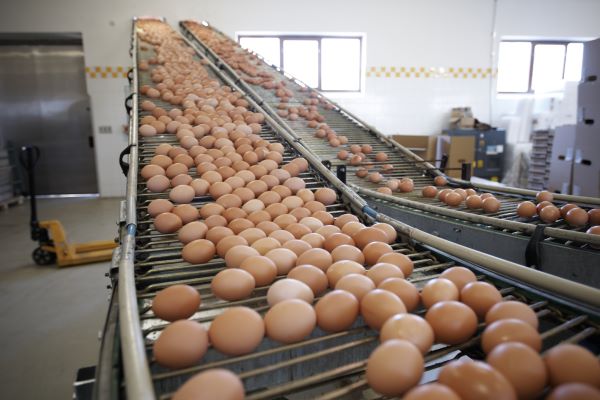
Comparative trials highlight how injection precision and egg identification can influence chick health, vaccine efficiency and hatchery productivity.
Accurate in ovo vaccination and egg identification could help commercial poultry hatcheries improve chick health, reduce vaccine waste and protect production efficiency, according to a technical report published by animal health company Zoetis.
The report, authored by Joshua Deines, PhD, technical service device lead at Zoetis, examines the performance of in ovo vaccination technologies and highlights two critical measures for hatchery operators: site-of-injection accuracy and egg identification accuracy.
In ovo vaccination involves administering vaccines to developing embryos inside eggs before hatching. The technology allows hatcheries to vaccinate large numbers of chicks efficiently, but the report emphasizes that the effectiveness of the process depends on delivering vaccines to the correct location and accurately identifying eggs containing viable embryos.
Site-of-injection (SOI) accuracy measures whether a vaccine reaches the amnion or embryo, the preferred locations for supporting an effective immune response. Depositing vaccines in other areas, such as the air cell, allantois or yolk, may not provide the same level of protection.
According to the report, even relatively small inaccuracies can have substantial consequences when hatcheries process millions of eggs.
Comparative trials reveal differences
Data from comparative trials conducted in 2025 showed differences in injection accuracy among the technologies evaluated.
Zoetis reported that its Embrex in ovo technology achieved 99.6% total SOI accuracy in a cited trial involving egg transfer at 18 days and 12 hours of incubation. Of the injections assessed, 77.9% delivered vaccine into the amnion, while 21.7% reached the embryo through intramuscular or subcutaneous delivery.
In a separate comparative trial, two other systems, identified in the report as Device Brand A and Device Brand B, recorded average SOI accuracy rates of 86% and 77.4%, respectively.
The report states that 14% of embryos processed using Device Brand A and 22.6% of those processed using Device Brand B did not receive vaccine in either the amnion or embryo.
These findings underline the importance of evaluating vaccine placement when selecting hatchery equipment. However, the report notes that the comparative trial did not directly compare the two other systems with Embrex, so the results should not be interpreted as a direct head-to-head comparison across all three technologies.
Egg identification also matters
Beyond injection precision, the report identifies accurate egg sorting as another essential component of hatchery performance.
Egg identification systems should distinguish viable embryos from infertile eggs and embryos that died early during incubation. Failure to do so can result in viable embryos being left unvaccinated, vaccine being wasted on nonviable eggs, or live embryos being mistakenly removed from production.
In a separate egg identification trial, Embrex technology reportedly left 100% of live embryos in their trays, removed 100% of infertile eggs and removed 99.3% of early-dead eggs.
By contrast, the comparative assessment found that Device Brand A delivered no vaccine to 3.5% of viable embryos and used vaccine on 7.3% of nonviable embryos. Device Brand B recorded corresponding rates of 3.7% and 1.3%. The report also identified live-egg removal as a concern, particularly for Device Brand B, although it did not provide a precise percentage for that system.
Small errors can have large consequences
The report illustrates the potential scale of inaccuracies using a hypothetical batch of one million viable embryos. At 86% SOI accuracy, approximately 140,000 embryos would receive injections outside the two preferred locations. At 77.4% accuracy, the number would rise to about 226,000.
Similarly, a live-egg removal rate of 0.61% would translate to approximately 6,100 viable embryos lost from a batch of one million live eggs.
These figures are mathematical illustrations based on the reported trial percentages, rather than predictions of actual hatchery outcomes. Results can vary depending on embryo development, equipment condition, operating practices and other production factors.
Evaluating overall hatchery performance
Zoetis recommends that hatchery operators assess both injection-site precision and egg identification when selecting or evaluating in ovo vaccination systems. Other considerations include the proportion of viable embryos receiving no vaccine, the number of nonviable eggs vaccinated and the number of live eggs incorrectly removed.
The company also emphasizes the importance of service-provider capabilities and technical support in maintaining reliable performance.
For poultry producers, the findings highlight how vaccination accuracy can influence more than disease prevention. Avoiding unnecessary vaccine use, preserving viable embryos and ensuring appropriate vaccine delivery can contribute to better resource utilization and hatchery efficiency.
The report concludes that the value of investment in in ovo vaccination depends substantially on the accuracy of the processes used to administer vaccines and identify eggs.