

For Erich Odwour Midigo, the journey towards transforming agriculture and nutrition in his community did not begin in a laboratory, boardroom or international development conference but on a smallholder farm in western Kenya, where childhood was shaped by hard work, simple meals and the daily realities of rural farming families.
Growing up in a large family of smallholder farmers, Midigo recalls waking at about 3 a.m. to work on the family farm, after which his mother would prepare hot porridge, often made from maize, millet or sorghum, before he headed to school.
“I remember waking up around 3 a.m. to work on the family farm, and before we left for school, my mother would prepare hot porridge for us,” he says adding that nutritionists and clinicians could advise them to improve the diet and use supplements which were, however, too expensive for the family.
“I kept asking myself: Can we use the cereals these rural poor families consume but transform them into more nutrient-dense products? And how do we make these products affordable, accessible, and desirable without harming the planet?” he thought.
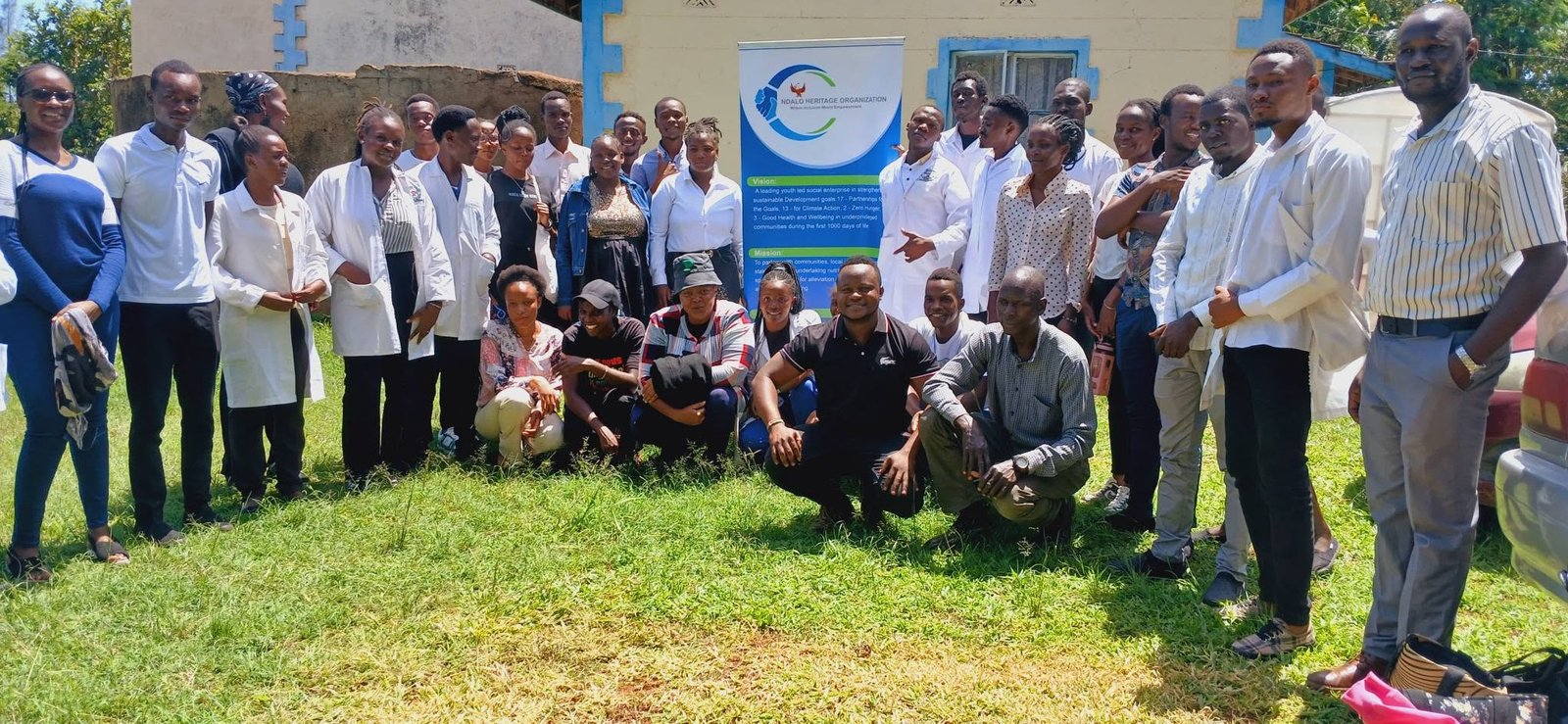
Those questions eventually became the foundation of Ndaloh Heritage Organisation, the youth-led organisation he established in Kisumu.
Soil nutrition first
Midigo started Ndaloh in 2020 as a small youth- and volunteer-led initiative focused on maternal and child nutrition, particularly the first 1,000 days and families caring for children with disabilities.
Working closely with families soon changed how the organisation understood malnutrition. The mother struggling to provide a nutritious meal was often also a smallholder farmer dealing with declining soil fertility, expensive inputs, unpredictable rainfall and poor prices for farm produce.
“The nutrition problem and the farming problem were connected,” Midigo says.
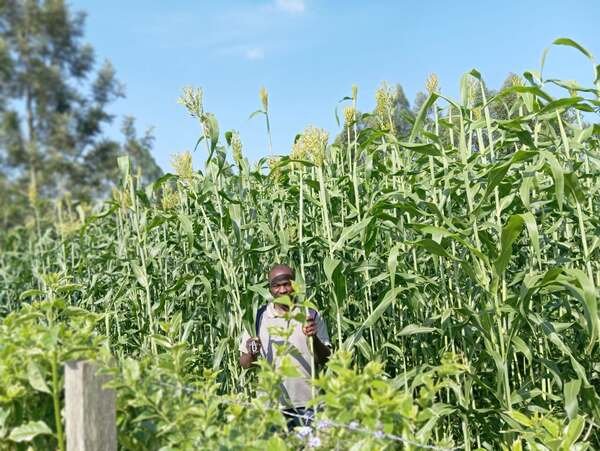
As Ndaloh expanded into a national NGO in 2023, it began addressing nutrition “from the soil up”, combining nutrition interventions with regenerative agriculture.
“That is where our philosophy, ‘Feed the Soil to Feed the Future,’ comes from,” Midigo says. “For us, healthier soils, better farmer livelihoods and well-nourished children are not separate goals; they are parts of the same food system.”
Building the food system from the community
Today, Ndaloh follows food from the soil to the plate through connected areas of work in western Kenya.
The organisation supports smallholder farmers, particularly women and young people, through regenerative agriculture, soil restoration, crop diversification and production of nutritious, climate-resilient crops including sorghum, orange-fleshed sweet potato, amaranth, pumpkin, beans, mango and guava.
It also focuses on aggregation, processing and value addition. Through food-to-food fortification, Ndaloh combines locally available fruits and vegetables with staple cereals such as sorghum to develop affordable, nutrient-dense foods.
In this, farmers, millers, schools, hospitals and other institutions are connected to strengthen production and markets.
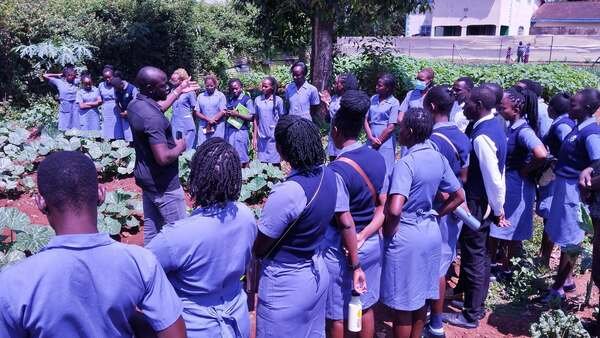
Ndaloh works with schools, mothers and young children to promote healthier diets, with particular attention to maternal and child nutrition and the critical first 1,000 days.
“To date, we have trained more than 2,000 smallholder farmers, and our food and nutrition initiatives have contributed to approximately one million nutritious meals,” Midigo says.
“Our Smart Farmer AgriHub brings these elements together—production, training, aggregation, processing, nutrition, water and market access—within one community-driven model,” he says.
Helping farmers capture more value
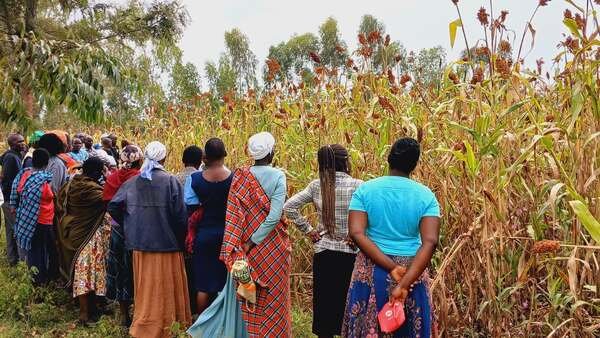
Smallholder farmers often capture the least value from the food they produce as they face declining soil productivity, high input costs, climate shocks, limited access to finance and technology, and unreliable markets.
Ndaloh’s Smart Farmer AgriHub Model is designed to change that equation as it trains farmers in regenerative practices, improves access to affordable organic inputs and climate-resilient crops, aggregates production, supports quality control and value addition, and connects farmers to reliable institutional markets.
“Through contract farming and local processing, we want farmers to move beyond selling raw commodities at low prices to becoming producers, suppliers and entrepreneurs who capture more value from what they grow,” Midigo says.
For young people especially, the organization’s goal is to demonstrate that agriculture can be a viable business and source of dignified employment.
Making familiar foods more nutritious
Ndaloh’s work is rooted in a question that emerged from Midigo’s childhood: how can poor families access better nutrition using foods they can grow and afford?
His experience has convinced him that nutrition advice has limited impact when diverse, nutritious foods remain unaffordable.
“Our experience has taught us that good nutrition begins long before food reaches the plate—it starts with what families can grow, access and afford,” he says.
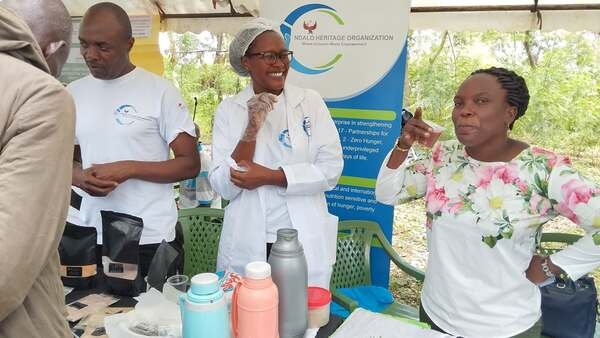
Ndaloh connects agriculture directly to nutrition where farmers are supported to grow nutrient-dense crops, while food science is used to improve the nutritional value of foods families already eat.
Midigo says the organisation’s research has shown that fortifying staple sorghum with locally available and culturally familiar foods such as mango, guava, amaranth and carrot can improve the availability of essential micronutrients, including iron and zinc.
“For me, this brings the science back to the community where my own story began,” he says.
“Instead of asking low-income families to abandon what they are already producing and consuming or depend on expensive supplements, we are using agriculture and science to make familiar, locally available foods more nutritious through food to food fortification,” Midigo says.
The prize and the next expansion
In 2026, Midigo won the US$96,000 Mandela Rhodes Foundation Äänit Prize, giving Ndaloh new resources to expand its community-driven model.
“Winning the US$96,000 Äänit Prize is deeply personal,” Midigo says. “I think about the young boy who woke up at 3 a.m. to work on the family farm and drank sorghum porridge before school because that was what we could afford.”
The award also represents persistence since Ndaloh was an Äänit finalist in 2022 and won the inaugural Audience Choice Award, but did not take the main prize.
“We went back to work—strengthening the science and business model, building partnerships and demonstrating traction,” he says. “Winning in 2026 is therefore validation not just for me, but for our farmers, staff, volunteers and communities who have built Ndaloh with us.”
The US$96,000 will be used to scale the Smart Farmer AgriHub model by expanding regenerative production, farmer training and aggregation, establishing processing and value-addition capacity, and strengthening access to markets for nutritious products.
Ndaloh will also strengthen Ndalo AgriPlus, its digital platform for farmer profiling and geo-mapping, production and yield tracking, market linkages, and real-time monitoring of farmer incomes and impact.
“The prize gives us the opportunity to turn a proven community model into a sustainable and scalable enterprise,” Midigo says.
His longer-term ambition is to establish a network of 100 Smart Farmer AgriHubs over the next decade, beginning in western Kenya and expanding across Kenya and sub-Saharan Africa.
“My vision is to prove that better nutrition, profitable farming and environmental restoration can be achieved through the same food system,” he says.
Midigo believes the model can be replicated, but not through a one-size-fits-all approach.
“Yes, I believe the model can scale across Africa, but not through a one-size-fits-all approach,” he says. “The crops and markets will differ, but the principle is transferable: build around local resources, apply science, add value locally, and ensure communities share in the economic benefits.”
“Our philosophy remains ‘Feed the Soil to Feed the Future,’” he says. “Our ambition is to turn that philosophy into a practical African model for healthier people, thriving farmers and resilient food systems.”