


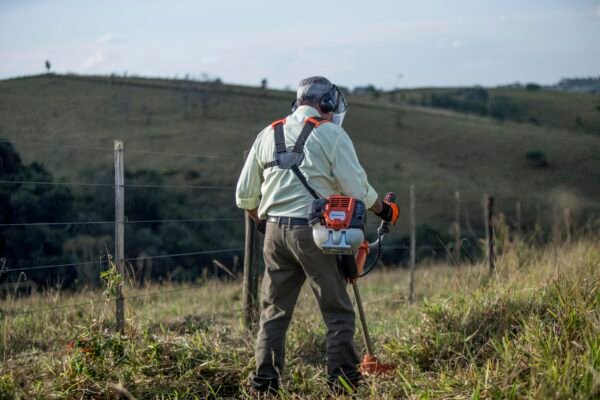
From tractors and mowers to chainsaws and brushcutters, farmers have an array of equipment to keep their land productive and well maintained. Each has its role, and a brushcutter is particularly useful for tackling grass, weeds and dense vegetation that larger machinery can’t always reach.
According to Timothy Isabirye, Marketing Manager – Husqvarna South Africa, getting the most from any piece of equipment isn’t simply about having the right machine. “How it is used can make all the difference to how effectively the job gets done,” he explains. “A brushcutter looks deceptively easy to handle but coupled with unpredictable terrain, it’s trickier than many think.”
As spring growth picks up, Isabirye highlights six common mistakes that could be getting in the way of a more efficient clearing job, whether on a farm, smallholding or large estate.
1. Using the wrong cutting attachment
Using the right cutting attachment for your brushcutter matters because each one has a different purpose. A trimmer head is suited to grass and lighter vegetation; tougher grass and weeds require a grass blade, while brush and small saplings call for a saw blade.
Picking the wrong one can make cutting less effective, with more passes required over the same patch, while putting added strain on the operator and increasing wear and tear on the equipment.
2. Assuming more power is best
It’s a natural assumption: the biggest, most powerful machine will get every job done faster. But matching your brushcutter’s power to its regular workload can make a significant difference to how comfortably and efficiently you get through it.
Using more machine than the job needs adds unnecessary weight and vibration, leading to fatigue and making precise, controlled work unnecessarily difficult.
Underpowering a heavy job causes the opposite problem: your brushcutter stalls more often, works harder, and the job takes longer. The better approach is to choose one a little more capable than your lightest tasks require.
3. Treating every job the same
Long grass keeps secrets. Stones, wire, old stumps: you won’t know they’re there until your brushcutter blade finds out for you.
Before starting, assess what you are dealing with and what may be hidden beneath it. Cutting blind into unfamiliar terrain risks damaging the blade. If it strikes a hidden obstacle, it can kick back suddenly, causing loss of control or even injury.
This is particularly important around fence lines, buildings and less frequently maintained areas, where obstacles are more likely to be concealed by overgrowth.
4. Cutting at the wrong angle
It’s tempting to plough straight into overgrown grass or brush, but that can make the job harder. Pushing the full blade face into vegetation, or forcing the line into thick grass, increases resistance and strain, and raises the chances of debris wrapping around the head. A controlled, sideways sweep, letting the edge of the blade or tip of the line do the work, gives a cleaner cut with less effort.
It takes practice to get the rhythm right, but thereafter, it’s a noticeably easier and faster way to work.
5. Working against the machine
A brushcutter shouldn’t leave you feeling as if you’ve spent the day wrestling with it. Incorrect harness adjustment, handle positioning, or an awkward posture can make a demanding job needlessly tiring and can eventually contribute to shoulder, back and wrist strain.
Taking the time to adjust the harness and controls to suit you helps the machine sit correctly, making it easier to maintain a controlled, comfortable position, especially over larger areas or longer working sessions.
6. Skipping some PPE
Beyond technique, full protective gear is extremely important. The lower body, particularly the legs, tends to bear the brunt of potential brushcutter accidents, so safety pants are essential, not just sturdy boots or eye and ear protection.
“A brushcutter can be remarkably versatile,” says Isabirye. “From routine grass trimming to clearing dense brush, it earns its keep across all sorts of properties. And by avoiding these common mistakes and knowing how best to use it, you’ll get maximum value out of it,” he concludes.
Explore Husqvarna’s full range of brushcutters and protective gear at https://www.husqvarna.com/zm/ or visit your nearest dealer for expert advice.