

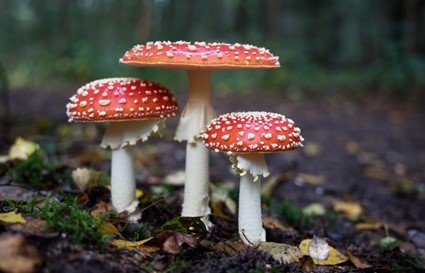
Beneath the surface of agricultural land lies a largely invisible world that helps determine whether soils remain productive, resilient and capable of supporting food production. Fungi, ranging from microscopic organisms to extensive underground networks, are a crucial part of this soil biodiversity.
Yet deforestation, land conversion, degradation, salinisation and intensive agricultural practices are putting these organisms and the services they provide under growing pressure.
According to the United Nations Decade on Ecosystem Restoration, fungi occupy diverse ecological roles and are closely linked to vegetation, nutrient cycling and carbon storage. Scientists have identified about 100,000 fungal species, while estimates suggest that between 0.8 million and 3.8 million species may exist worldwide, meaning much of this hidden diversity remains undocumented.
The importance of fungi becomes clearer when considering what happens in healthy soil. Some fungi act as decomposers, breaking down dead plant and animal material and returning nutrients to the soil.
They help make nutrients available to plants and can support nitrogen fixation and the mobilisation of phosphorus, two processes essential for plant growth and agricultural productivity.
Underground networks supporting plants
Fungi also have a major role in the movement and storage of carbon. Decomposer fungi cycle carbon from dead vegetation and other organic material, while mycorrhizal fungi form mutually beneficial relationships with plant roots.
Through these associations, plants provide fungi with carbon from photosynthesis, while fungal networks help plants access resources in the soil.
This relationship contributes to soil carbon sequestration, allowing carbon captured from the atmosphere to be stored in soil for decades or even hundreds of years.
The UN Decade notes that biodiverse soils can capture as much as 10 tonnes of carbon dioxide per hectare annually.
Protecting fungal diversity, therefore, is not only a soil-management issue but also part of wider efforts to address climate change.
Intensive farming puts fungi under pressure
However, the conditions created by intensive and industrialised farming can undermine the biological systems that make soil healthy. Land conversion for agriculture, soil degradation and other forms of environmental disturbance can jeopardise fungal diversity and functioning.
When natural ecosystems are cleared and soils are repeatedly subjected to intensive production, the organisms that depend on functioning soil habitats can be placed under pressure.
The consequences extend beyond crop yields. Healthy fungal communities support nutrient availability and soil fertility, while their links with plants and carbon cycling contribute to broader ecosystem stability.
Damaging these communities could weaken some of the natural processes that agriculture depends upon, making the protection of soil biodiversity an important part of sustainable food production.
Fungi can help tackle pollution
Fungi also offer benefits beyond the soil. Certain species can help break down pollutants, including plastics, petroleum-based products, pharmaceuticals, personal-care products and oil. This capacity could make fungi useful tools in efforts to reduce environmental pollution.
Some fungi may also support ecosystem restoration by helping reforestation in degraded soils, while other species can contribute to biological pest control.
The relationship between fungi and human food security is equally significant. Edible mushrooms provide protein, fibre, minerals and vitamins, including vitamins B, C and D.
They can also be cultivated using agricultural waste rather than fertile soil, creating opportunities to reduce farm waste while increasing food supplies, farmers’ incomes and employment.
The benefits continue into healthcare and manufacturing. The UN Decade reports that some edible mushrooms possess medicinal properties, while mycelium—the network that forms the main vegetative structure of fungi—is being developed as an alternative to materials such as plastic and synthetic or animal-based products. Mycelium-based products can be biodegradable and require fewer water and land resources.
Protecting the organisms beneath our feet
Protecting fungi ultimately means protecting the living systems that sustain productive landscapes. Sustainable soil management, conservation of natural ecosystems and restoration of degraded land can help preserve fungal diversity and maintain its ecosystem services.
As pressure on land and food systems increases, these seemingly small organisms deserve greater attention.
Their networks may be hidden underground, but their contribution is anything but small. By sustaining nutrient cycles, supporting plants, storing carbon, helping clean pollution and creating opportunities for food and materials, fungi connect soil health with human wellbeing.
Protecting them should therefore be treated as an essential part of protecting the land on which communities and economies depend. That protection matters for everyone.