

A conversation with 2026 Jennifer Ward Oppenheimer Research Grant finalist Dr. Gabriel Akoko Juma
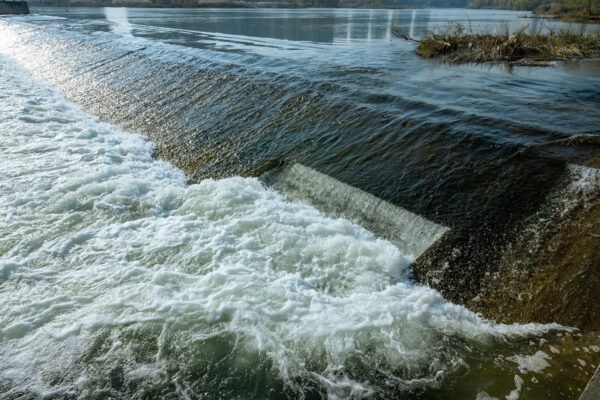
Water does not recognise the boundaries we have drawn on maps.
Rain falling hundreds of kilometres inland eventually shapes ecosystems far downstream.
Every river is an artery connecting the landscapes it crosses, to the ocean beyond. It carries with it the accumulated story of the places it has travelled through; freshwater, sediment, nutrients and the signals of a changing climate. For ecologist and researcher Dr. Gabriel Akoko Juma of the University of KwaZulu-Natal, understanding that story means looking beyond the boundaries between freshwater and marine ecosystems.
Gabriel’s fascination with water began as a child growing up near Kenya’s River Nyando, and developed into a scientific career focused on the interconnectedness of Africa’s aquatic systems. Today, his research is examining how changing rainfall patterns, droughts and floods are altering the flow of freshwater and nutrients from southern Africa’s rivers into estuaries and coastal waters – and what those changes mean for the organisms at the foundation of aquatic food webs.
Using field observations alongside years of satellite data and computer modelling, Gabriel is tracing these changes across four river systems and two contrasting ocean currents, from the warm Agulhas to the cold Benguela. As Earth observation, satellite remote sensing and AI-assisted technologies become increasingly accessible, researchers can monitor ecosystems across vast areas and, in some cases, observe environmental change almost in real time. For Gabriel, these tools offer a way to make conservation more proactive – particularly in parts of Africa where traditional long-term monitoring infrastructure can be limited.
The Jennifer Ward Oppenheimer Research Grant is a highly significant award supporting early-career African environmental researchers, funding up to three years of independent, African-led research. This year’s shortlist includes Dr. Juma, with ambitions for a wider project to examine major waterways on the continent from source to sea.
What happens upstream inescapably affects what happens downstream in estuaries and near-coastal waters. Rain falling in distant lakes and dams eventually reaches rivers, estuaries and oceans, carrying nutrients, sediments and pollutants – shaping life from micro to macro along the way. Focusing on the Zambezi, Limpopo, Tugela and Orange river systems, he will investigate how climate-driven changes in river discharge reshape plankton communities, nutrient cycling and carbon dynamics across southern Africa’s estuaries and coastal waters. Plankton rarely attract public attention, yet changes in their abundance, diversity and composition can ripple through entire ecosystems – affecting fisheries, broader biodiversity and carbon storage.
The work combines field sampling with up to 20 years of satellite data and modelling, and includes training three Master’s students across South Africa, Mozambique and Namibia. By focusing on plankton, Dr. Juma is exploring a global scientific challenge through an African lens – and seeking better ways to protect and sustainably manage the continent’s waters.
World Water Week takes place from 23 to 27 August. Organised by the Stockholm International Water Institute under the theme of “Water for People and Progress”, with a focus on water security and safely managed drinking water. National Marine Month in South Africa is celebrated during October, raising awareness about coastal environments, ocean conservation, and the economic and climate benefits provided by the country’s surrounding ocean – highlighting the value of the Agulhas and Benguela currents while promoting sustainable use of sea resources. With the African Union having declared 2026 the year of “Assuring Sustainable Water Availability and Safe Sanitation Systems” and the World Economic Forum designating it a “Year of Water”, bringing an unprecedented focus to freshwater and ocean systems through its ‘Blue Davos’ theme: it is a timely moment to examine issues around river and ocean health.
Aquatic ecosystems can no longer be neglected, taken for granted, or merely be extracted from without robust management and restoration efforts. The future of humanity is being built along the world’s coastlines. Around 2.4 billion people globally live within 100 kilometres of a shoreline, including roughly one billion people within 10 kilometers. This narrow band of land, about 5 percent of the inhabited world, generates an estimated 30 to 50 percent of global Gross Domestic Product. It contains many of our fastest-growing cities, economies and infrastructures. More than three billion people depend on the ocean for their livelihoods. The fate of our society is increasingly tied to the waters, and our prosperity will depend on understanding how these are changing alongside a warming climate.
We spoke to Dr. Juma about his scientific journey, the connections between Africa’s rivers and oceans, the importance of African-led research, and why understanding these systems now could help us make better decisions about their future:
Tell us about yourself and how you achieved your PhD in Germany.
I was at the Alfred Wegener Institute, Helmholtz Centre for Polar and Marine Research, from 2021 to 2025, where I completed my PhD.
I am originally from Kenya. I did my bachelor’s degree in Environmental Science at Chuka University in 2012, and that was really where my journey into ecology started. We did some sampling and fieldwork along rivers, and I became interested in understanding aquatic ecosystems.
From there I moved into a Master’s programme, and I continued into marine science and research. In 2019 I went to Germany for a postgraduate training programme at the Alfred Wegener Institute. It was a 10-month programme focused on marine spatial planning and data analysis, bringing together about ten early-career researchers from different parts of the world.
During the COVID period, when I was back in Kenya, my research focused on seagrass ecosystems, mangroves and coral ecosystems. We were trying to establish baseline surveys around places such as Vanga and Gazi, including work relevant to blue-carbon offset schemes.
That eventually led into my PhD.
One of the things that became very clear to me through all of this work is that the oceans are actually connected. Getting the bigger picture is really important. My research has taken me from the tropics to the Arctic, and being able to work in the polar regions was an incredible experience.
Now I am interested in bringing that broader perspective back to African river and coastal systems.
You started with the Tugela and are now looking at a much wider network of rivers. What has made that possible?
One thing that has really progressed is our ability to use observation and surveillance systems.
Initially, we imagined research as something that required a lot of money and equipment on the ground. And we still need that – we need in-situ data. But we can also use these systems to expand what we are able to observe.
We can incorporate modelling components, combine them with remote-sensing data and use them to project what is likely to be there in the future.
For me, that is very fascinating because it gives us hope that, even with limited resources, we can develop a much better understanding of our ecosystems and make more informed decisions.
How is climate change reshaping southern Africa’s coastal food webs?
Climate change has different components, and they interact.
Increasing temperatures in both Arctic and tropical regions are already shaping the material that comes from land into the ocean. Changes in precipitation in the tropics, permafrost and erosion can all alter what eventually reaches coastal zones.
For example, we can have more sediment entering the water. That can darken the water and increase turbidity, reducing the amount of light available to phytoplankton.
If there is less light, there can be less photosynthesis, which can mean lower biomass or productivity.
Alternatively, some species may be able to adapt. That can lead to changes in species composition, which then cascade through the food web to zooplankton and eventually to fish.
A species may have a preferred food source, but if that food changes or becomes unavailable, it may have to eat other organisms.
Zooplankton, for example, may prefer particular phytoplankton, but they may shift towards other organisms such as dinoflagellates. Some of those species can be toxic.
So these changes can propagate through the system.
What other changes are taking place upstream?
There are also changes resulting from human activities.
For example, we can have nutrient surges in upland areas because of chemical fertilisation. That increases the accumulation of nutrients, and when those nutrients are washed into rivers, they can create conditions that allow other species to thrive.
Aquatic invasive species are another concern. Hyacinths, for example, are spreading in some river systems.
So climate change is not operating in isolation. We have changes in climate occurring alongside changes in land use, nutrient inputs and other human pressures.
What are some of the major issues in water conservation that your research is uncovering?
We are still working on this, but we have started getting data from data centres going back decades – in some cases as far as the 1950s – which allows us to build long-term time-series analyses.
For example, we are seeing a decline in discharge in the Orange River.
In some of these rivers, we also see strong seasonality, as well as the effects of El Niño and drought events. Some of the spikes in discharge appear to be reducing.
The general trend in the Zambezi is also interesting.
What is particularly valuable is being able to compare what we are seeing in the data with precipitation patterns in the river basins. In some areas, what we see in the river corresponds with what is happening in the basin.
Those changes affect the river and the chemistry downstream.
We are beginning to understand that the material being transported – including things such as chlorophyll and carbon – can influence downstream systems.
But we also need to understand the influence of ocean processes. For example, the Benguela Current and its upwelling system are major drivers of productivity along the coast.
We are trying to understand how these different influences interact rather than assuming that everything we see downstream is simply a reflection of what happened upstream.
What specifically are you looking at in these river systems?
There are three main components.
First, we want to look at environmental gradients and biogeochemistry downstream. We are examining discharge, carbon, salinity, chlorophyll and other parameters and looking at trends over roughly 30 years.
Second is biodiversity.
We want to sample in situ and understand what is present from the river through the estuary and into coastal waters. Do species change? How far does that change extend? At what point do we start seeing a different community, and how does that vary with seasonality?
Third is carbon cycling.
We want to look at soil and particulate material and determine what proportion and amount of carbon goes into the ocean, what goes into the atmosphere and what becomes incorporated into sediments.
Ultimately, we want to develop a carbon budget for these coastal rivers.
That allows us to ask a very important question: how are these ecosystems functioning? Are they sinks for carbon, or are they becoming carbon emitters?
You are looking at both the Indian Ocean and Atlantic Ocean systems. What does that comparison tell you?
The two systems are very different.
The Agulhas Current and the Benguela system provide an interesting contrast. The Agulhas is particularly important because of the large eddies and rings associated with it.
Agulhas rings are giant, spinning ocean eddies. They pinch off from the warm Agulhas Current south of Africa, near the Agulhas Retroflection, and then move westwards into the Atlantic Ocean. They carry heat and salt and contribute to the global ocean circulation.
We want to understand how these large-scale ocean processes interact with what is coming from the rivers.
We are also planning to integrate stable isotopic analysis. By looking at carbon signatures, we can ask whether particular carbon is coming from land or from marine production.
That gives us another way of tracing the movement of material through the system.
Are you seeing evidence of tropicalisation in these systems?
That is something we are interested in understanding.
As climate change progresses, areas that were initially influenced by particular climatic conditions are slowly changing.
One question is whether we are already seeing tropicalisation, particularly in our estuaries – both in the south-west and along the west coast.
We need more data to understand exactly what is happening and how far these changes extend.
Why are plankton so important to this research?
Plankton are a critical but understudied foundation of aquatic food webs.
At the base of these marine systems are plankton. They anchor the food web and help regulate how carbon moves between land and sea.
Because they respond relatively quickly to changes in their environment, they can also tell us something about what is happening in the wider ecosystem.
If we understand how plankton communities change along the river-to-ocean gradient, we can begin to understand how environmental changes are cascading through the food web.
How much do we still not know about the microbial life in our waters?
There is a lot that is still unknown.
We need better equipment and technology to detect and identify what is actually there. Some of that equipment is extremely expensive, particularly for African countries.
There is still a huge amount to be discovered in our freshwater systems and oceans.
That is why development of scientific capacity is so important.
Could indigenous knowledge help fill some of those gaps?
Absolutely. There is huge untapped potential in working with indigenous and local communities.
For a long time, communities have been observing these systems. Fishermen, for example, can often tell you whether water is clean or how conditions have changed.
But with the current education system, some of that knowledge has never been written down. It has been passed through storytelling and observation.
We need to capture that knowledge and integrate it with current technology.
We may eventually have better machines and more sophisticated systems. Spectral analysis, remote sensing and other technologies can allow us to observe environments that are difficult to access, including the ocean floor.
But we should not assume that everything worth knowing is contained in a machine.
There are still discoveries being made through surveys. For example, corals have been found in coastal Benin where people had previously thought they were gone.
The more we survey, the more we realise how much has not yet been documented.
Why is it important that African scientists are doing this research in Africa?
One of the most important reasons is that we are able to tell our own stories.
If you look at some of the research published in major scientific journals on African soils, for example, you can sometimes struggle to find an African name or affiliation.
That means we are not necessarily telling our own story.
Scientists come to Africa, conduct research here, and then the work goes back into European university libraries. The research may be about Africa, but the knowledge does not necessarily return to the communities where it was generated.
When Africans are doing the research, we are able to go back to those communities and inform them of the findings.
We can also refine the research questions with communities, conduct the research with them and develop environmental management strategies based on the findings.
It becomes a much more holistic approach.
If I can go back to the same river every month, for example, then I am telling a comprehensive story about that river. If we continue doing that for 30 years, we can say that a particular species has been present, has disappeared or has changed based on our observations.
That is incredibly valuable.
Does African-led research also allow different questions to be asked?
Yes.
Internationally funded research can sometimes be shaped by what a particular funder needs.
The question that is timely for one person may not be timely for another.
We have questions on the ground in Africa that may not be regarded as urgent in the global research domain, but they can be extremely important locally.
We need to be able to conduct research that enhances our own interests while still partnering with the global scientific community.
We can also incorporate indigenous knowledge and local observations into that research.
How significant are the financial disparities between African and European research?
They are shocking.
Governments need to realise that research is an important element of development.
In many countries, decisions are based on research. They should not be based simply on feelings or emotions. If you are going to develop agendas, they should be informed by evidence.
Funding itself is much more limited in Africa.
We strive to use the little we have, but it is far less than what is available in the Global North. That creates a problem.
We therefore reach out and partner with the global scientific community, but sometimes funding schemes are aligned with particular strategies or priorities.
Again, what is important to Africa may not always be what is currently considered important internationally.
Talk me through how the work actually gets done.
We start by getting the available data and extracting information for the particular points we are interested in.
Then we plan the fieldwork.
We will collect environmental data such as salinity, turbidity and organic carbon. We will also collect phytoplankton and zooplankton samples and trace how these parameters change.
We will do this for the four proposed rivers during both the rainy and dry seasons, so that we can compare differences in discharge levels and see how those changes influence the biological communities.
For zooplankton, we can use nets, or we can take water samples.
Of course, this all depends on obtaining the necessary permits to conduct the work.
Once we come back to the laboratory, we analyse the samples using microscopy. This allows us to identify species and determine biomass parameters.
From the carbon data we generate in the laboratory, we can analyse the particulate components. This allows us to model what happens to the carbon – how much goes to the atmosphere, how much enters the sediments and how much remains in the estuary.
We can then start determining how these ecosystems function.
What are the phytoplankton levels?
Are these systems functioning more as carbon sinks or carbon emitters?
The idea is to combine remote-sensing data, in-situ observations and modelling.
And the more research and data we have, the better the model becomes. If we have less research, our story may not be as strong or complete in the models that we produce.
What are some of the technological opportunities you see for African environmental research?
We already have technologies that can help us understand these systems.
In-situ sampling is extremely important, but we should also be using remote sensing, models and existing datasets.
We may not have all the technology we need yet, but we can start with what is available to understand what is there.
The opportunity is to develop and streamline these tools more specifically for Africa, by Africans.
That could transform the scale at which we are able to monitor our ecosystems.
What will you do specifically as a result of the Oppenheimer Research Grant?
Capacity development is a major part of the research.
We want to train and enhance capacity for more Africans working in this field.
As part of the proposal, we plan to train at least three students. This includes general training in the marine environment, but also training taxonomists who can identify and analyse the samples we collect.
We need people we can rely on to look deeply at what we have.
Those students and technicians can then train others, creating a ripple effect.
Another important goal is to develop a more unified database.
We want to start building a database for plankton in Africa. Similar databases already exist for many European countries.
If we can build that kind of resource for Africa, then researchers working on major rivers across the continent can contribute observations and build a long-term record.
What would winning the grant mean to you personally and professionally?
It would enhance my research capacity significantly.
I would have the responsibility of administering and executing the grant activities, which would strengthen my portfolio as a career researcher.
It would also enhance collaboration and supervision. I would be able to support students, build networks and develop new collaborations.
The publications generated from the work would contribute to my career as well.
So it would be important in terms of coordinating students, collaboration, networking and overall career growth.
What is the way forward for us when it comes to climate change?
I think a holistic approach is one of the ways we are going to win this.
For some time, we have been looking at ecosystems as standalone units.
But they are not standalone.
That is why we are looking at the system from rivers to oceans.
We are developing cross-cutting research. We are not just looking at plankton and zooplankton and asking how they build up. We are asking how the whole system functions from river to ocean and how estuaries fit into that system.
We also need a stakeholder and participatory approach.
River basins are enormous and many are transboundary. That requires governments to work together.
If we are going to manage a river system properly, we need to manage the upstream areas as well. We need leaders, coastal communities and other stakeholders to work together towards sustainable use of natural resources.
And in research, we need to use the tools that are already available to us.
In-situ sampling is great, but we already have remote sensing, models and huge amounts of data.
Let’s start with these tools to understand what is there.
We might not have enough technology yet, but we can develop more. We can refine remote sensing, modelling and data systems specifically for African ecosystems.
That is how we can begin to build a much stronger understanding of the continent’s rivers, estuaries and oceans.
Says Gill Simpson, founder and director of the Wild Rescue nature reserve, “Water connects all of our landscapes. Rain falling becomes part of a journey, through rivers and eventually into the ocean. Along the way, it shapes the organisms and ecological processes that sustain life, both aquatic and on land. On our reserve, developments in our local waterways are particularly salient to us as we border the Goukou river en route to the Still Bay estuary. Exceptionally biodiverse, it is the first estuary to be included in a marine protected area in the Western Cape, supporting a rich mix of rich aquatic nurseries that teem with fish, invertebrates and migratory birds – and all of this begins up in a distant mountain catchment area from which the headwaters flow. Dr. Juma’s research is ultimately about a lot more than plankton. It is about understanding the African aquatic environment as a single, interconnected system – and developing the knowledge needed to manage it before environmental change becomes irreversible. At a time when water security, ocean health and climate resilience are becoming increasingly inseparable, following the water may be one of the most useful ways of understanding where our community and our continent is headed.”
“A changing climate is written in water, but much of our environmental management remains reactive. A fishery collapses, and restrictions are introduced. A wetland becomes polluted, and abrupt efforts are made to restore it. A drought occurs, and water restrictions follow. But by the time an ecological crisis becomes obvious, some damage may already be difficult or impossible to reverse. The real scientific challenge is therefore not simply understanding what is happening today. It is recognising the signals that tell us what might happen tomorrow. Dr. Juma’s vital contribution is to follow those revelatory signals through water, seeking to understand environmental change before it becomes problematic,” Gill concluded.
The winning applicant for the Jennifer Ward Oppenheimer Research Grant will be announced on 28 August and formally awarded at the Oppenheimer Research Conference on 8 October.