

South Africa’s Food-Based Dietary Guidelines (FBDGs) should be reviewed to reflect the latest scientific evidence and respond to the country’s evolving health, nutrition and environmental challenges, according to experts who gathered for the launch of a new policy brief by the Physicians Association for Nutrition (PAN) South Africa on Tuesday evening.
The high-level virtual convening brought together experts from healthcare, government, academia, and civil society to discuss how updated dietary guidelines could better support public health, strengthen food systems, and contribute to climate goals.
Opening the event, PAN South Africa Chief Operating Officer, Dr Heinrich Volmink, said dietary guidelines are part of the policy architecture of a country, shaping health promotion and education, public feeding programmes and food environments. While South Africa’s current guidelines contain important strengths; nutrition science, climate realities and food systems have changed considerably since they were last revised in 2012. The call for revision is not to dismiss what came before but to build on that foundation.
He said: “The aim is not to prescribe one rigid diet to an entire nation. The aim is to provide stronger, clearer, and more future-fit guidance. Guidance that enables healthier choices, but respects culture and context and helps align our food system with the health of both people and the planet.”
During the launch, Dr Nanine Wyma, Chairperson of the PAN South Africa Board and lead author of the policy brief, presented recommendations aimed at further strengthening the existing South African dietary guidelines.
The policy brief recommends that South Africa’s next revision of the guidelines:
- Maintain guidance on food sources of critical nutrients, including protein, iron, calcium, zinc and omega-3 fatty acids, and continue to provide advice on vitamin B12 supplementation where appropriate.
- Retain evidence-based information on the health benefits of vegetarian dietary patterns, including their association with lower risks of certain NCDs and the recommendation to include at least one meat-free day per week.
- Create more inclusive food groups by incorporating a wider range of protein sources and ensuring the guidelines accommodate diverse dietary preferences, cultural practices, and socioeconomic circumstances.
- Strengthen transparency and address potential conflicts of interest in guideline development, while ensuring balanced information on nutrient sources, food intolerances, and suitable dietary alternatives.
- Provide more comprehensive guidance on environmental sustainability, including the environmental impacts of food choices and the role of dietary patterns in supporting both human and planetary health.
- Include practical guidance on healthy dietary alternatives and emerging food products, helping consumers make informed choices and identify nutritious alternatives that support diverse dietary needs and preferences.
The policy brief draws on growing international evidence indicating that aligning national dietary guidelines with the EAT-Lancet Planetary Health Diet framework can reduce premature mortality by approximately 15% on average. However, many existing guidelines remain misaligned with global health and climate targets, particularly where environmental sustainability is not adequately integrated.
Sumati Bajaj, Nutrition Knowledge Specialist at PAN International and contributor to the EAT-Lancet Commission, highlighted modelling showing the potential health gains of adopting the Planetary Health Diet.
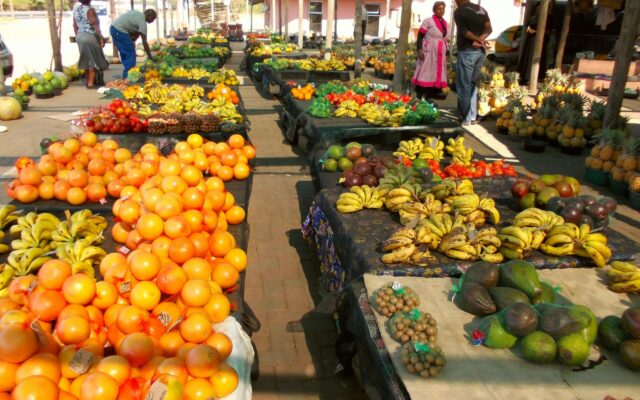
“The South African population would need to reduce sugar, a large proportion of reduction in wheat, rice, maize, and a substantial amount of increasing fruits, vegetables, legumes, nuts and seeds. So much so that the current consumption of fruits, vegetables, legumes, nuts and seeds is less than 100 kilocalories per day by an adult, which would need to increase to more than 500 kilocalories.”
Prof. Ashika Naicker, Associate Professor and Head of Department: Food and Nutrition at the Durban University of Technology, said South Africa already has a strong scientific foundation on which to build.
Maria van der Merwe, President of the Association for Dietetics in South Africa, welcomed the policy brief’s broader perspective.
“There are strengths that we could build from, so we are not starting at zero. We’re starting already from recommendations that promote diversity. That promotes vegetable and fruit consumption, and legumes, healthy fats, sugar and salt in moderation. So these remain evidence-based recommendations. And already have a strong foundation.”
She also stressed that the revision process should remain evidence-based, inclusive and independent.
“The guidelines themselves are not going to bring about change. We need to consider that the guidelines can only be effective if they are achievable for the communities that they intend to serve. “
Jody Frank Brown, Specialised Environmental Officer: Climate Change, Western Cape Government, said climate change, health and food can no longer be treated as separate conversations.
“Climate change has already changed where we grow our food, how we produce it and ultimately what ends up on our plate. But at the same time, our food system is also a significant contributor to climate change through greenhouse gas emissions generated across production, transport, and processing.”
He added:
“So when we talk about revising South Africa’s food-based dietary guidelines, I think we’re not simply just updating nutrition advice or science; we are actually starting a conversation of how do we help shape the future of our food systems.”
Paula Knipe, Lawyer: Food Systems Reform Programme at Animal Law Reform South Africa, said dietary guidelines are an important policy tool.
She said:
“In addition to the national guidelines being able to shape and guide what millions of people eat, they also could have a massive impact on shaping the agricultural system as a whole.”
Knipe concluded that the justice dimension of the policy brief could be strengthened further.
“This is not only a nice-to-have. The government has an obligation to ensure the right to food for everyone in South Africa, and I think that’s important for that to be explicit.”
The webinar concluded with a call for government and stakeholders to work together to ensure South Africa’s dietary guidelines reflect the latest scientific evidence and respond to today’s health, nutrition and environmental challenges.
The policy brief calls on stakeholders to:
- Publish new national dietary intake data by prioritising updated nutrition surveillance to replace the 2012 SANHANES-1 data.
- Initiate a transparent Food-Based Dietary Guideline revision process with clear conflict-of-interest policies and broad participation from government, academia, civil society, and health professionals.
- Align future guidelines with the WHO and FAO guiding principles on healthy and sustainable diets and the Planetary Health Diet by integrating health, environmental, and socio-cultural considerations into the revised guidance.
- Engage broadly and act urgently. Twelve years have passed. The science has moved. South Africa’s guidelines must move with it.
PAN South Africa is inviting individuals and organisations to support the public petition calling for the review and updating of South Africa’s dietary guidelines to ensure they reflect the latest evidence on healthy diets from sustainable and just food systems.
Sign the petition: https://bit.ly/4xMqVUb