Photo @TradeMarkAfrica
Thousands of smallholder grain farmers in Burundi are gaining improved access to formal markets through a partnership between TradeMark Africa (TMA) and the Netherlands that is helping them secure better prices, improve transparency in agricultural trade and create new rural employment opportunities.
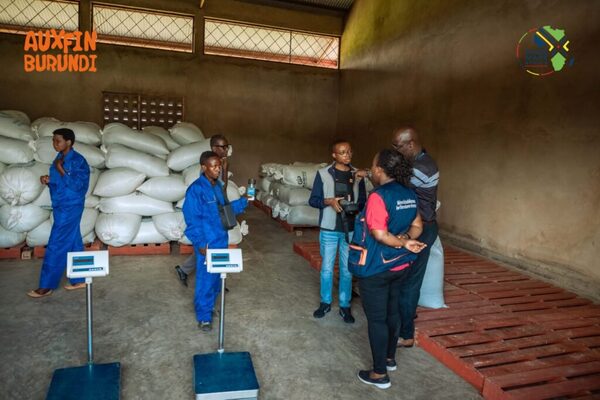
The initiative centres on the Umva Business Center (UBC), an aggregation and marketing facility facilitated by TradeMark Africa with funding from the Netherlands. The centre links farmers directly with verified buyers through a structured trading system that incorporates transparent weighing, quality inspections, digital transaction records and prompt payments.
For years, many grain farmers were forced to sell their harvests to middlemen at prices as low as 800 Burundian francs (BIF) per kilogramme due to limited storage facilities and poor access to large buyers. By the time cereals reached formal markets, much of their value had already been captured by intermediaries, leaving farmers with little bargaining power.
According to TradeMark Africa, the UBC is helping reverse that trend by creating a more transparent and accountable marketing system.
“At first glance, the UBC is simply an aggregation centre. Farmers bring their harvests, grain is weighed, tested and recorded, and buyers collect products in bulk. But a closer look reveals that something more profound is happening,” the organisation said in a recent impact story.
Every sack delivered to the centre is inspected for quality, each kilogramme is weighed individually and every transaction is digitally recorded through the UMVA collection application. Farmers receive receipts immediately, while payments are made the following day, improving confidence in a market where transactions were previously opaque.
The system is also strengthening confidence among institutional buyers by providing traceable records on quality, weights and payments, reducing opportunities for fraud while improving accountability across the value chain.
For farmers, the benefits are already translating into higher incomes and improved livelihoods.
“I once sold into informal markets with low returns, but now receive fairer prices for my produce,” said Tuyishime Sandrine, a farmer from Buganda Commune in Cibitoke District.
“The additional income most farmers like myself have gotten is being reinvested into livelihoods: purchasing livestock, acquiring land, building homes and launching small businesses.”
 Photo @TradeMarkAfrica
TradeMark Africa said the initiative’s impact extends well beyond farming households.
During harvest periods, young people are employed in quality inspection, grain processing, operational supervision and security across the UBC system. The programme has also created part-time work for more than 100 hand loaders, contributing to employment opportunities in rural communities.
According to the organisation, the UBC has evolved into a broader market ecosystem that demonstrates how improving market access can generate lasting economic benefits.
“By connecting thousands of farmers to verified buyers through a structured digital system, the UMVA platform sealed the information gaps that once allowed exploitation to thrive. It has replaced uncertainty with transparency and informal transactions with accountable trade,” TradeMark Africa said.
The organisation added that the experience shows poverty is often driven not by low agricultural production, but by the absence of fair and efficient market access.
By making grain trading more transparent and efficient, the partnership between TradeMark Africa and the Netherlands is helping transform farming in Burundi from a subsistence activity into a pathway for sustainable economic opportunity while ensuring farmers retain a greater share of the value generated by their harvests.