

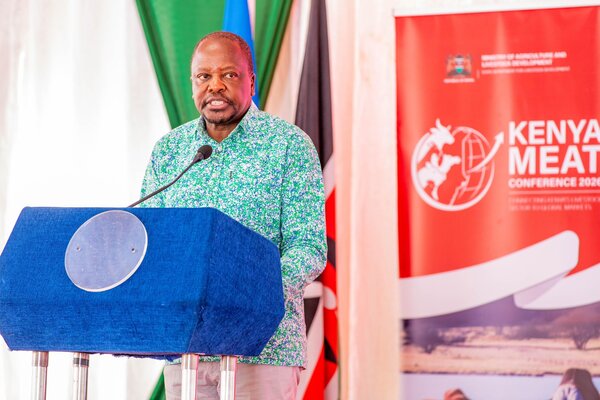
Kenya’s Cabinet Secretary (CS) for the Ministry of Agriculture and Livestock Development (MoALD) Sen. Mutahi Kagwe has warned that the growing threat of antimicrobial resistance (AMR), largely driven by the misuse of veterinary medicines, could jeopardize Kenya’s access to lucrative international meat markets.
Speaking at the opening of the Kenya Meat Conference 2026 in Nyeri, Kagwe said AMR has evolved beyond a veterinary concern and now represents a major economic, food security and public health challenge for the country.
“Responsible use of veterinary medicines is becoming a passport to international markets,” Kagwe said in a statement posted on the ministry’s X account, warning that failure to comply with international standards on antimicrobial residues in meat products could reverse years of negotiations aimed at securing market access for Kenyan livestock products.
According to the statement, global estimates link antimicrobial resistance to about 5.5 million deaths annually, with Kenya among the countries significantly affected by the growing crisis.
The Cabinet Secretary said rising concerns over food safety and antimicrobial residues are reshaping global trade requirements, with importing countries increasingly demanding strict adherence to sanitary and phytosanitary standards.
“Modern consumers demand traceability, food safety and transparency,” Kagwe said, noting that these have become essential requirements for participation in international trade.
To address the challenge, the government is strengthening oversight of veterinary medicines by reinforcing the Kenya Veterinary Board and the Veterinary Medicines Directorate to ensure that veterinary drugs remain under the supervision of licensed professionals.
Kagwe highlighted a series of reforms being implemented to transform the livestock sector and improve compliance with international standards.
These include the National Livestock Vaccination Programme and increased investment in the Kenya Veterinary Vaccines Production Institute (KEVEVAPI), which aims to increase annual vaccine production from 45 million doses to more than 70 million doses.
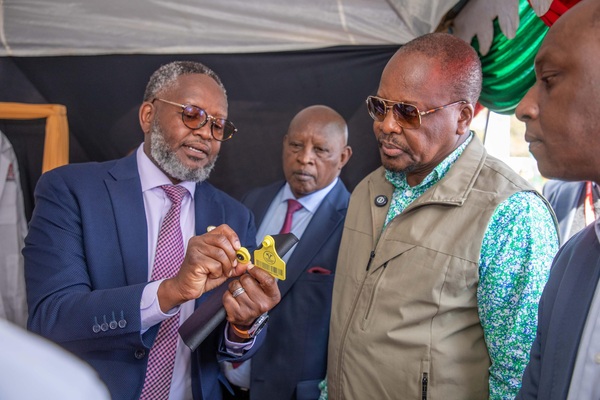
The government is also rolling out the Livestock Identification and Traceability System (LITS) and the Animal Identification and Traceability System (ANITRAC), initiatives expected to enhance the monitoring of animal movements and improve traceability across the livestock value chain.
The Cabinet Secretary also raised concerns over illegal donkey slaughter, describing the practice as a threat to food safety, public health and Kenya’s export ambitions.
Despite the government’s 2020 ban on commercial donkey slaughter, illegal operations continue, with more than 700 donkeys reportedly being slaughtered every month. Kagwe directed his ministry to strengthen policy and enforcement measures against individuals involved in the illicit trade.
On value addition, the CS called for increased investment in modern meat processing facilities, branding and certification to maximize returns from the livestock sector. He said the government is working closely with county governments and private investors to modernize abattoirs and expand export-ready processing capacity.
Kenya is targeting a significant expansion of its livestock industry, aiming to increase the sector’s contribution to gross domestic product from 12% to 20% and nearly double annual meat production to approximately 990,000 metric tonnes by 2028. The expansion is expected to generate an estimated KSh450 billion annually.
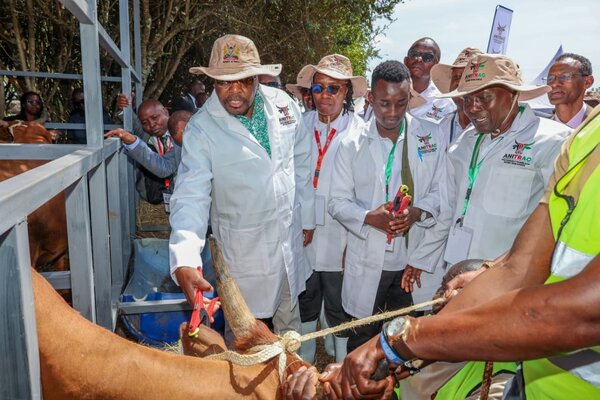
Kagwe urged stronger collaboration among national and county governments, researchers, financial institutions and the private sector to position Kenya as Africa’s leading exporter of safe, traceable and high-quality meat products.
The two-day Kenya Meat Conference 2026 has brought together leaders from across the livestock value chain to discuss strategies for growing the country’s meat industry and expanding access to international markets.