


By Dr. Rolf Peters PotatoConsult UG
The productivity gains in potato cultivation has largely been driven by the ongoing mechanization of many farming operations. With the advance of digitalization and the integration of artificial intelligence, the potato sector is now entering the next stage of development, from is expected to result in further benefits throughout the entire value chain. A comprehensive overview of these developments will be provided at PotatoEurope, taking place on 9 and 10 September 2026 at Rittergut Gestorf in Springe near Hanover, Germany.
In addition to live machinery demonstrations covering planting, harvesting, loading and innovative crop protection technology, the technical program will feature the new “DLG Spotlight: Digital Farming powered by FarmRobotix”, focusing on the latest developments in robotics, automation and artificial intelligence for crop production. PotatoEurope 2026 is organized by the DLG (German Agricultural Society). Around 300 exhibitors are expected to participate.
Given their strong affinity for technology, many farmers are generally open to the new ideas emerging from the agricultural machinery industry. However, these technologies can only deliver their full value if they adequately address the agronomic requirements of potato cultivation and genuinely simplify farm operations. At the same time, changing framework conditions, such as restrictions on fertilizer use and the decreasing availability of crop protection products, are increasingly influencing how individual operations in potato production are carried out.
Planting
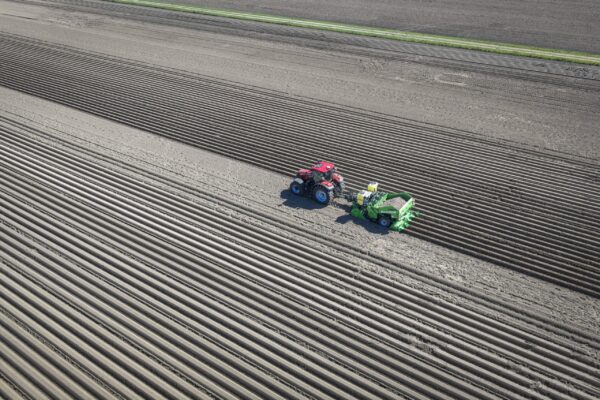
Today, many digital tools enable farmers to optimize field traffic planning from their home office, with the resulting plans transferred directly to tractors via USB devices or cloud-based systems. Information for variable row shut-off when planting irregularly shaped fields can also be integrated, and tramline establishment can be automated.
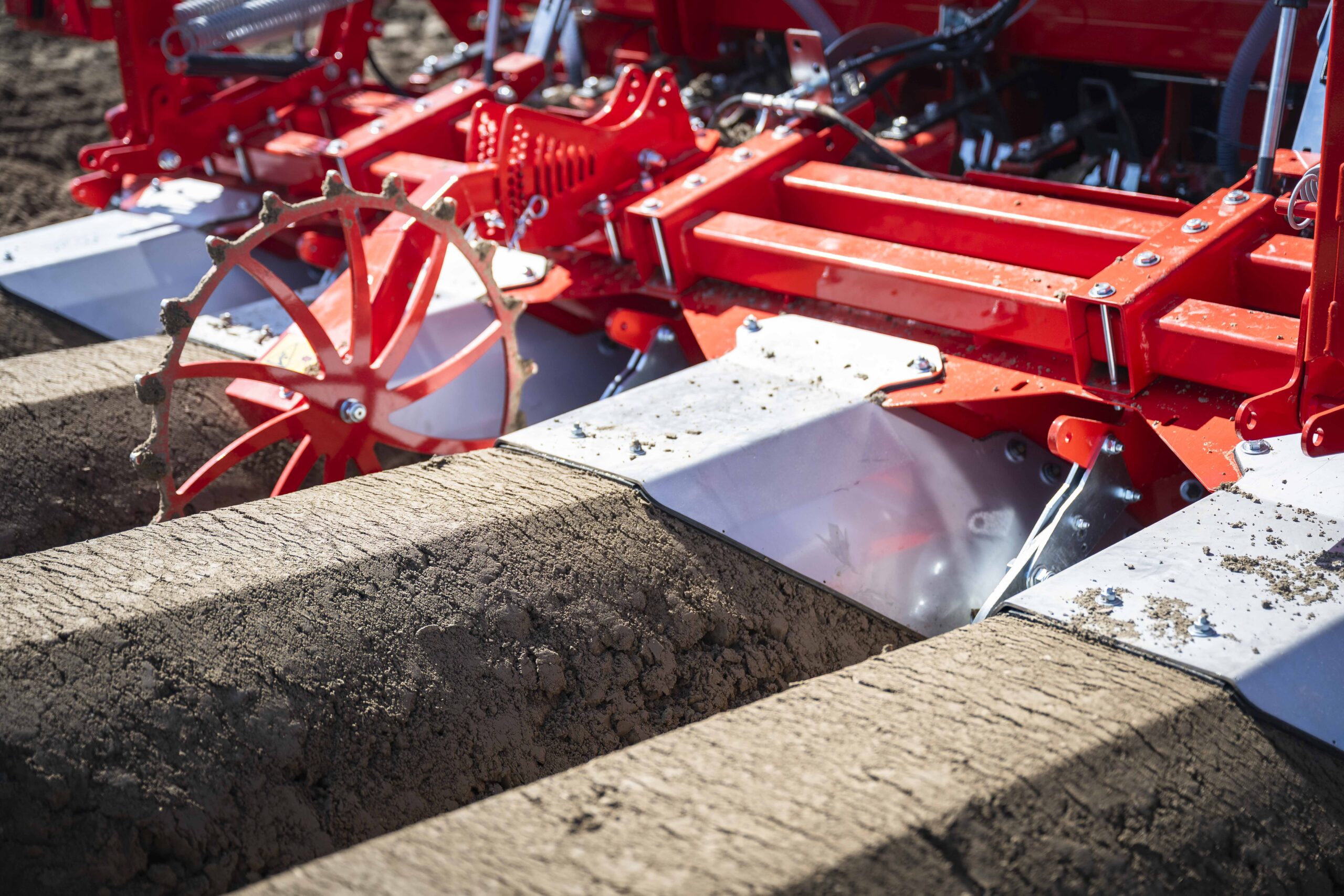
During planting, maintaining a consistent planting depth and uniform ridge formation are key quality criteria. These factors not only influence uniform crop emergence and subsequent plant development but also determine the required harvesting depth later in the season.
By combining sensors with undercarriage hydraulic control systems, the distance between the planter frame and the soil surface can now be maintained at a highly consistent level. Regardless of bunker fill levels or soil carrying capacity, this supports precise furrow opener depth control and uniform ridge formation. These technologies provide measurable benefits, particularly when farms use seed potatoes with a narrow grading range.
The increasing use of hydraulically driven, and in the future electrically driven, planting units also makes it possible not only to adjust plant spacing within tramline areas but also to automatically implement field-specific planting maps.
Crop Care
The relatively slow early growth of potato plants and their comparatively wide row spacing reduce their competitiveness against weeds during initial growth stages. While mechanical cultivation and herbicides remain important control measures, the selection of varieties with faster canopy closure can also help suppress weeds.
However, periods of highly variable weather often force compromises in mechanical weed control. In potatoes, whose root systems extend well into the ridge flanks, inappropriate cultivation timing can have long-lasting negative effects on plant development. Conversely, if interventions are delayed, the effectiveness of weed control against larger weeds becomes significantly reduced.
One possible solution lies in wider mechanical cultivation equipment that can operate across multiple tramlines while using autonomous implement guidance or individual side-shift control of cultivation tools. Such systems could improve operational efficiency while minimizing crop damage.
Harvesting and Storage
Although potato harvesting marks the final stage of field operations, undetected errors—particularly tuber damage—can create considerable risks during storage and subsequent marketing.
The use of sensors and camera systems is helping to improve the monitoring and optimization of crop flow through harvesting machinery. At the same time, artificial intelligence is increasingly being applied to capture and systematically analyze image-based information generated during harvesting.
Another long-standing topic in potato production concerns the separation of soil, stones and other impurities either during harvesting or during storage intake. Some farms remove stones or separate materials before planting to facilitate high-capacity harvesting with minimal impurities. Others are increasingly relying on mechanical, pneumatic and electronic separation systems that remove impurities only when potatoes are placed into storage.
This trend is being driven by significantly higher harvesting capacities in the field, the shortage of reliable manual sorting labor and major advances in optical-electronic sorting technologies. These systems rely on image recognition and processing, increasingly supported by artificial intelligence.
Optical-electronic sorting systems can also be used during potato outloading to detect impurities as well as visible defects such as rotten or severely damaged tubers. In principle, such systems are also suitable for grading unwashed potatoes if appropriate software is available.
Currently, however, development is moving toward dedicated sorting machines that capture multiple images of each individual tuber before making a decision and can subsequently divide the product stream into more than three fractions or size categories. Despite the substantially higher investment costs involved, potato growers expect these systems to significantly reduce labor requirements while providing greater flexibility in meeting the diverse quality and size specifications demanded by buyers.
The full technical article is available at: www.potatoeurope.de/en/news/closer-integration-of-technology-and-potatoes
Machinery Demonstrations and FarmRobotix at PotatoEurope 2026
The machinery demonstrations will showcase modern agricultural equipment under real operating conditions. Visitors will see machines working live in the field and experience first-hand how current technologies support potato production. Demonstration topics include planting, harvesting, loading and innovative crop protection technologies. The technology partner for the demonstrations is Case IH.
In addition, DKE-Data and DLG, together with FarmRobotix, will present the latest technologies in robotics, automation and artificial intelligence for crop production. Visitors can expect live demonstrations, practical insights and expert discussions illustrating how autonomous machines and digital systems can make agriculture more efficient and sustainable.
Through the FarmRobotix platform, DLG brings together farmers, manufacturers, researchers and investors, highlighting how future-oriented technologies are transforming agriculture.
The conceptual partner and initiator of PotatoEurope 2026 is the Union of the German Potato Industry (UNIKA). The regional partner is Golden Geest Potato Growers Association Ltd., and the exclusive partner is the State of Lower Saxony.