“The hunger for good things usually winds up as starvation,” wrote the Nobel Prize-winning poet Czesław Miłosz, born in Lithuania during June 1911 – the conclusive years of the Russian Empire. It’s the paradox of desire: the intense pursuit of our cravings often alienates us from what sustains us.
For all of known history, few subjects have occupied human attention more than food. Early hunter-gatherers spent about 20 hours per week actively hunting and foraging, surging up to around 50 hours of weekly labour to maintain crop yields by the agrarian age of agricultural communities. Fermented grains, for its desirable intoxicating effects, is said to have set the stage of civilisation according to the “Beer Before Bread” hypothesis, catalysing nomads into settled farmers; threshing out steady supplies or raw kernels for brewing, and stockpiling communal surpluses for later consumption. Whether lager came before the loaf, or not, the explosive increase in world population to today’s 8.3 billion people – thanks to the Industrial Revolution and modern medicine – has escalated human food consumption up to 6 billion metric tons annually (and over 194 billion liters of beer).
We fetishise food. There are thousands of food-related television shows on global networks, hundreds of millions of glamorised “food porn” images posted and hashtagged on social media every year, with over 6.74 million food & drink channels on Youtube at a global upload rate of over 500 hours of content per minute – roughly 262.8 million hours per our 8760-hour calendar year. About 20 million cookbooks are sold every year in the United States alone. The average person (excluding those with eating disorders) thinks about food for around 3.6 – 4.8 hours of their day – and then actually eats for an additional 1 – 2 hours, or more. The human gut, more than procrastination, is the real thief of time. Every month there are over one billion restaurant searches on Google. The global food, beverage, and restaurant industry spends tens of billions of dollars annually on advertising, in a marketplace estimated at over 7 trillion USD. 80 percent of ad spend goes to television, and almost 2 billion USD is spent marketing directly to children. Packaging and processed foods are deliberately coloured in such a way as to evoke a hedonic response – an emotional reaction based on the pursuit of pleasure. But those vibrant blue hues of anthocyanins (antioxidants) found in berries – for example – aren’t at all present in the sharply tinted candies designed to hijack our nourishment-seeking attention.
Food is not evenly distributed. Nearly 3 billion people worldwide are overweight or obese, while 673 million go hungry (one in five in Africa, which has a fifth of the world population), 318 million people face acute food insecurity and 2.6 billion people can’t afford a healthy diet – though enough calories and nutrients are actually being produced to adequately feed everyone. Diets vary sweepingly between locations, cultures, religions and individual preferences, though everyone eats not just for survival but for gratification. Believing some foods to be aphrodisiacs, historically the clergy warned against sensuous ingredients that supposedly excited the body, whipped passions and weakened moral restraints. Pepper, cinnamon and nutmeg were the spices of the sinful. In ‘The Birth of Venus‘ it’s no wonder why the Roman goddess of love was painted by Botticelli as emerging from the sea inside a large oyster shell. “Food is not rational. Food is culture, habit, craving, and identity,” said travelling chef Anthony Bourdain. However you slice it, our food choices are a complex, intimate and often sensitive topic.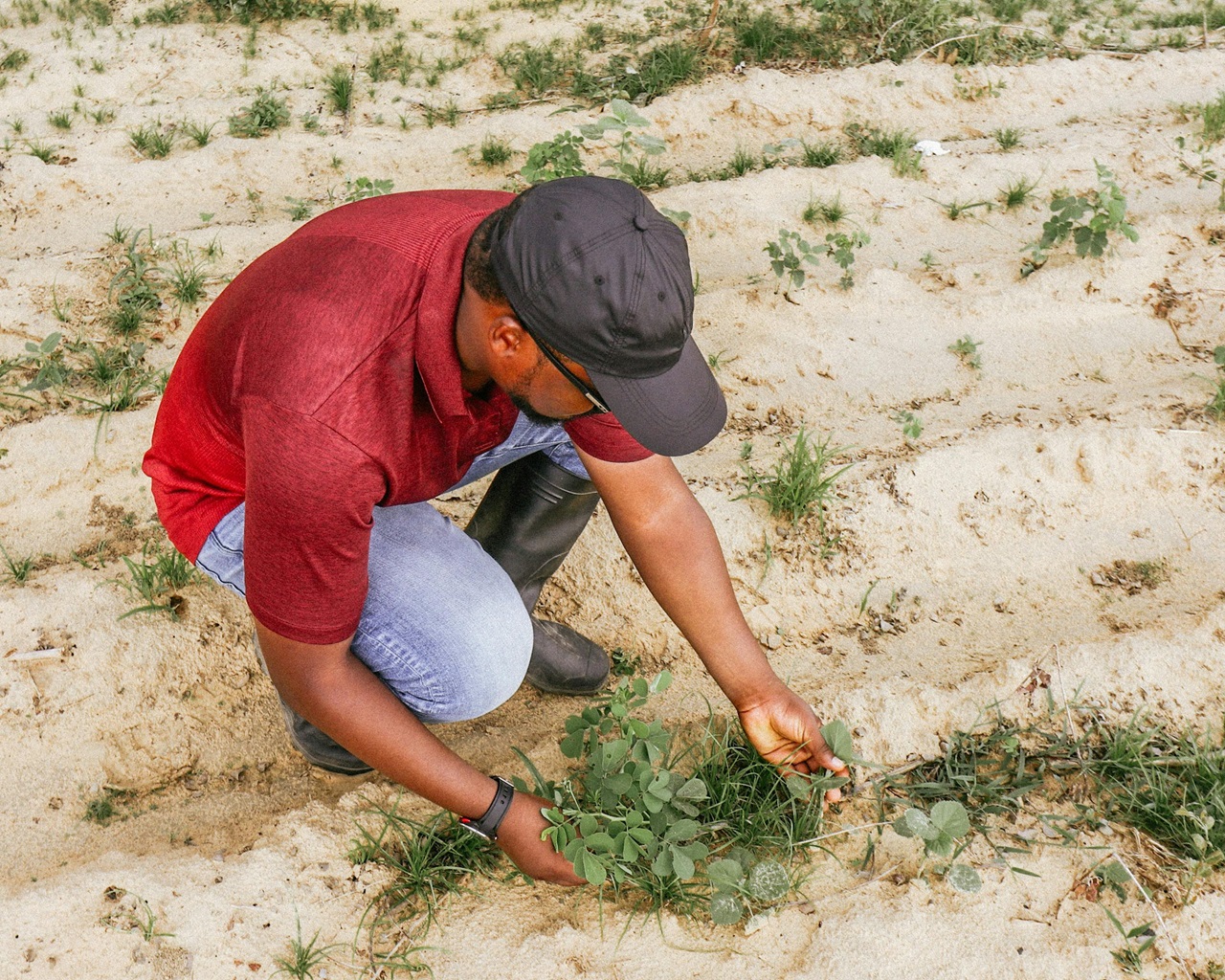
Amid all the immediacy, preoccupation, relish and romp around food – however – in our urban isolation, removed from food production and detached from the soil; we rarely think about the consequences of our consumption. June is National Environment Month in South Africa, for the promotion of sustainable practices and to stimulate environmental awareness. The government has declared the 2026 theme as “Think, Eat, Save and reduce your foodprint,” citing food waste, a preference for chemical-free organic foods and eating local produce as key pillars for understanding dietary impacts and changing attitudes. While these are credible recommendations, food and environmental issues are inextricably and intricately linked: it falls vitally short of discussing crucial factors and effective environment-impact adaptations. South Africa is in a crisis of food insecurity, with unemployment and the rising cost of food not being adequately addressed, and roughly 10.8 million people living below the food poverty line. Food is only wasted by those who have it to begin with, and organic foods are sold at a premium, with the exception of some urban farming and community markets. In a country where more than 1,000 children die from malnutrition each year, these suggestions have a spurious flavour. If we want to reflect more genuinely on food security and resilience, we need to hone in more specifically on foodprints, and also foodsheds.
A “foodprint” is the measurement of the resource use and environmental impacts of agriculture; from land use and water consumption, to greenhouse gas emissions, processing, production, packaging, waste and transportation. It is the full burden placed on the environment for what you eat – often hidden, underestimated or simply ignored. Part and parcel to this is a “foodshed” – the regional food flows, the journey from farm to table and a geographic map of food production for a particular population. It’s a watershed for nutrition. While consumers fixate on retail prices, the costs levied on nature for the same food item may go unnoticed, or seem too abstruse or convoluted to tempt scrutiny.
Food production accounts for a significant share of greenhouse gas emissions, exceeding 50 percent in some countries and accounting for roughly 35 percent of global emissions. Animal agriculture contributes a large portion of greenhouse gases such as carbon dioxide, methane and nitrous oxide – making up nearly 60 percent of the total, or about 15 percent of global human-caused greenhouse gas emissions, equal to the entire transportation sector. Getting to the meat of the issue; animal agriculture is a leading cause of environmental degradation as a result of overgrazing, overfishing, deforestation, habitat loss and pollution – fueling the alarming rate of species extinction. Looking for more real estate? Around 40 percent of global arable land (77 percent of total agricultural land when including grazing) is dedicated exclusively to growing animal feed (responsible for up to 40 percent of deforestation worldwide), and only 23 percent is used for crops for human consumption. That’s around 4 billion hectares, or roughly half the world’s habitable land.
Back to food insecurity, a staggering amount of human-edible crops are diverted to animal agriculture rather than humans at about 36 percent of the world’s crop calories, including a third of cereal grains, over 70 percent of soy and a large majority of staples such as maize and barley. Only 12 percent of those calories ultimately return to the human diet as animal products, at an average of 43 grams of animal protein for every 100 grams of grain protein. While acknowledging that there is some variation and debate on exact figures between different sources, a meta-analysis inevitably leaves an undeniable imprint of the substantial inefficiency of animal protein. Cows are the single mammal species with the largest biomass on Earth, roughly 416 to 420 million metric tons or 40 percent of mammalian biomass – slightly outweighing the human population. It takes about 6 to 8 kilograms of grain or concentrated feed to produce 1 kilogram of beef, though that number jumps to 25 kilograms if you measure all dry matter intake. Factoring in the entire supply chain it requires about 15,000 liters of water per 1 kilogram of beef, including at least 500 – 700 liters of fresh water. Taking your two-minute shower to save water doesn’t really make a dent if it’s steak for dinner. Lamb, pork and poultry are similarly asymmetric on resource use. Globally boreholes supply roughly 40 percent of water for farm irrigation, and in South Africa, the Council for Scientific and Industrial Research estimates that agriculture uses 66 percent of local groundwater. Another study showed that well water levels worldwide are declining towards depletion due to overuse, which is set to place additional strains on food production. As we already contend with chronic water shortages and critically low dam levels in parts of South Africa, the substance of unwise water use in the food system becomes distressingly clear. These are the foodprints that should retain our attention.
Just plant more veggies? Monocropping isn’t necessarily the long-term answer, requiring high amounts of synthetic fertilizers, water, and pesticides to maintain and severely draining soil nutrients since the same crops absorb identical nutrients every season. Depleted soil also has a lower water-holding capacity, increasing the overall volume of water needed – and removing plant diversity means that monocultures create a perfect, endless buffet for pests and diseases specific to that crop. The genetic vulnerability of monocropping leaves us more susceptible to famines, such as the Irish potato famine that triggered mass emigration. Climate refugees may as well be synonymous with food refugees. It’s not just our ingredients that are problematic, it’s also our system.
Coinciding with our National Environment Month is World Environment Day on the 5th of June, focusing on urgent environmental signals, ecosystem protection and climate change action. The past 11 years have been the 11 warmest on record, 2025 was one of the top three, with unabated ocean heating. One year between 2026 and 2030 is predicted to break all historical heat records and wildfires are becoming more widespread and destructive around the globe. Exasperated by the loss and degradation of freshwater ecosystems, roughly half of the world’s population is experiencing severe water scarcity for at least part of the year. Melting glaciers and disappearing permafrost driven by climate change will likely affect two-thirds of all irrigated agriculture in the world and threaten the food and water supply of 2 billion people. These aren’t just signals: they’re profound warnings. Additionally the official date for Earth Overshoot Day is calculated by the Global Footprint Network on World Environment Day. This is the date when humanity’s demand for ecological resources in a given year exceeds what Earth can regenerate. It. After this date, we’re in the red column and humanity operates on an ecological deficit. It usually falls around July or August. People use as many ecological resources as if we lived on 1.7 Earths, reportedly. Imagine for a moment the compounding effects, year upon year, of going gravely over budget on the environment.
Gunboat diplomacy hits you in the grocery aisle. With the Iran war choking shipping lanes in the Strait of Hormuz, the movement of chemical fertilizers underpinning global food production has been severely stifled. Energy-rich regions, particularly in the Gulf states, are responsible for a significant share of global fertiliser output, and the Strait of Hormuz connects these production hubs to global markets through a single, highly exposed route that enables almost 50 percent of the globally traded sulphur used in phosphate fertilisers – as well as ammonia and urea – making it one of the most critical corridors for global agricultural inputs. With diminishing supply amid excessive demand, disruptions will hit the poorest countries hardest, costing up to 10 billion meals a week globally in anticipation of a seemingly inevitable international bidding war for chemical fertilizers and food outputs. A recent Food and Agriculture Organization report revealed the African nations most reliant on agri-Gulf imports, with 57 percent of Malawi’s fertilizers originating from the region, followed by Namibia at 53 percent, Seychelles 52 percent, Uganda 51 percent, South Africa 51 percent, Madagascar 45 percent, and Kenya 38 percent. This demonstrates deeper structural gaps in the continent’s production and distribution systems, with direct implications for food security as our next food crisis is incited by a capricious armed conflict in another hemisphere.
Fixing these fertilizer shortages isn’t fully a solution – it’s just an ecological postponement. The use of chemical fertilizers on an industrial scale, as we do, is part of the problem. Chemical fertilisers reduce soil fertility and pollute the environment. Synthetic agricultural chemicals can cause eutrophication – when nutrients such as phosphorus and nitrogen overload streams and rivers, causing excessive growth of algae and cyanobacteria, depleting oxygen in the water and poisoning aquatic life. Our indigenous flora have evolved to thrive specifically in nutrient-poor or highly balanced local soils, but chemical fertilizers can kill or systematically displace indigenous plants by altering soil chemistry, scorching specialised root systems and driving the rapid spread of invasive species. At a moment of climate instability, accelerating biodiversity loss, and pollinator decline, Africa’s food systems are crucially dependent on healthy soils, functioning ecosystems, and biological diversity – all of which is eroded by monocropping, chemical fertilisers and pesticides. If we’re interested in ecological resilience and safeguarding our food sovereignty, then moving beyond chemically-dependent farming is no longer optional.
Climate change is reshaping and often shrinking suitable habitats that plants need to survive. Researchers have found that up to 16 percent of vascular plants (a category that accounts for almost all the world’s plants) could lose more than 90 percent of their range by the end of the century, placing them at high risk of extinction. South Africa currently ranks 5th in the world for vascular plant biodiversity, making this no small matter. A plant’s habitat is not simply a place on a map, but the full array of conditions it needs: temperature, rainfall, soils, land use and landscape features such as shade. Climate change is shrinking these combinations, leaving fewer areas with all the conditions that a species needs. Plants underpin most terrestrial ecosystems. They store carbon, stabilize soils, support wildlife and provide our food. The reduced vegetation cover caused by climate change means ecosystems absorb less carbon dioxide, which further intensifies warming – thereby creating a harmful feedback loop between vegetative losses and climate change that continues to snowball, so to speak..
African countries did not cause climate change, contributing only a fraction of greenhouse gas emissions compared to industrialised regions, but the continent will carry heavy consequences for a crisis it did little to create. The 2025 Lancet Countdown on Health and Climate Change report found that millions of people are dying unnecessarily each year because of fossil fuel use, rising greenhouse gas emissions and governments failing to adapt to climate change fast enough. However, African wisdom may be able to ameliorate the issue as it has been found that some of the best solutions for food systems resilience come when indigenous knowledge works alongside science and environmental policies. Traditional rural farmers have demonstrated innovations that may hold the key to broader food security, and in reimagining and reshaping the global food system bold actions are needed to support indigenous communities in restoring lost food traditions – and mainstream underutilised crops into the food system. Native species, adapted to their environment, polycropped with other complementary indigenous plants, help retain indigenous fauna such as beneficial insects, pollinators and seed dispersers and offer a direct pathway to the lowering environmental impact of agriculture and improving food systems resilience.
Says Gill Simpson, Executive Director of the Wild Rescue nature reserve, “Nature isn’t just the backdrop to human life, it’s the foundation that sustains us. Conserving our biodiversity goes hand-in-hand with fortifying our food systems and agricultural resilience, which is needed now more than ever. Indigenous flora and fauna, along with the help of traditional knowledge around farming and cultivation will be indispensable to both the future of environmental protection and feeding our people. Reserving sections of otherwise cleared farmland for indigenous plants and allowing these areas to rewild is highly beneficial due to the pollinators, mycelia, microorganisms and other natural allies that return and create more favourable conditions for crops.”
Many African communities have practised forms of agriculture and food production that work with nature and in positive ecological feedback loops. The pressures to change our whole approach to food production are myriad, and fresh thinking is needed to develop new strategies that align the food system with improved human health and environmental outcomes. Africa’s future needn’t be outsourced; with indigenous plants and traditional knowledge we have the tools to build resilience, and even prosperity, in an otherwise fragile global food system.
Environmental Impact Assessments [EIAs] are one of the most widely used policy tools globally to limit the environmental harm caused by human development – industrial, urban or otherwise. A new consultation between March and April this year on South Africa’s EIAs has raised some concern over increased streamlining and flexibilities that would hasten approval processes and limit the leverage of scientific scrutiny. We might be entering into a crucial phase in the development of South African environmental law where the balance of economic growth over environmental protection shifts towards short-term financial gains – nearly 30 years after it became mandatory for local developers to study the implications of their projects. Developing countries are typically reluctant to provide government officials with discretion in screening EIA decisions because of the opportunity that such a critical discretion presents for corruption and malfeasance. The opportunity to sell out South Africa’s biodiversity conservation and ecological integrity by greasing palms with silver does not bode well for the country’s environmental destiny, but as a developing story it’s too soon to panic and it’s up to the regulator to ensure reasonable legal checks & balances.
The environmental crisis is an economic crisis, a technological crisis, a health crisis, and a water crisis. As we have seen, it’s also a food crisis. As we celebrate National Environment Month we need to be conscious of the powerful links between conservation, climate change and agriculture. To some extent we ate our way into this problem, and by the same measure we can – at least somewhat – eat our way out of it. Money is a metric that anyone can identify with and if these environmental concerns seem too distant or abstract, just keep an eye on skyrocketing food prices in the months and years to come.
And remember: this all started with “just one” beer.
Hypothetically.
This is part one of a four-part opinion series for South African National Environment Month, identifying the scope of our ecological challenges, along with their connections to nature conservation, and offering solutions.