Somalia has launched a major climate resilience initiative aimed at supporting pastoralists and farmers as the country grapples with recurring droughts and climate shocks that threaten livelihoods and food security.
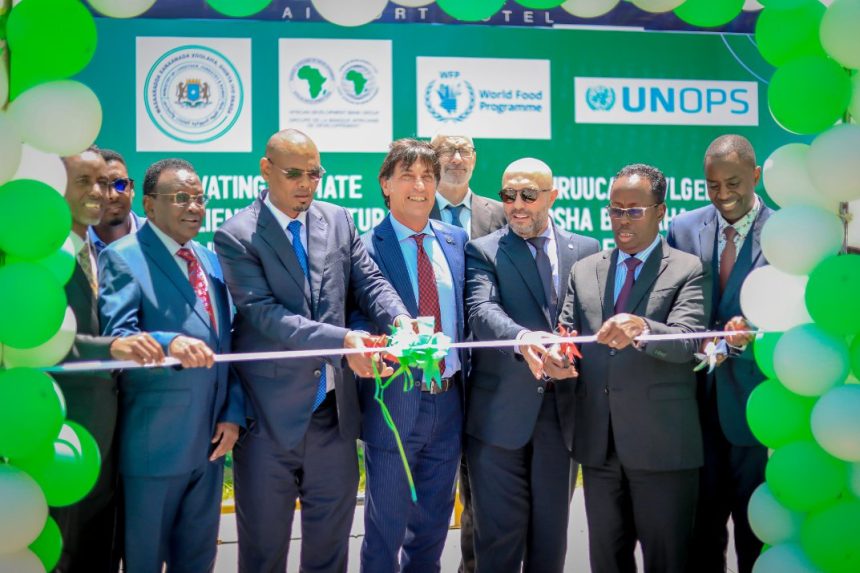
The Federal Government, through the Ministry of Livestock, Forestry and Range, officially unveiled the Activating Climate-Resilient Agricultural Livelihoods in Somalia (ACALS) project in Mogadishu this week.
The initiative is designed to deliver climate-resilient technologies and strengthen livelihoods for vulnerable communities across the country.
Funded by the African Development Bank (AfDB) and implemented jointly by the World Food Programme (WFP) and the United Nations Office for Project Services (UNOPS), the project targets pastoralists, smallholder farmers, women and youth—groups considered most exposed to climate variability.
Officials say the project will initially focus on Hirshabelle and Puntland states, where it aims to directly benefit about 30,000 people through improved agricultural systems, climate-adapted infrastructure and early warning mechanisms.
The initiative comes at a critical time for Somalia, where climate change has intensified drought cycles, undermining traditional livelihoods. Agriculture and livestock form the backbone of the economy, employing a majority of the population and contributing significantly to GDP.
According to project details from the AfDB, the broader ACALS programme is expected to benefit more than 400,000 people, including pastoralists and agro-pastoral households, by improving resilience and diversifying income sources.
The Somali government said the project will prioritize practical interventions such as water harvesting systems, drought-resistant fodder production and rehabilitation of degraded rangelands. These measures are intended to reduce vulnerability to climate shocks while supporting sustainable livestock and crop production.
In addition, the initiative emphasizes anticipatory action—using climate data and early warning systems to help communities prepare for extreme weather events before they occur. This marks a shift from reactive humanitarian responses to longer-term resilience-building strategies.
Development partners view ACALS as part of a broader push to strengthen food security in Somalia, where millions remain at risk due to a combination of climate change, conflict and economic challenges. Recent droughts have been among the worst in decades, highlighting the urgent need for sustainable adaptation measures.
The project also aligns with ongoing efforts by Somali authorities and international partners to scale up climate financing and integrate resilience into national development planning. By targeting women and youth, the programme seeks to expand economic opportunities and promote inclusive growth in rural areas.
Officials have called on local communities and stakeholders to actively participate in the implementation phase, noting that long-term success will depend on community ownership and collaboration.
With implementation set to begin immediately, the ACALS project is expected to play a key role in helping Somalia transition from emergency aid dependence to more sustainable, climate-resilient livelihoods for its pastoral and farming communities.