


BY: FASIL TADESSE Director Stewardship, CropLife Africa Middle East
Across the Africa Middle East region, an often-overlooked challenge exists in the background of food production. After pesticides are used, their empty containers do not simply disappear. In the absence of proper collection and disposal systems, they frequently end up discarded in the environment, posing serious risk to human health and ecosystem.
While countries like Zambia have made important progress including the introduction of Extended Producer Responsibility (EPR) frameworks, gaps in implementation remain.
However, CropLife Zambia together with its partners, has made strong strides in implanting container management initiatives on the ground. Strengthening these systems further, particularly through such partnerships, offers valuable lessons for other countries seeking to build effective and sustainable container management systems.
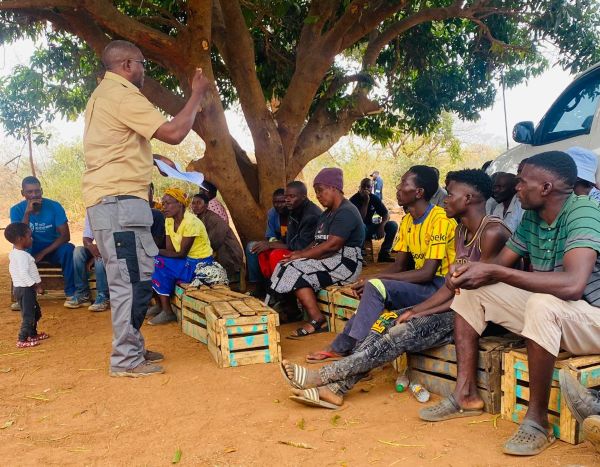
In the farming communities of Chongwe District, just outside Lusaka, a quiet but important shift is taking place. Farmers now gather at a newly established aggregation hub carrying empty pesticide containers that once posed a serious environmental and health risk. Instead of burning them, burying them, or discarding them along field edges, the containers are triple rinsed, punctured, collected, and prepared for recycling.
Among those delivering containers one recent morning was Mr. Makoza Tembo, a small-scale tomato farmer who has cultivated the same land for more than two decades. For years, he said, empty pesticide containers were a constant dilemma. “With no system to properly dispose them, we often burned them or threw them away” he recalled.
“Sometimes people reused them at home. We knew it was not safe, but we didn’t have another option.”
His experience reflects a wider challenge faced by farming communities across Africa. Crop protection products play a vital role in helping farmers safeguard their harvests and secure their livelihoods. Yet, the management of empty pesticide containers, an essential part of pesticide lifecycle stewardship, often receives far less attention.
When empty pesticide containers are improperly handled or disposed of, the consequences can be severe. Even after use, containers often retain chemical residues that can contaminate soil and water sources, posing risks to the environment and human health. Burning these containers releases toxic fumes into the air, while in some cases they
are reused domestically to store water or food, exposing families to health risk.
Additionally, poorly discarded containers may find their way back into informal markets, contributing to the illegal trade and misuse of pesticides. Responsible agriculture therefore does not end when the last drop of pesticide is sprayed. It continues with how
containers are handled, collected, and safely recycled or disposed of.
Closing the Gap: Zambia’s Lessons in Empty Pesticide Container Management for Africa
By turning agricultural plastic waste into farm inputs, container management programmes can help reduce environmental pollution while also supporting climate-smart farming practices. However, expanding these efforts will require stronger collaboration.
Governments, industry, farmers, recyclers, and development partners must work together to scale container management systems across more districts. Investment is needed to establish additional aggregation hubs, strengthen collection logistics, and support recycling industries capable of processing agricultural plastics.
Equally important are policies that promote safe pesticide lifecycle management, from responsible use to proper disposal. Strengthening the implementation of existing legal frameworks such as EPR will be critical to ensuring longterm sustainability.
The work underway in Zambia demonstrates that stewardship is not just about regulation and compliance. It is about building agricultural systems that protect both productivity and the environment.
Farmers are the first stewards of the land. When they are given the tools and knowledge to manage pesticide containers responsibly, they help safeguard the soil, water, and communities that agriculture depends upon.
The empty containers now arriving at aggregation hubs in Chongwe and Mkushi represent more than discarded plastic. They reflect a growing commitment to responsible agriculture and a future where productivity and environmental protection go hand in hand.
Looking ahead, there is a clear opportunity to build on Zambia’s progress and scale impact across the region. With the right legal frameworks, decision-makers can ensure that farmers, agro-dealers, and industry are properly incentivized to adopt safe practices, making effective empty pesticide container management a standard.
With agriculture continuing to grow across Africa, the need for effective pesticide lifecycle management will only become more urgent. By investing in practical systems and learning from emerging models like Zambia’s, countries can turn a persistent environmental challenge into an opportunity for safer, more sustainable agriculture.