

South Africa’s Minister of Agriculture, John Steenhuisen, has called for stronger measures to ensure farming remains both sustainable and profitable, warning that long-term agricultural sustainability cannot be achieved if farmers are unable to maintain viable businesses.
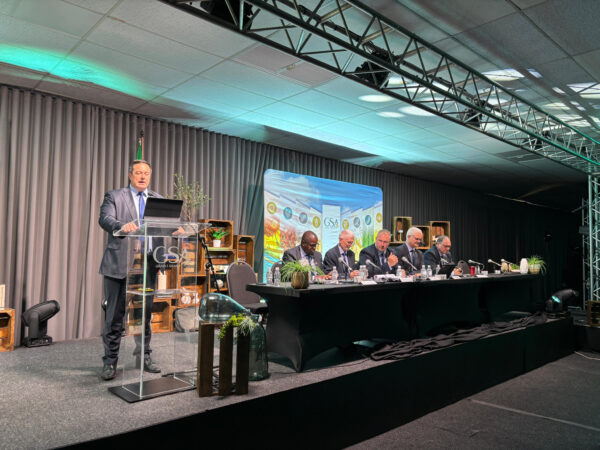
Addressing producers at the 2026 Grain SA Congress last week, Steenhuisen highlighted the crucial role of the country’s grain sector in supporting national food security, economic growth and rural livelihoods. His remarks reflected both optimism about the sector’s resilience and concern over mounting pressures facing grain producers.
The Minister praised local farmers for continuing to produce food despite increasingly difficult conditions. He acknowledged the competitiveness and determination of South Africa’s grain producers, noting that their commitment has helped maintain stable grain production even as challenges intensify.
However, Steenhuisen stressed that producers are operating in an environment where profitability is becoming increasingly difficult to sustain.
“Agriculture cannot be sustainable if farming is no longer profitable,” he told delegates, underlining the need for policies and systems that allow farmers to remain economically viable.
According to the Minister, grain farmers are grappling with a combination of structural and external pressures that threaten long-term sustainability. These include rising input costs, shrinking profit margins, climate uncertainty, infrastructure shortcomings and volatile global markets.
He also pointed to delays and inefficiencies in critical systems designed to support agricultural operations, which further complicate farm management and planning.
“These challenges are not isolated,” Steenhuisen noted. “Together they create an environment where it becomes increasingly difficult for producers to remain sustainable and profitable over time.”
For the grain sector, the issue of profitability sits at the centre of broader sustainability efforts. Stakeholders argue that environmental stewardship, technological innovation and long-term investment are only possible when farming operations remain financially viable.
Grain SA emphasised that addressing these challenges requires coordinated action from government and industry.
The organisation said the path forward must include predictable agricultural policies, efficient government administration and improved logistics infrastructure, particularly road and rail networks that are critical for moving grain to markets.
Industry leaders have long argued that infrastructure bottlenecks and systemic inefficiencies increase the cost of doing business for farmers, eroding already tight margins.
Grain SA stressed that producers should not be expected to shoulder the combined burden of production risk while also absorbing the costs created by structural inefficiencies in the broader agricultural system.
“Producers cannot carry the burden of production risk while also being expected to absorb the cost of systemic inefficiency,” the organisation said in response to the Minister’s remarks.
Stakeholders at the congress also highlighted the need for stronger support for agricultural competitiveness. This includes measures that encourage investment in innovation, improve access to markets and strengthen the overall enabling environment for agribusiness growth.
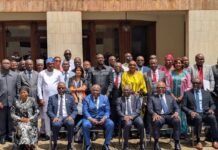
Steenhuisen’s address took place during his visit to NAMPO Park, where he met directly with grain producers and other agricultural stakeholders.
NAMPO Park is widely regarded as one of the country’s most important agricultural venues and hosts major industry gatherings, including the annual NAMPO Harvest Day.
The Minister used the visit to engage directly with farmers and industry representatives, creating space for discussions on the practical realities facing the grain sector.
Producers raised concerns about input costs, logistics constraints and the broader policy environment, while also sharing insights on the innovations and strategies they are using to remain competitive.
Grain SA welcomed the Minister’s willingness to engage with the sector, saying that direct dialogue between policymakers and producers is essential for addressing the structural challenges facing agriculture.
The organisation reiterated its commitment to advocating for conditions that support a profitable, sustainable and globally competitive grain industry.
As pressures on the agricultural sector continue to mount, industry leaders say collaboration between government, producers and agribusiness will be key to ensuring that South Africa’s grain farmers remain able to feed the nation while sustaining their livelihoods.