

The 2025 Santam Insurance Barometer Report highlighted a persistently tough economic environment, rising crime, infrastructure risks and climate change as the key challenges facing South African businesses. For agricultural businesses, however, climate change – and more specifically weather volatility – stands out as the single biggest concern, amplifying risk across production systems already under pressure.
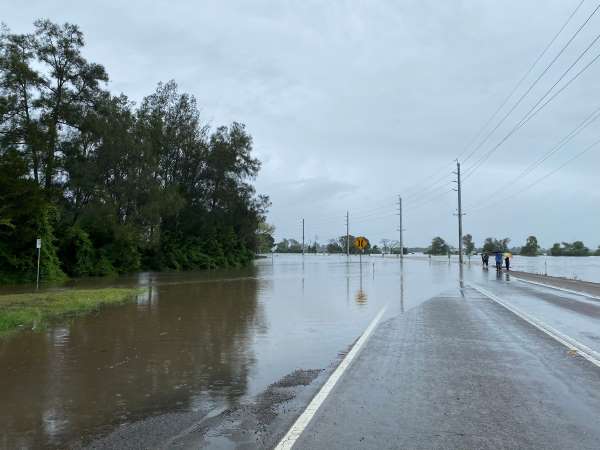
According to Louis Strydom, Marketing Director at Omnia, weather-related risk has become increasingly difficult for producers to anticipate and plan around. “Climate volatility is without question the biggest risk facing producers today,” he says. “We are seeing increasingly unpredictable rainfall patterns and more frequent extreme weather events such as hailstorms, floods and heatwaves. These extremes have a far greater and more immediate impact on farming operations than gradual climatic shifts alone.”
Beyond weather, producers are grappling with a broad range of external risks that threaten both operational and financial sustainability. “Market uncertainties, including export tariffs, rising input costs, local biosecurity chalenges and global geopolitical developments continue to place pressure on farm profitability,” Strydom explains. “At the same time, infrastructure and logistical challenges, from deteriorating rural roads to delays in getting products to market, further erode margins.”
Longer-term structural risks, like declining soil health and water quality issues, are also intensifying. “Subsoil acidity in central production regions is a ticking time bomb for long-term yields. while water quality is becoming a growing concern for both local food safety and export markets,” says Strydom, who also notes that if there’s E. coli or microbial contamination in irrigation water, you simply can’t export that product.
Pest and disease pressure adds another layer of uncertainty. “We’re seeing diseases that are becoming more frequent and harder to manage, like Goss’s wilt on maize, which was only discovered a few years ago, alongside ongoing issues like Foot-and-Mouth Disease,” Strydom says.
In light of this, managing agricultural risk is becoming more about preparation rather than reaction. Omnia’s approach is anchored in its Nutriology® model, which Strydom describes as a science-based system that brings multiple disciplines together to support more resilient farming systems. “Nutriology® incorporates all the aspects that speak to climate and weather risk – from soil and plant nutrition to precision agriculture and data,” he explains.
At a practical level, this includes tailored nutrition programmes using granular, liquid and specialty fertilizers, alongside biostimulants designed to improve crop resilience. “Our bioproducts contribute to what we call a priming effect, where the crop is better prepared for stresses like drought, heat stress or physical damaged due to hail or wind,” says Strydom. “That’s a big part of how we assist producers to manage weather-related risk.”
Data plays a central role in decision-making. “We analyse everything – soil, water, leaf and , data, which our agronomists use to guide crop production practices.,” he says.
Digital tools such as SUPER-5™, OMNIPIVOT™, OMNIZONE™ and OMNIRISK-IQ™ allow producers to quantify and manage risk at field level. “We use historical yield data to identify and quantify risk per crop and per field,” Strydom explains. “You can run scenarios – normal rainfall, below-normal rainfall, high rainfall – and then calculate the probability of achieving a certain yield and whether there’s actually a profit to be made.”
This shift towards proactive planning also extends to decision-making at farm level. “It’s not just about giving a product to fix a problem,” he says. “Before the season, the agronomist and producer look at the system and decide which fields to plant and which crops to plant, given the associated risks involved.”
As uncertainty continues to reshape the agricultural landscape, Strydom believes resilience will depend on better use of science and data. “If you have the data, you can turn it into knowledge and make informed decisions,” he concludes. “That’s really where we see the value – assisting producers understand their risk so they can farm more sustainably and profitably.”