

The Government of Kenya, in partnership with the European Union (EU) and the International Fund for Agricultural Development (IFAD), has launched a €4.3 million (Sh600 million) soil health and agroecology programme aimed at strengthening climate-resilient agriculture and improving livelihoods for 40,000 smallholder farmers across six counties.
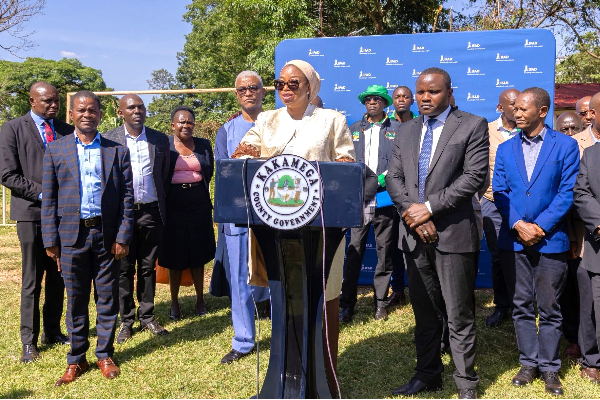
The programme, dubbed the Investing in Livelihood Resilience and Soil Health (ILSA) initiative, was officially launched in Kakamega County and will be implemented over the next three years in Kakamega, Trans Nzoia, Embu, Kilifi, Makueni and Taita Taveta counties.
Speaking during the launch, IFAD Kenya Country Director Mariatu Kamara said the initiative builds on previous EU- and IFAD-supported programmes, rather than introducing a completely new model.
“This programme is not starting from scratch. We are building on what has already worked under KCEP-CRAL and BOOST, and scaling it up to reach more farmers,” Kamara said.
She added that the project would expand the use of digital e-voucher systems, which link farmers directly to private input suppliers, improving access to certified seeds, fertilisers, bio-inputs and advisory services.
“The e-voucher system has proven to be an effective way of crowding in the private sector while ensuring farmers access quality inputs in a transparent and efficient manner,” Kamara noted.
The EU has committed approximately €4.3 million (about Sh645 million) to the programme, reflecting its continued support for Kenya’s agricultural transformation and climate resilience agenda. EU representatives said soil degradation remains a major threat to food security, rural incomes and environmental sustainability.
According to officials, declining soil fertility caused by erosion, nutrient depletion and unsustainable farming practices has significantly reduced productivity among smallholder farmers, particularly in arid and semi-arid areas.
A representative from the State Department for Agriculture said the initiative aligns with national priorities on food security and sustainable land management.
“Healthy soils are the foundation of sustainable agriculture. This programme will help farmers restore soil fertility while increasing productivity and resilience to climate shocks,” the official said.
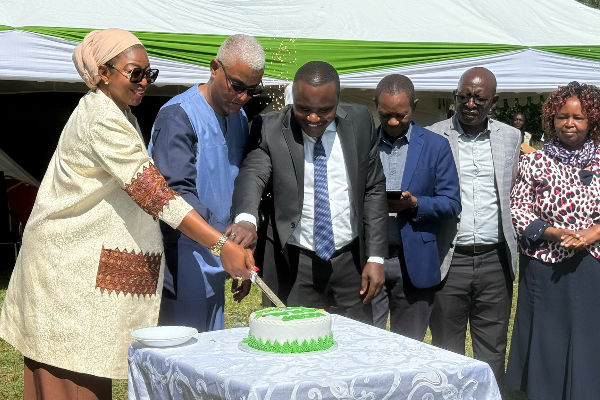
At the county level, leaders welcomed the initiative, saying it would strengthen local agricultural systems. Kakamega County Executive Committee Member for Agriculture Moffat Mandela said the programme would support the county’s push toward sustainable farming.
“This initiative is timely. It will help our farmers adopt soil-friendly and climate-smart practices while improving yields and household incomes,” Mandela said.
The ILSA programme will promote integrated soil fertility management, agroecological practices, agroforestry, soil testing, climate-smart agriculture and improved post-harvest handling. It also seeks to strengthen county extension services and institutional capacity to ensure long-term sustainability beyond the funding period.
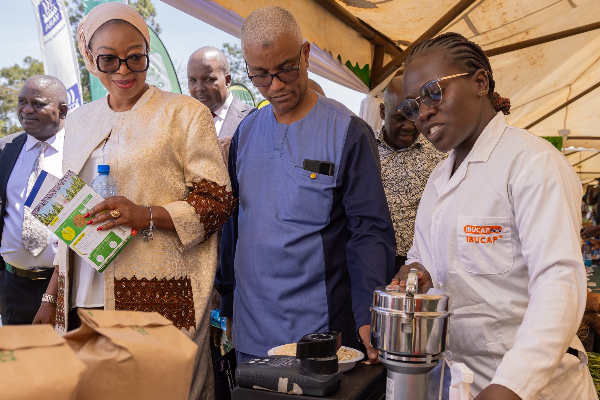
Farmers and stakeholders attending the launch expressed optimism that improved soil health would lower production costs, stabilise yields and enhance resilience to climate change. However, they also stressed the importance of continuous training, innovation and market access to ensure lasting impact.
As Kenya grapples with climate variability and land degradation, the EU- and IFAD-backed soil health initiative is expected to play a key role in safeguarding food systems and supporting rural livelihoods.