

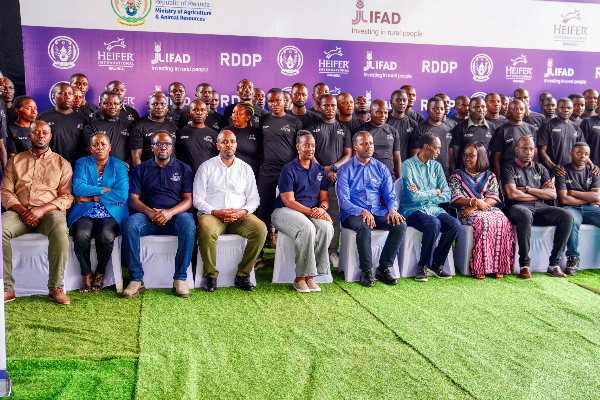
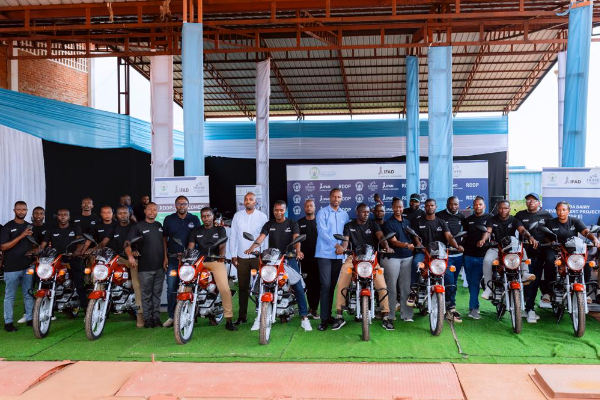
Access to veterinary services for dairy farmers across Rwanda is set to improve following the handover of 135 motorcycles to Community Agro-Vet Entrepreneurs (CAVEs) operating in 27 districts.
The motorcycles were distributed under the Rwanda Dairy Development Project Phase II (RDDP II), with support from the International Fund for Agricultural Development (IFAD) and implementation by Heifer International Rwanda. The initiative aims to strengthen last-mile delivery of animal health services, particularly in remote and hard-to-reach rural areas.
The handover comes shortly after Rwanda launched the Veterinary Sanitary Mandate (VSM) policy alongside the Veterinary Registration and Licensing Module under the Agriculture Management Information System (AMIS), a move designed to professionalise veterinary service delivery and improve regulation within the sector.
Speaking during the event, beneficiaries said the motorcycles would significantly enhance their ability to serve farmers. “The motorcycles will help us reach farmers on time, even in remote areas,” said one of the CAVEs supported by Heifer International Rwanda under RDDP II and funded by IFAD. “We commit to using them well to grow our businesses and serve more farmers.”
Jean Claude Ndorimana, Director General for Animal Resources Development at the Ministry of Agriculture and Animal Resources (MINAGRI), thanked IFAD and Heifer International Rwanda for addressing mobility challenges that have long constrained veterinary professionals. He noted that timely access to animal health services is critical for improving livestock productivity and safeguarding farmers’ livelihoods.
Beyond improving service delivery, the initiative also promotes youth employment and entrepreneurship. All the beneficiaries are licensed veterinary professionals operating as private businesses and earning income through service provision. Notably, they contributed more than 20 per cent of the cost of the motorcycles, underscoring strong ownership and commitment.
With improved mobility, CAVEs are expected to reach more farmers, respond faster to animal health needs, and contribute to healthier livestock and increased milk production. Heifer International Rwanda said the initiative will help drive higher incomes, resilience and climate-smart growth for rural families across the country.