

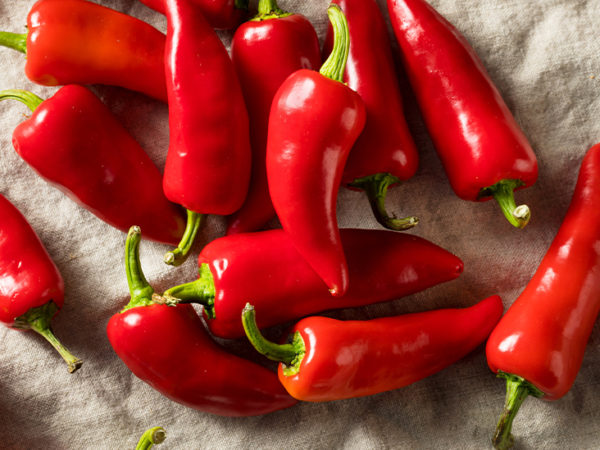
The World Vegetable Center (WorldVeg) pepper breeding program marked an unprecedented year in 2025, releasing a record 37 new chili and sweet pepper varieties, surpassing a 20-year high of 21 varieties set in 2005.
The achievement reflects growing global demand for improved pepper types that are climate-resilient, disease resistant, and tailored to farmers’ and consumers’ needs.
More than three-quarters of the new releases were targeted at African markets, where chili production and consumption have surged.
In addition to the new varieties, WorldVeg distributed 1,590 pepper breeding lines — genetic materials used by seed companies to develop commercial products — to partners in 46 countries worldwide, with 1,241 chili lines and 349 sweet pepper lines shared.
Climate-smart peppers for today’s challenges
WorldVeg’s portfolio combines multiple “stacked” traits, giving peppers tolerance to heat stress, resistance to key pests and diseases, and desirable quality characteristics such as size, color, flavor and aroma.
These multi-trait varieties are designed to help farmers cope with climate change while satisfying evolving market preferences.
Among the notable releases in 2025 was a new line of Krishna chili, developed for markets in India’s Odisha and Andhra Pradesh states where deep purple-to-black fruits are locally favored. The release sets the stage for a collaboration with the Government of Odisha to breed even more robust Krishna types.
The program also introduced several highly spicy habaneros, aromatic thin-skinned chilies that are deeply embedded in African cuisines and are gaining traction in processing markets for sauces and oils. WorldVeg runs one of the few public breeding programs focused on habaneros in Africa.
In Bangladesh, WorldVeg released a versatile hybrid, AVPP1245, that’s heat tolerant, resistant to debilitating diseases like Begomovirus and anthracnose, and suitable as a “catch crop” between rice seasons — providing farmers with an additional source of income.
Global reach and rising production
The record number of releases reflects a broader expansion in pepper seed distribution. Africa’s share of WorldVeg distributions climbed sharply, from one in ten in 2023 to nearly one in four in 2025, with recipient countries including Benin, Nigeria, Senegal, Tanzania, South Africa, Egypt and Ethiopia — where brown-tinted chilies known as berbere are culturally significant.
In Asia, large shipments went to South Asian countries like India and Nepal where seed companies rely on WorldVeg’s pre-breeding materials to refine varieties for local conditions. Partnerships under the Asia and Pacific Seed Association (APSA)-WorldVeg Vegetable Breeding Consortium helped make additional breeding lines available to members, boosting adoption and broader breeding innovation.
Latin America, the Caribbean and the Pacific also saw increased activity, with distributions to Mexico, St Kitts and Nevis, Samoa and Fiji, among others. Heat-tolerant sweet peppers are now under multi-location trials in Samoa, signaling growing demand in the Pacific region.
Looking ahead
Derek Barchenger, senior scientist and leader of WorldVeg’s pepper breeding program — and recipient of the 2025 Borlaug Field Award for his work with peppers and farmers — described 2025 as a “phenomenal year” that underscores peppers’ role as a versatile, resilient and profitable crop for smallholders and commercial growers alike.
With a robust pipeline of new varieties and global partnerships, WorldVeg aims to deepen the impact of climate-smart pepper breeding — helping farmers adapt to environmental pressures and expanding market opportunities in 2026 and beyond.