

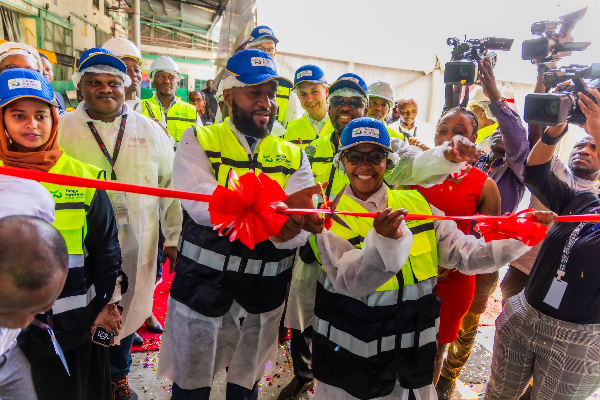
Tunga Nutrition (Kenya) Limited — a joint venture between Kenyan agribusiness groups and Skretting managed by global feed giant Nutreco — has launched a state-of-the-art aqua feed production facility in Nairobi, marking the beginning of a new era for the East African aquaculture sector.
The launch which took place mid last week is poised to boost installed feed production capacity from 24,000 metric tons to 45,000 metric tons annually, positioning the site among the largest dedicated aquafeed operations in East Africa.
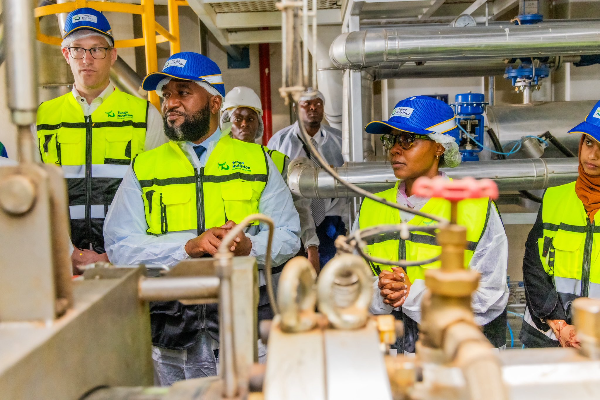
Named “Growing Capacities, Growing Communities,” the modern plant features advanced extrusion technology, enhanced safety and quality-assurance systems and a zero-carbon biomass boiler for steam generation, underscoring a strong focus on sustainability. The facility will manufacture fish feeds marketed under both the Skretting and Fugo brands and serve markets in Kenya, Uganda, Tanzania, Rwanda and neighbouring countries.
At the launch event, Harrison Juma, General Manager of Tunga Nutrition (K) Limited, described the moment as a watershed for regional aquaculture. “Today marks a defining moment for Tunga/Skretting and for aquaculture in East Africa; for us. Our new plant positions us to serve farmers with world-class feed, while improving consistency, affordability and supply reliability,” he said.
The rapid expansion of the Nairobi facility has been dramatic: when operations first began in 2017, the plant produced just 7,000 tonnes of feed annually. The latest scale-up more than doubles capacity in under three years and is expected to improve operational efficiency and strengthen supply reliability for Kenya’s burgeoning aquaculture sector.
Sector challenges and policy dialogues
The launch drew senior government representation, including Ali Hassan Joho, Cabinet Secretary for Mining, Blue Economy and Maritime Affairs, who highlighted the potential of aquaculture to drive local investment, jobs and food security. Joho described the industry as a “sure bet” for investors and called for deeper public-private collaboration to expand fish production, reduce reliance on imports and create more competitive markets for locally produced fish protein.
A key theme at the event was the persistent challenge of feed affordability — a critical determinant of profitability for fish farmers. Juma noted that feed production in Kenya remains heavily reliant on imported raw materials such as soybean meal and yellow maize, adding to supply costs through freight charges, import duties and value-added tax (VAT).
“Fish feed production relies heavily on imported soybean meal and yellow maize, and freight charges together with import duties significantly increase our input costs,” he said, adding that high electricity consumption and the continued VAT burden on fish feed — unlike flour for human consumption — further exacerbate costs.
Industry stakeholders and policymakers discussed proposals such as zero-rating VAT on fish feeds and making permanent duty-free importation of yellow maize to stabilise prices and lower the cost of production for farmers. The ministry signalled a willingness to engage the Cabinet on these proposals, pending clear data demonstrating potential benefits to feed prices and sector growth.
Strategic significance and future outlook
Rob Binnenkamp, Managing Director for Middle East and Africa at Nutreco, framed the investment as part of a longer-term commitment to scaling aquaculture production across the continent.
“We are not just investing in steel. We are investing in people, communities and sustainable growth by 2050, making aquaculture critical to meeting rising protein demand,” he said, underscoring Africa’s demographic growth and the corresponding need for increased nutritious food production.
With annual fish consumption in Kenya still below 5 kg per capita, industry actors say boosting feed production capacity and lowering costs are essential to unlocking future opportunities in aquaculture, improving food security and enhancing farm-level profitability across the region.