

As a global agricultural science company with deep expertise in plant breeding and crop innovation, Corteva Agriscience continues to invest in technologies that strengthen productivity, resilience and sustainability in grain production.
“Central to this commitment is ensuring that advanced research does not remain theoretical but is translated into practical solutions that deliver measurable value to farmers. Sustained progress in the grain sector will depend on how effectively innovation is integrated, scaled and aligned with on farm realities,” says Driaan Bresler, AME Seed Product Development Lead at Corteva Agriscience.
According to Bresler South Africa’s maize yield trajectory reflects what is possible when science and production needs, move in step. Over the past several decades, significant yield gains have been achieved through structured commercial breeding programmes, farmer collaboration and sustained research investment. Early hybrid development laid the groundwork for improved performance and stability. As breeding methodologies advanced, genetic gain accelerated.
The introduction of biotechnology and molecular marker technologies in the 1990s marked a turning point. Genomics enabled breeders to understand plant performance at a deeper genetic level, allowing more precise selection decisions. The integration of global germplasm strengthened local breeding programmes by enabling international advances to be adapted to South African environments. These developments collectively contributed to steady productivity growth.
However, Bresler states that production systems are becoming more complex. Climate variability, evolving pest and disease pressures and rising sustainability expectations are placing new demands on grain producers. He believes that maintaining yield progress will require a new level of precision and coordination within breeding pipelines.
“Modern hybrid breeding operates within an immense universe of possible genetic combinations. Testing every combination in the field is not feasible. We understand our hybrids at a genetic level far better than ever before,” Bresler explains. “The challenge is deciding which combinations to prioritise and advance.”
“Today, genome technologies, environmental modelling and predictive analytics allow breeding teams to simulate performance across diverse and variable conditions. By combining historical field data with genomic prediction models, breeders can identify promising candidates earlier in the process. Field validation remains essential, but decision making is significantly accelerated. Technology speeds up our selection process, but the field remains our ultimate reference point,” says Bresler.
One of the most promising advances lies in precision gene editing. Stacking multiple disease resistance traits through conventional crossing requires substantial time and resources.
Gene editing provides a more targeted solution. “We can reposition native maize genes into a single genetic location,” Bresler explains. “This allows breeders to track multiple resistance traits together, while focusing selection on other targets such as yield potential, agronomic traits and local adaptability. By consolidating traits in this way, breeding efficiency improves and product development timelines can be shortened.”
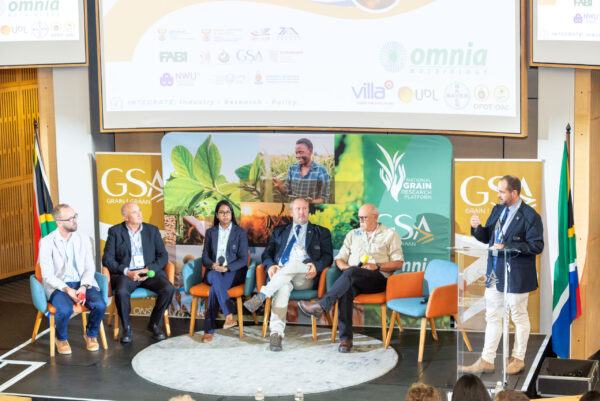
Bresler emphasises that technology alone will not secure the future of grain production. Integration across the value chain is fundamental. Breeding strategies must align with enabling technologies, regulatory environments and market realities. Collaboration between private companies, public institutions and producers ensures that research outputs translate into scalable solutions.
At Corteva Agriscience, integration drives innovation. Through partnerships and global research networks, the company connects advanced science with local farming needs to deliver solutions that enhance profitability, resilience and long-term food security. “The decisive factor will be how effectively the industry works together. With the right integration of science, technology and collaboration, the upward trajectory of productivity can continue, ensuring that research consistently moves from discovery to meaningful results in farmers’ fields,” says Bresler.