

Rwanda provides school meals to almost 4.8 million students – one of the country’s most ambitious investments in education, nutrition, and child wellbeing. However, as school feeding expands nationwide, attention is increasingly turning to determining how can these meals become more nutritious, more diverse, and more connected to Rwanda’s local food systems.
These themes sat at the centre of a recent webinar, From Evidence to Action: School Feeding for Food Systems Transformation in Rwanda. The event also marked the launch of a new Rwanda Community of Policy & Practice (CoPP), a platform designed to strengthen collaboration and shared learning around school feeding and food systems transformation.
According to Sam Ngabire, National Coordinator of the Home-Grown School Feeding Project for the Ministry of Education, school meals are now providing around 35-40% of students’ daily nutritional intake requirements. But, while school feeding coverage has expanded significantly, nutrition challenges remain and around one third of children in Rwanda are still affected by malnutrition.
Rather than simply expanding access to meals, attention is increasingly focused on improving nutritional quality, strengthening local sourcing systems, and connecting school feeding programmes more closely with farmers and communities.
Strengthening school nutrition
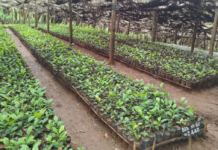
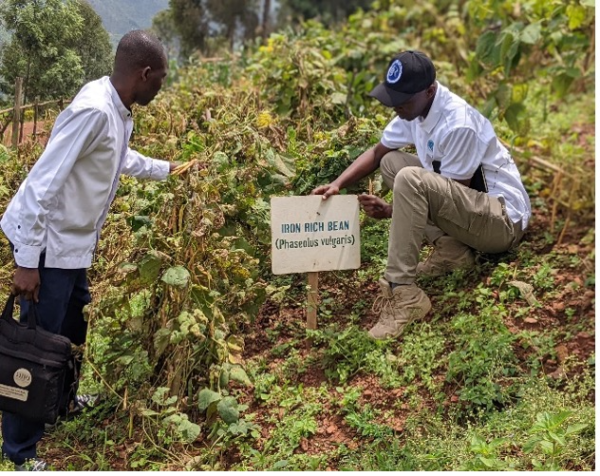
Working across 43 schools, a University of Rwanda-led initiative has been testing crops including iron-rich beans, pro-vitamin A maize, orange-fleshed sweet potato, carrots, and red amaranths. The research explores how more micronutrient-rich foods can be integrated into school feeding systems through school farm trials and local supply chains. “We needed to come up with an approach that’s connecting agriculture, nutrition and market at the same time,” explained Dr Manirere, research lead for the project.
To better understand nutritional gaps and identify opportunities for improvement, the project team has also been analysing school meals directly by collecting and testing food samples from schools.
At GS Jean de la Mennais school in Burera District, Headteacher Brother Pierre has seen how Rwanda’s national school feeding programme is changing daily life for students. Alongside a reported 25% reduction in absenteeism, he has observed improvements in classroom engagement, stronger participation from parents, and growing awareness among teachers and students around nutrition and meal quality. “What was once seen as a simple feeding is now recognized as a driver of education, nutrition and economic development,” he reflected.
Home grown solutions
Across Rwanda, different implementation models are already operating at scale to improve meal diversity while strengthening links between schools, farmers, and communities.
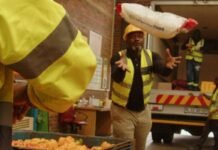
Solid’Africa, a Rwanda-based organisation working on community nutrition and large-scale meal supply, described its “farm to plate” approach, where food is procured directly from over 7,000 local farmers, prepared in two centralised kitchens, and distributed to schools nationwide. Delivering 17 different ingredients, including vegetables, beans, and fortified maize, the model now serves around 30,000 children daily as well as 130,000 hospital patients annually.
Solid’Africa also works through advance purchasing agreements with farmers to create more stable markets. Participating farmers have seen income increases averaging around 61%, according to Founder and President Isabelle Kamariza. Efficient systems and coordination, she added, have been key to making nutritious meals affordable at scale. “The food is not expensive. It is a matter of partnering with local farmers early on in the procurement process to figure out how to lock-in prices at scale.”
Organisations are also working to improve community awareness and engagement around school feeding. Gardens for Health International currently supports school feeding activities across 180 schools in nine districts and has reached more than 195,000 pre-primary and primary students through school gardens linked to feeding programmes. “School gardens contribute about 60 to 80% of the vegetables used in the school meals,” says Esther Mukundane, Executive Director explained.
The gardens also serve as practical learning spaces where students learn about food production, healthy diets, and nutrition. GHI has also trained thousands of teachers, local leaders, and community members in nutrition, health, and agriculture, helping extend nutrition awareness beyond schools and into households and communities.
Scaling what works
Across Rwanda, school feeding programmes are increasingly being used to support not only education and nutrition, but also local agriculture, farmer livelihoods, and wider food systems transformation.
The newly launched Rwanda Community of Policy & Practice (CoPP) aims to help strengthen collaboration and practical learning between many of the initiatives already operating across the country.
For Nicole Umuhoza of the University of Rwanda, continued collaboration will be essential if Rwanda is to build on the progress already achieved: “Let’s join forces and close this gap because we really believe that school feeding can be a channel to food system transformation for Rwanda.”