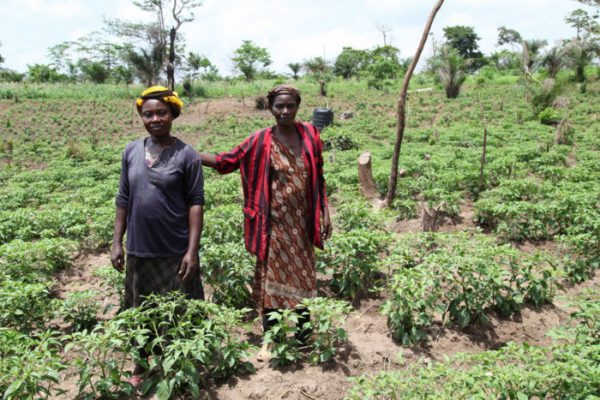



Tackling long-standing distortions in agricultural markets could play a critical role in reducing cross-border migration from rural areas in developing countries, according to new research by economists from the International Food Policy Research Institute (IFPRI), Universidad de San Andrés in Argentina, and the International Monetary Fund (IMF).
International migration has surged over the past two decades, outpacing overall population growth, with a significant share of migrants originating from rural farming communities. Those rural areas also receive a large share of global remittance inflows, estimated at roughly 40 percent worldwide.
While migration takes many forms and is influenced by shocks such as natural disasters, conflict, and economic hardship, the study places a spotlight on the structural role played by agricultural distortions — market inefficiencies created by policy barriers, weak institutions, high transaction costs, and regulatory burdens that limit rural economic opportunities.
Using Guatemala as a case study, the researchers developed a quantitative model that sheds light on how such distortions shape household decisions about whether to stay, seek non-farm work locally, or migrate abroad — often through irregular or undocumented channels.
Distortions drive migration
Guatemala’s agricultural sector employs a large share of rural workers but makes a relatively small contribution to national GDP. Factors such as concentrated land ownership, fragmented markets, and weak governance dampen productivity, leaving many households without viable economic prospects at home.
These challenges are compounded by rural-urban disparities in infrastructure, financial inclusion, and institutional support.
The model constructed by the research team captures these dynamics by allowing household members to choose between farm work, non-agricultural employment, or migration. It shows that higher levels of agricultural distortions both directly and indirectly increase incentives to migrate.
First, distortions reduce the return on agricultural ability. This means that even relatively productive farmers gain little from investing effort in farming, making overseas work increasingly attractive.
As a result, more skilled or productive rural workers are more likely to depart, reducing average productivity and weakening local economies. Second, distortions misallocate labor and land across sectors and regions, reducing incomes in both rural and urban areas and further intensifying migration pressures.
Quantifying potential impacts
In hypothetical scenarios where agricultural distortions are reduced to the level of the most efficient regions within Guatemala, the model predicts significant outcomes.
The share of households choosing to emigrate could fall by 2.3 percentage points, which the authors estimate as roughly equivalent to a 35 percent reduction in the number of Guatemalans living in the United States.
Such a shift would not only reduce migration but also bolster domestic economic performance. Aggregate agricultural productivity could increase by about 30 percent, while median household welfare might rise by roughly 4.5 percent under these improved market conditions.
Importantly, the welfare gains would be felt most strongly by poorer households. According to the study, households in the lower end of the income distribution would see welfare improvements more than twice as large as those at the upper end, with the largest benefits in less developed regions such as the Dry Corridor and Western Highlands.
Policy implications
The authors emphasize that addressing agricultural distortions is not a simple, short-term fix, but rather requires coordinated policy action over multiple time horizons.
Long-term investments — such as improving rural infrastructure, strengthening institutions, and expanding access to credit — are critical to creating vibrant rural economies capable of retaining productive workers.
In the short term, the study suggests that expanding financial inclusion, improving market transparency, and supporting cooperatives and farmer associations could help reduce market frictions and improve resource allocation.
Reviewing existing regulations and eliminating counterproductive interventions can also play a role in improving efficiency.
Broader lessons beyond guatemala
While the research centers on Guatemala, the authors note that its conclusions have broader relevance for other parts of Central America and Mexico, where rural populations face similar structural constraints.
Reducing agricultural distortions in these regions could help strengthen rural livelihoods, increase productivity, and ease the economic pressures that often push households to migrate.
The study highlights the intricate ties between rural economic policy and migration outcomes, from local fields to international borders.
As policymakers seek solutions to complex migration patterns, improving the functioning of agricultural markets may offer a pathway to both economic growth and reduced migration pressures.