


Rainbow Chicken Limited (“Rainbow” or “the Company” or “the Group”) has delivered pleasing results for the year ended 28 June 2026, supported by higher sales volumes, an optimal product mix, firm front-end pricing and lower commodity input costs. The favourable market conditions were complemented by strong agricultural and operational performances together with cost efficiencies.
Rainbow recorded revenue of R17,1 billion for the year, a 7.7% increase when compared to R15,8 billion in the previous year. The Group’s EBITDA increased by a remarkable 101.8% to R2 136,0 million (2025: R1 058,7 million) and the EBITDA margin increased from 6.7% to 12.5%. Both headline earnings and headline earnings per share increased by more than 130% to R1 353,2 million (2025: R584,8 million) and 150.87 cents per share (2025: 65.57 cents) respectively when compared to the previous period.
The Group maintained a strong cash position and a low level of gearing whilst ensuring appropriate liquidity and a resilient financial position.
“Our improved operational and financial performance across the entire value chain reflected the benefits of ongoing disciplined execution of our strategy, albeit within the context of more positive operating conditions,” outlines Marthinus Stander, Rainbow’s Chief Executive Officer.
Favourable operating conditions
Lower maize and soya prices, supported by healthy local crops and ample global supply during the period, provided significant relief in a sector where animal feed remains the largest cost component. At the same time, poultry volumes were boosted by volatility in red meat and pork supply and pricing, following outbreaks of foot-and-mouth disease and swine flu.
Constrained consumer spending remains a key challenge. As the cost of living has continued to escalate in South Africa, reduced disposable income has affected purchasing behaviour. Many households have cut back on animal protein amid financial constraints, even though chicken remains the most affordable protein source. While load-shedding has eased and the national energy outlook has improved, municipal-level failures, water interruptions, rail constraints and local infrastructure weaknesses continue to affect operational reliability. The higher fuel prices in recent months have had a notable impact on costs throughout the supply chain.
Strategy update
Following the completion of a strong turnaround strategy, operational strength has been restored and KPIs improved across breed, feed, agriculture, processing and logistics. “The next phase of the Group’s strategy focuses on growth to match demand, premiumisation, innovation and further value extraction, while maintaining resilience and profitability through the cycles one expects from a commodity business,” adds Stander.
Capital investment requirements have been consolidated into a ten-year plan, addressing areas requiring improvement and upgrades, while also supporting growth and new technology. This represents an investment not only in the Company, but also in South Africa’s poultry industry, enabling it to continue competing favourably with the world’s lowest-cost producers.
“Return on Invested Capital is our key measure applied to evaluate the effective allocation of capital to generate returns,” explains Stander. “The significant increase in the Group’s profitability reflects improved operational performance and disciplined capital management, driving a meaningful enhancement in returns generated from the capital invested in the business.”
Segmental review
Chicken Division
With an increase in revenue of 7.6% and an excellent 138.1% growth in EBITDA for the period, the Chicken Division made a significant contribution to the Group’s overall performance.
Stander commented: “While these results are underpinned by lower commodity feed input costs, they are also due to the implementation of our strategically considered product mix and improved agricultural and operational performance, while firmer market pricing had a positive impact. Rainbow’s ‘Brilliant Basics’ approach has certainly been a key driver in delivering an exceptional result.”
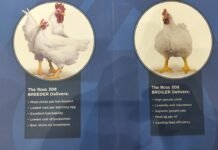
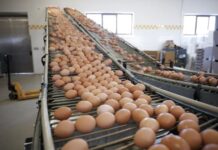
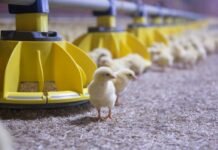
RC Chicks, which supplies day-old chicks and eggs to the market, has continued to build momentum. Although still a fledgling business, it is becoming a promising part of this division. Rainbow’s integrated value chain also supports small-scale and emerging farmers by improving access to affordable, high-quality chicks, feed and technical expertise.
In a complex market, competitive intensity increased in certain product categories, but Rainbow continued to manage the factors within its control while prioritising its mission of nourishing the nation.
Animal Feed Division
Rainbow’s integrated business model requires the Animal Feed Division to support the feed requirements of the Chicken Division and since animal feed is the largest cost in poultry production, the Division plays an important role in Group efficiency and competitiveness.
Although revenue decreased by 3.9%, EBITDA increased by 19.8%, with lower selling prices reflecting the softer raw material commodity prices but improved margins resulting from operational efficiencies, disciplined cost control, and effective margin management
Waste-to-Value (W2V) Division
Although the financial and operational performance remained below expectations, the Division continued to show slow but steady progress. The Worcester plant performed according to plan. In contrast, operational challenges at the Rustenburg plant persist and remain a critical area of focus to improve operational stability and performance.
Poultry industry matters
Rainbow continued to strengthen its biosecurity, surveillance and response measures, successfully preventing any major outbreaks of Avian Influenza (“AI”) during the year. The regulatory changes announced by the former Minister of Agriculture to enable poultry vaccination on a much larger scale are an important development. Rainbow is assessing the implications for implementation, traceability, surveillance and market access while maintaining its stringent biosecurity protocols.
South Africa’s rail system remains a major impediment to lower cost distribution of raw materials. Although national commitments to infrastructure investment and rail recovery are encouraging, the rail network is not yet able to provide a distribution solution for animal feed raw materials that is more cost-effective or reliable than road transport.
Rainbow will continue to cooperate with the reasonable requests of the Competition Commission in its Poultry Market Inquiry. “We support affordability, transformation and fair competition, while recognising that a competitive and efficient poultry industry needs both large and small producers to succeed,” explains Stander. “Scale and integration drive inclusive growth, affordable nutrition and long-term food security”
The African Continental Free Trade Area (“AfCFTA”) is creating greater scope for intra-African trade and offering players an opportunity to build long-term relationships in high-growth markets. “We see export development as an opportunity for expansion, although progress depends on effective disease control, veterinary certification, market access negotiations and reliable logistics,” says Stander.
Trade policy uncertainty, mostly related to the USA, remains a concern, including import controls, anti-dumping duties, disease-related restrictions and the future of trade arrangements. Rainbow supports fair, predictable and consistently applied trade policies to protect local production, jobs and food security. “We believe sustainable solutions are best achieved through partnership, and we continue to call for active engagement with government and a seat at the table for industry to ensure that local production capacity is protected,” adds Stander.
Outlook
Industry research supports the view that chicken is well positioned as one of the most affordable and versatile proteins, with consumption expected to grow beyond 2030. This provides a favourable long-term backdrop for Rainbow, although near-term conditions could be affected by consumer affordability pressures and potential increases in input prices.
While current grain availability provides some support to feed costs, the expected strengthening of the anticipated El Niño, together with exchange-rate volatility, higher fuel and fertiliser costs, and geopolitical uncertainty, could place renewed pressure on the cost base.
In the face of a volatile and cyclical operating environment, our strategy aims to continue building resilience and to extract further value from the strong operating platform built over the past several years, while remaining firmly focused on disciplined cost containment, operational efficiency, innovation in affordable protein, and investment in people and infrastructure to ensure sustainable value for all our stakeholders.
Strong cash position has enabled a special dividend declaration
The Board of Directors has declared a final cash dividend of 45.00 cents (June 2025: 20.00 cents) and a special cash dividend of 75.00 cents per ordinary share for the year ended 28 June 2026. The special dividend is subject to South African Reserve Bank (“SARB”) approval. Dividend decisions are informed by a range of considerations, including the Group’s profitability, financial position, gearing levels, capital needs, strategic growth initiatives and available cash balances.