

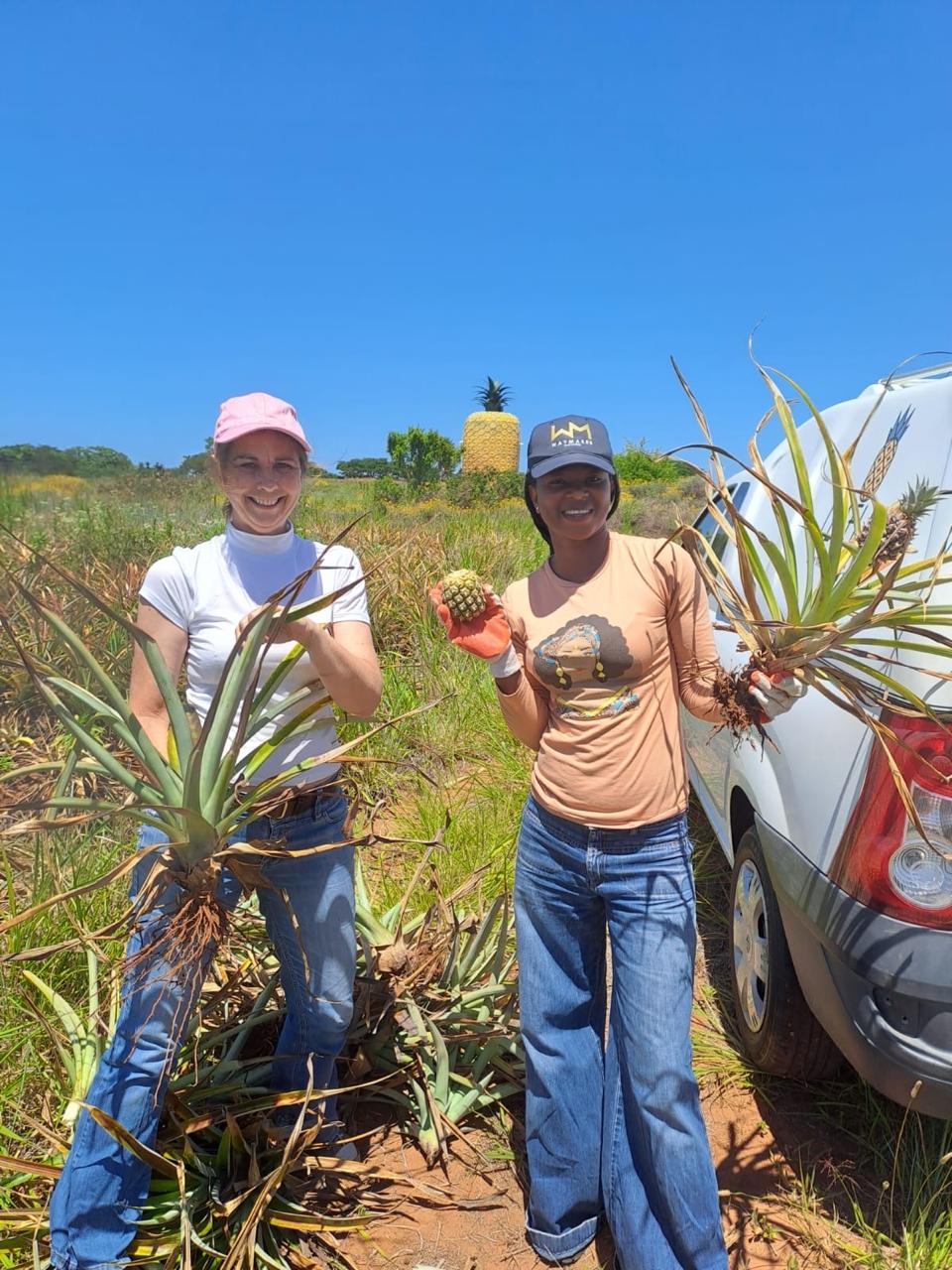
From Bathurst, the home of the Big Pineapple, washable hygiene products producer Leafline is revolutionarising the industry by turning pineapple leaves into reusable, biodegradable, toxin-free sanitary products, including adult and baby nappies, that last up to two years!
Leafline is now planning on taking its products global after recently graduating from the Department of Trade and Industry and Competition’s (dtic) five-month Global Export Passport Programme (GEPP) in February 2026. In the Eastern Cape, the programme is implemented in partnership with the Eastern Cape Development Corporation (ECDC) and with 15 companies from the province participating. As part of the programme, participants were required to present their individual export marketing strategies, with Leafline’s strategy ranked int the top three.
All of Leafline’s products are made with cayenne pineapple leaves which when milled, produce a fibre stronger than cotton. Leafline founder Candy Androliakos says the idea for the reusable sanitary products came to life while working with local women at a care centre.
“One of the older ladies asked me to make her a more affordable option for adult nappies. Despite having never sewn, I decided to try. That random request turned into the founding of Leafline in 2018.
“Our quest led us to discover the remarkable potential of pineapple leaf fibres, a byproduct of pineapple harvesting. This sustainable material is transformed into a highly absorbent, soft, breathable, and durable fabric, perfect for our high-quality, washable, and reusable sanitary and incontinence wear. We’re proud to be accredited with the Proudly South African mark, reinforcing our commitment to local production, job creation, and contributing to the South African economy,” says Androliakos.
Leafline employs four permanent staff, and three part-time workers who are elderly and living with disabilities.
Also exploring the possibilities of the export market is Whittlesea’s vegetable farming operation InteliMinds, whose export marketing strategy secured first place in the Eastern Cape leg of the Global Export Passport Programme (GEPP).
Whittlesea vegetable farming operation InteliMinds is preparing to take locally grown organic vegetables to international markets after its export marketing strategy secured first place at the Eastern Cape leg of the Global Export Passport Programme (GEPP).
Founded in 2015 by Thandokazi Khoza and operating in Dyamala Village in Whittlesea, InteliMinds already supplies retailers such as Massmart group outlets, Spar, Pick n Pay and Boxer stores. The business operates on six hectares of irrigated land with access to a total of 10 hectares. It produces a range of vegetables including potatoes, spinach, butternut, green, chilies, and cabbage while also processing fruit and vegetable products such as jams sauces and precut vegetables.
“Through our participation in the Global Export Passport Program, InteliMinds received training and mentorship aimed at strengthening our export readiness, and developed a structured export marketing strategy, that won first prize,” says Khoza.
Also securing a top three spot for its export marketing strategy, is Komani’s vegetable producer Aruzabiz.
Established in 2014 by Zoleka Dikana, Aruzabiz produces a range of vegetables, including tomatoes, green mielies, bell peppers, potatoes, cabbage, and spinach, with cabbage and spinach among its top-selling products. The company supplies major retailers including SPAR stores, Food Lover’s Market, the Buffalo City Fresh Produce Market.
Dikana says participation in the programme gave them a clear understanding of the standards required for international trade.
“We are now preparing to scale our operations through greenhouse production and frozen vegetable processing to compete globally. Operations span two leased farms, a 21-hectare site in Maya village near Cofimvaba, and an eight-hectare farm in Amberdale near Komani.
“We currently employ 16 permanent staff and eight temporary workers, with seasonal headcount reaching up to 30 during peak production periods,” says Dikana.
“The GEPP, equips small, medium, and micro enterprises with the tools and expertise needed to access global markets. Since its launch in 2018, the programme has supported more than 50 Eastern Cape businesses. This latest cohort unveiled ambitious export marketing strategies, including target markets, entry plans, and growth objectives, all designed to boost their global competitiveness.
“The programme doesn’t just teach exporting, it turns plans into action. For example, former GEPP participant, Proglove, from eQonce (formerly King William’s Town), has already begun selling to Namibia, while Gqeberha’s Analit Africa exports Sunpheka cooking oil and cosmetics to both Mozambique and Namibia,” says ECDC Trade Promotion Specialist Linda Lubengu.