


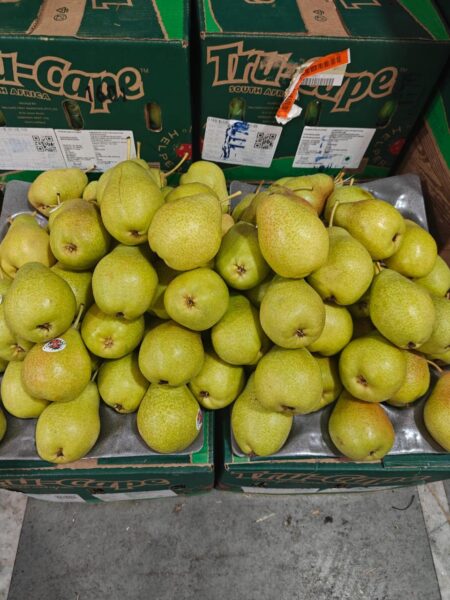
India remains an important growth market for South African apples and pears, but industry leaders warn that South Africa risks losing its competitive advantage unless progress is made towards a broader, more preferential trade agreement with India.
This concern was highlighted during a recent visit by South African agricultural stakeholders to India, including engagements with leading fruit importers and distributors in Mumbai. Among them was NGK Trading, a long-standing importer of South African fruit and a major customer of Tru-Cape apples and pears.
NGK Trading imports approximately 300 containers of South African fruit annually, including around 220 containers of apples and pears. According to owner Gagan Khosla, South African apples have built a strong reputation among Indian consumers.
“South African apples have established themselves well in India because of their quality, consistency and value for money,” said Khosla. “Royal Gala remains extremely popular, while Flash Gala continues to grow year after year as awareness of the variety increases.”
India has become an increasingly important market for South African apple and pear exporters, particularly for high-coloured Gala varieties. Tru-Cape exported more than 650,000 MK6-equivalent cartons of apples and pears to India during 2025, with strong growth potential for premium varieties such as Flash Gala.
Preferential trade access becoming urgent
Despite South Africa’s dominant position in India’s imported apple category, exporters currently face a 50% import tariff. That position is increasingly vulnerable as competing suppliers secure improved market access through preferential trade agreements.
Khosla confirmed that tariffs on apples imported from Europe will be reduced to 20%, while New Zealand will benefit from tariffs of 25% from January 2027. Chile is also in discussions with India to lower its import tariff on apples.
“India represents one of the most exciting growth opportunities for the South African apple and pear industry, but we are increasingly concerned about our future competitiveness in this market,” said Roelf Pienaar, managing director of Tru-Cape Fruit Marketing.
“If our competitors gain significantly better tariff access while South Africa remains subject to a 50% duty, it will become progressively more difficult to compete on price, regardless of product quality.”
Riaan Ferreira, director of GF Marketing, Tru-Cape’s marketing partner in India and several other key export markets, agreed that the changing tariff landscape presents a significant challenge for South African exporters.
“India has tremendous potential for South African fruit, but South Africa needs a broader and more preferential trade agreement if we want to maintain and grow our position in the market,” said Ferreira.
“Once lower tariffs come into effect for competing suppliers, South Africa’s competitive position will inevitably come under pressure. Quality alone cannot indefinitely offset a tariff disadvantage of 25 to 30 percentage points.”
With its rapidly growing middle class, rising demand for premium imported fruit and strong consumer acceptance of Gala apples, India remains s strategically important markets for the future growth of South African apple exports.
“The opportunity is there,” said Pienaar. “The priority now is ensuring South African exporters can compete on equal terms with their international competitors through improved trade access and preferential tariff arrangements.”
For more information, please contact Lucille Botha at lucilleb@tru-cape.co.za or visit www.tru-cape.com. Follow Tru-Cape on X (@TruCapeFruit), Facebook (@Tru-Cape Fruit Marketing), TikTok (@trucape), and Instagram (@trucapefruit).