Global fisheries and aquaculture production reached a record 235 million tonnes in 2024, underscoring the sector’s growing contribution to global food security and livelihoods, although mounting environmental and climate-related pressures continue to threaten its long-term sustainability, according to the latest State of World Fisheries and Aquaculture (SOFIA) 2026 report by the Food and Agriculture Organization of the United Nations (FAO).
The report, launched last month during the 11th Our Ocean Conference in Mombasa, revealed that total production included 195 million tonnes of aquatic animals, highlighting the expanding role of fisheries and aquaculture in feeding the world’s population.
Aquatic animal products are also becoming increasingly important in global trade. The report showed that trade in aquatic animal products reached a record value of US$184 billion, now rivalling terrestrial meat trade in value, with more than one-third of global production being traded internationally.
According to the report, 89 percent of all aquatic animal production is destined for human consumption, supplying at least one-fifth of the animal protein intake of 3.1 billion people worldwide. The sector also supports more than 600 million livelihoods globally.
However, despite rising production and availability, the benefits are not evenly distributed. Per capita consumption of aquatic animal foods in Africa remains significantly below the global average, standing at only 9.1 kilograms per person compared with 26.3 kilograms in Asia.
FAO Director-General QU Dongyu warned that safeguarding aquatic ecosystems is essential to sustaining the sector’s future.
“The report illustrates that, more than ever before, a healthy planet requires a healthy ocean and healthy inland waters,” QU Dongyu wrote in the report’s foreword. “We need to ensure that all necessary efforts are made to reverse the decline in sustainability and secure the long-term potential of the sector, for generations to come.”
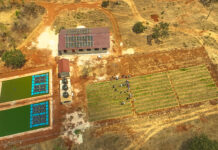
The report highlighted the increasingly important role of aquaculture in meeting global demand. In 2024, aquaculture production of aquatic animals surpassed 100 million tonnes for the first time, reaching 103 million tonnes and generating a farm-gate value of US$371 billion.
Including algae production, total aquaculture output climbed to 141 million tonnes, valued at US$391 billion. Aquaculture now accounts for 53 percent of total aquatic animal production and more than 59 percent of aquatic animal food output globally.
Meanwhile, capture fisheries have largely stabilized, reflecting ecological limits and the effectiveness of management measures in some regions. Production from capture fisheries stood at approximately 92 million tonnes in 2024, remaining within the 86–94 million tonne range recorded since the late 1980s. Marine fisheries contributed around 80 million tonnes of this total.
The report noted several positive developments in fisheries production. Tuna catches reached a record 9.3 million tonnes in 2024, while anchoveta catches rebounded strongly, rising by 109 percent to more than 5 million tonnes from 2.4 million tonnes in 2023. Inland fisheries also achieved a record production level of 12.3 million tonnes.
Despite these gains, the sector faces significant challenges. Climate change, environmental degradation, economic disruptions and geopolitical tensions are increasingly affecting fisheries and aquaculture performance and sustainability.
FAO warned that under high greenhouse gas emissions scenarios, exploitable fish biomass could decline by more than 10 percent by 2050 in several regions, threatening food supplies and livelihoods that depend on fisheries.
The report also found that 72.6 percent of all landings in 2023 originated from biologically sustainable stocks, demonstrating progress in fisheries management but also indicating that further action is needed to reverse declines in stock sustainability.
Looking ahead, FAO projects continued growth in production, consumption and trade, with total aquatic animal production expected to reach 214 million tonnes by 2034.
Through its Blue Transformation Roadmap 2022–2030, FAO is working with governments and partners to improve sustainability, productivity and inclusiveness in the sector.
Initiatives include promoting climate-smart aquaculture systems, strengthening fisheries governance, improving monitoring and surveillance, combating illegal, unreported and unregulated fishing, and supporting small-scale fisheries.
According to the report, while global fisheries and aquaculture continue to break production and trade records, ensuring that growth remains sustainable and equitable will be critical to securing the future of the world’s oceans, inland waters and the millions of people who depend on them.