

South African farmers are navigating one of the most complex operating environments, rising input costs, tightening export requirements, and ongoing pressure to produce more with less. At the heart of this challenge is energy. Not just as a cost, but as a determinant of productivity, timing and ultimately profitability.
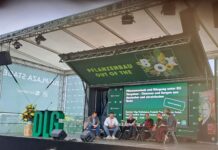
Speaking during this year’s Grain SA’s NAMPO Harvest Day, Innocent Pereira, Vice President of Commercial Sales and Marketing at Sasol, said the company’s goal is to work with farmers and enable their drive to remain productive while adapting to a rapidly changing agricultural environment.
“We recognise that energy sits at the centre of the farmers’ ability to operate competitively, and that’s where we believe we can make a meaningful contribution” Pereira said adding that sustainability has become a central pillar of the firm’s strategy in agriculture.
This positioning reflects Sasol’s broader ambition to act as a trusted production partner to agriculture, enabling farmers to improve performance through reliable energy, strong equipment protection, reduced downtime and more efficient production systems. In doing so, Sasol supports farmers in containing input costs they can influence, particularly energy, equipment performance and operational efficiency, while contributing to South Africa’s broader food security.
Pereira noted that uninterrupted operations are essential in agriculture.
“Farming is unforgiving when it comes to downtime. If your equipment stands still at the wrong time, the cost is immediate. What we focus on is how we play a part to reduce that risk, whether through supply reliability, product performance, or simply being predictable as a partner.” However, Pereira acknowledged that trust is built through consistency, not claims.
Sasol’s local production capability further strengthens supply security, enabling the company to respond quickly during disruptions and support customers when shortages occur.
“It’s one thing to say you’re reliable. It’s another for a farmer to experience that in difficult conditions. That’s the standard we hold ourselves to, as seen recently during the middle east crisis induced shortages to which we were able to assist in order to maintain predictable supply to many of our customers.”
Partnering with farmers for shared value
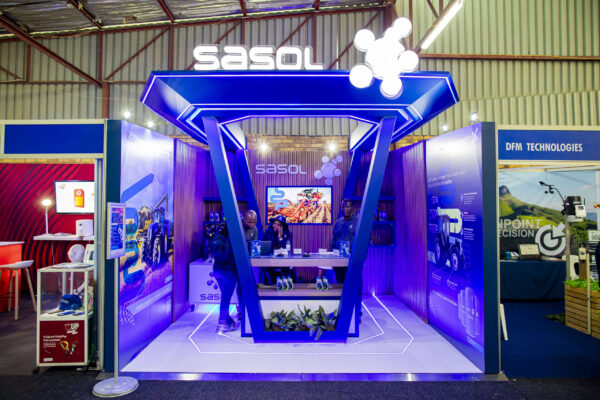
Sasol showcased a range of initiatives at NAMPO, including educational and family-focused activities designed to engage farmers and their children. Demonstrations focused on engine care, lubricant performance and operational efficiency, while interactive tractor games and harvesting competitions were used to attract younger audiences and create a family-oriented experience.
Beyond engagement, Pereira said Sasol’s presence at the exhibition was largely about building stronger partnerships with farmers and understanding their operational challenges.
“We are under no illusion that we are not the single source of the solution. It has to be co-created,” he said. “The real advantage comes from working with the farmer to know their pain points, what exactly they are solving for, and then looking on our side to provide solutions that drive real value.” This partnership-driven approach reflects Sasol’s long-standing commitment to agriculture, built over more than 75 years of supporting the sector.
Supply chain security
According to Pereira, supply security remains one of the biggest concerns for the agricultural sector, especially during periods of geopolitical uncertainty and supply chain disruption. He noted that farming operations cannot afford interruptions because delays in fuel, lubricants or equipment maintenance can lead to major losses.
“Farming can’t stop,” he said. “The moment you don’t have your energy sources and your equipment remains idle at a particular time, you might suffer losses because you have stopped working. That continuous cycle is an important one.”
He said Sasol’s local production capabilities have enabled the company to react quickly during supply crises and support customers when shortages occur.
“The crisis has highlighted the importance of local production. We’ve been able to assist customers when they needed us most,” he added.
Plant-based oils
One of Sasol’s major announcements at the exhibition was the introduction of a new certified sustainable diesel product produced from plant-based oils. Pereira explained that the oils are sourced from non-food plants grown on non-agricultural land, helping avoid competition with food production while supporting lower carbon emissions.
“What is different about this, is that it comes from sustainable feedstock,” he said. “We produce this from plant-based oils that we extract from plants planted on non-agricultural land.”
The company said the product has undergone independent testing and certification to verify that it meets global sustainability standards and uses genuinely sustainable feedstock.
He believes the innovation could create significant opportunities for South African farmers targeting premium export markets, particularly in Europe, where buyers increasingly demand traceable and low-carbon production systems.
“European markets are beginning to ask questions about the carbon footprint of your production chain,” he said. “Now, for the first time, the farmer can have an input material that goes into their production, but they can also claim sustainability points against it.”
Although the product is more expensive than conventional alternatives, Pereira said it gives farmers access to premium markets that reward sustainable production practices.
“This is an emerging trend, and we want to help farmers capture that opportunity,” he added.
Sasol’s recent renewable fuel certification further strengthens this position, confirming its ability to produce certified renewable diesel through independently audited pathways. This enhances confidence in Sasol’s ability to support customers transitioning to lower-carbon, future-ready operations.
Educating farmers
Pereira said education remains a crucial part of the process because many farmers are only beginning to understand the importance of traceable carbon footprints and sustainability-linked supply chains.
For Sasol, the broader objective is not only to supply products, but to support the resilience and competitiveness of South African agriculture.
“We are not an agriculture company,” Pereira said. “But we can play a role in making sure the farmer is better enabled to do what they do best in a cost-effective, sustainable and reliable way.”
Supporting resilience, food security and long-term growth
Sasol’s role in agriculture extends beyond energy provision. The company sees itself as contributing to the broader conditions required for food security, economic resilience and inclusive growth for South Africa. Their initiatives include supporting over 300 emerging farmers through the Iphephe Programme, focused on skills development, market access and long-term sustainability, strengthening SMEs and local suppliers through Enterprise and Supplier Development (ESD) and investing in education, skills and sustainable livelihoods in farming communities. These initiatives reflect Sasol’s commitment to enabling farmers, not just powering farms.
A long-term partner to agriculture
For Sasol, the objective remains clear: to support the resilience and competitiveness of South African agriculture through practical partnership and shared progress.
Powering performance. Enabling resilience. Growing South Africa’s future.
The future relationship between energy providers and agriculture will be defined less by supply, and more by relevance.
Pereira concluded by saying “If we’re not helping farmers navigate the realities they are facing, cost pressure, sustainability requirements, operational risk, then we’re not adding value. The goal is to stay close enough to the farmer to remain useful.”