

According to Growth Market Reports, the global digital agriculture market size stood at USD 17.8 billion in 2024. The market is exhibiting robust growth, registering a CAGR of 13.4% from 2025 to 2033. By the end of 2033, the digital agriculture market is forecasted to reach a value of approximately USD 54.2 billion. This substantial growth is driven by increasing adoption of advanced technologies, such as IoT, AI, machine learning, and data analytics, which are fundamentally transforming agricultural practices worldwide.
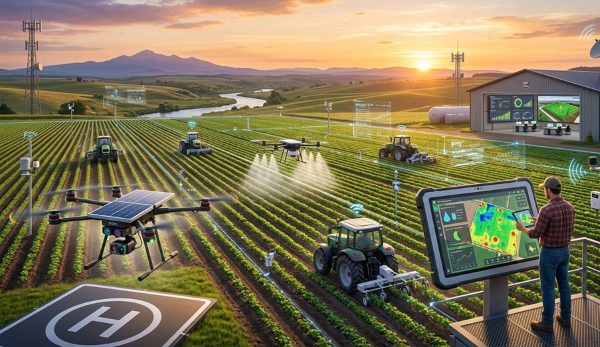
The digital agriculture market represents the integration of advanced digital technologies into farming and agricultural operations to improve productivity, efficiency, and sustainability. Digital agriculture often referred to as smart farming or Agriculture 4.0 utilizes technologies such as artificial intelligence (AI), Internet of Things (IoT), big data analytics, cloud computing, drones, and robotics to optimize farming practices. These technologies enable farmers to monitor crops, soil conditions, weather patterns, and livestock in real time, allowing for data-driven decisions that enhance agricultural productivity and resource management.
Market Drivers
Rising Global Food Demand
One of the primary drivers of the digital agriculture market is the increasing demand for food. With the global population expected to reach nearly 9 billion by 2050, agricultural production must increase significantly to meet future food requirements. Digital technologies help farmers maximize crop yields and optimize resource utilization to meet this growing demand.
Need for Resource Optimization
Agriculture relies heavily on natural resources such as water, soil, and energy. However, these resources are becoming increasingly scarce due to climate change and environmental degradation. Digital agriculture technologies enable precise resource management, reducing the use of water, fertilizers, and pesticides.
Studies show that data-driven farming approaches can increase yields by 8–15% while reducing water usage by up to 30% and fertilizer application by up to 25%.
Labor Shortages in Agriculture
Labor shortages have become a major challenge in the agricultural sector, particularly in developed economies. Automation and robotics are helping address this issue by reducing dependence on manual labor. Autonomous tractors, robotic harvesters, and automated irrigation systems are increasingly being deployed on farms to improve efficiency and reduce operational costs.
Government Support and Policies
Governments around the world are actively promoting digital agriculture through funding, policy initiatives, and research programs. Many countries are investing in agricultural technology to improve food security, enhance productivity, and support sustainable farming practices.
Challenges in the Digital Agriculture Market
Despite its significant potential, the digital agriculture market faces several challenges.
One major challenge is the high cost of technology adoption. Many small and medium-scale farmers lack the financial resources required to invest in advanced digital farming equipment and software.
Another challenge is limited internet connectivity in rural areas. Many digital agriculture solutions rely on real-time data transmission and cloud-based platforms, which require reliable internet access.
In addition, farmers may face difficulties in adopting new technologies due to a lack of technical knowledge or training. Addressing these challenges requires collaboration between governments, technology providers, and agricultural organizations.
Future Outlook of the Digital Agriculture Market
The future of the digital agriculture market appears highly promising as technological innovation continues to reshape the agricultural sector. Advances in AI, robotics, satellite imaging, and data analytics will further enhance the capabilities of digital farming systems.
The increasing integration of automation, predictive analytics, and smart sensors will enable farmers to optimize every aspect of agricultural production. These technologies will not only improve crop yields but also support sustainable farming practices and environmental conservation.
Moreover, the development of digital agricultural ecosystems where farmers, agribusinesses, technology providers, and governments collaborate through interconnected platforms will create new opportunities for innovation and growth.
Competitive Landscape
Prominent companies operating in the market are:
- Deere & Company
- Trimble Inc.
- AGCO Corporation
- Bayer CropScience AG
- Corteva Agriscience
- Syngenta AG
- Topcon Positioning Systems
- Raven Industries
- Climate LLC (a subsidiary of Bayer)
- CNH Industrial N.V.
- Kubota Corporation
- Yara International ASA
- Taranis
- Granular, Inc.
- Ag Leader Technology
Source: https://growthmarketreports.com/report/digital-agriculture-market-global-industry-analysis