

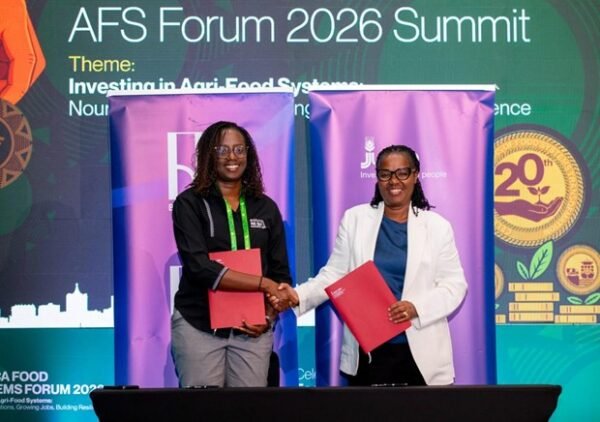
The International Fund for Agricultural Development, Bank of Kigali and Aceli Africa announced today that they are partnering to strengthen agricultural financing in Rwanda through a new financing agreement that will improve access to finance for farmers’ organizations and smallholder farmers, supporting increased productivity, resilience, and inclusive growth across the country’s agricultural sector.
This investment will support the Farmers’ Organizations Financing Programme – Rwanda (FOFP-R), a blended finance initiative that is mobilizing a total of US$21 million, combining the US$12 million in IFAD financing with an additional US$9 million in co-financing from Bank of Kigali.
The initiative is expected to strengthen approximately 215 farmers organizations, provide financing to around 172 of them, and benefit more than 35,000 smallholder farmers, particularly women and youth, across key agricultural value chains such as maize, rice, cassava, dairy, and horticulture.
“The significance of Farmers’ Organizations Financing Programme – Rwanda represents a broader shift towards innovative financing solutions. Innovation goes beyond technology; it is also about finance, institutions, partnerships and entrepreneurship. FOFP-R is expected to reduce risk, attract additional investment and expand opportunities for rural entrepreneurs, farmers’ organizations and small-scale producers,” said IFAD Vice-President, Gérardine Mukeshimana.
Agriculture employs more than 70 per cent of Rwanda’s population and contributes approximately 25 per cent of the country’s GDP. Despite its central role in livelihoods and economic growth, access to finance remains a major constraint for the sector, with agricultural lending accounting for only a small share of total credit in the country.
Farmers’ organizations play an important role in aggregating production, facilitating access to inputs and markets, and linking farmers to financial services. Rwanda’s farmers’ organizations have grown steadily in number in recent years, yet around 70 per cent of their financing needs remain unmet, constrained by weak governance, limited collateral, inadequate financial records and low financial literacy, all of which increase lenders’ perception of risk.
“Farmers’ organizations are the backbone of Rwanda’s agricultural economy, yet they have long been underserved by traditional financing. Through this partnership with IFAD, Bank of Kigali is bringing innovative, inclusive financing solutions to the people who need them most — combining capital with the technical support these organizations need to strengthen their governance and financial systems. This is what innovation in banking should look like: not just new products, but new ways of reaching the farmers who power Rwanda’s economy,” said Dr. Diane Karusisi, Chief Executive Officer of Bank of Kigali.
IFAD’s US$12 million financing package comprises a US$9 million loan, a US$1.8 million grant for risk sharing and a US$1.2 million technical assistance grant that will strengthen the governance, financial management and digital capacity of farmers’ organizations, while equipping Bank of Kigali to build the tools and expertise needed to serve these organizations sustainably.
The initiative benefitted from a US$6 million allocation to IFAD from the Business Investment Financing Track (BIFT) – a financing tool of the Global Agriculture and Food Security Program (GAFSP) that offers multilateral development finance institutions access to flexible grant and concessional finance to implement financial innovations that address the unique investment needs of smallholder farmers and early stage micro-, small- and medium-sized agribusinesses in low-income countries.
“This innovative finance solution offered by the BIFT will support more inclusive capital markets in Rwanda to help the most vulnerable working in the agri-food sector – including smallholder farmers, women, and youth – make transformative investments for their future,” said GAFSP Head Shobha Shetty.