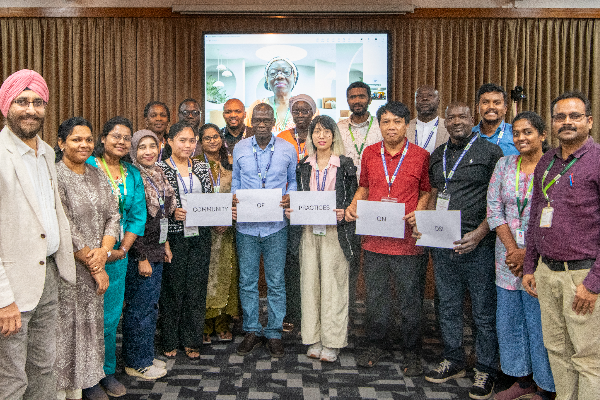
Up to 18 scientists from 12 countries across Africa and Asia have been provided with hands-on training in cutting-edge genomics tools that aim to modernize and future-proof genebanks, bolstering global efforts for food and nutrition security.
The five-day workshop on Digital Sequence Information (DSI) and genomic data integration was held from 8–12 December 2025 at the International Crops Research Institute for the Semi-Arid Tropics (ICRISAT) Headquarters in Hyderabad, India.
The intensive program was part of the CGIAR Genebanks Accelerator initiative and was jointly organized by the International Crops Research Institute for the Semi-Arid Tropics (ICRISAT), AfricaRice, and the Alliance of Bioversity International and CIAT to tackle a growing gap in the capacity of national research systems to use the rapid expansion of genomic data in plant breeding and genetic resource management.
As genomics increasingly shapes modern agriculture, Digital Sequence Information (DSI) — the digital data derived from a plant’s DNA — has emerged as a powerful tool for improving access to and use of crop genetic resources in breeding programs.
However, many research institutions still lack the technical expertise and infrastructure to leverage these data responsibly and effectively.
“As a signatory to the International Treaty on Plant Genetic Resources for Food and Agriculture (ITPGRFA), ICRISAT continues to promote the effective use of plant genetic resources through training programs, strengthening human capacity to translate scientific advances into tangible gains for food and nutrition security,” said Dr Stanford Blade, Deputy Director General – Research & Innovation at ICRISAT, highlighting the importance of the initiative in bridging technical and institutional gaps.
Participants gained practical experience in handling, analysing, and integrating DSI into genebank databases — competencies that are becoming essential in breeding programs that aim to develop climate-resilient and high-yielding crop varieties.
The training covered the full genomics workflow, from DNA extraction to high-throughput genotyping and single nucleotide polymorphism (SNP) data analysis, using ICRISAT’s advanced laboratory facilities.
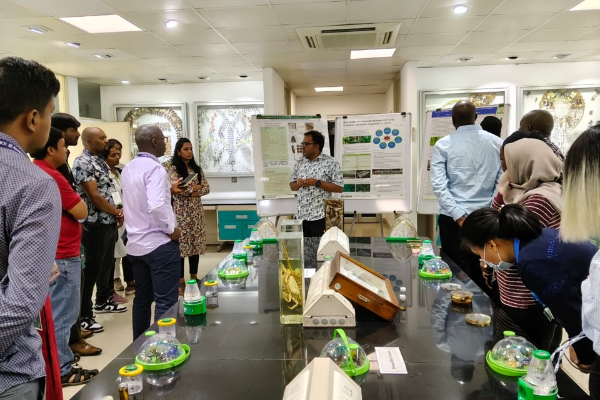
In addition to laboratory work, scientists toured key research infrastructures, including the Genebank, Speed Breeding Facility, Plant Quarantine Laboratory, Climate Change Biology Facility, and Aflatoxin Laboratory.
These visits offered participants a holistic view of how advanced genomic tools link germplasm conservation with practical crop improvement — from seed preservation to farmer-ready varieties.
The workshop also had a strong focus on collaboration and sustained engagement beyond the training itself. Building on guidance from experts, participants agreed to develop a shared training agenda and establish regular interactions through regional Communities of Practice (CoP) in both Asia and Africa to promote peer learning and long-term cooperation.
Speaking virtually during the program, Dr Marie-Noelle Ndjiondjop, Head of the Monty Jones Rice Biodiversity Center for Africa and Interim Lead of AoW5 under the CGIAR Genebank Accelerator, stressed the importance of strengthening coordination among genebanks.
“By building shared capacity across regions and institutions, the training enhances the application of genomic data and supports more informed decisions in breeding programs,” she said, underscoring the value of interconnected research systems.
The program also highlighted the importance of institutional leadership and regional ownership. At the training’s conclusion, two National Agricultural Research Systems (NARS) Champions — Dr Jean Sangare from the Institut d’Economie Rurale, Mali, and Dr Puneet GM from the Indian Institute of Agricultural Research — were named to co-lead the emerging Communities of Practice, strengthening the initiative’s regional impact and sustainability.
Dr Kuldeep Singh, Acting Global Research Program Director for Accelerated Crop Improvement and Head of the Genebank at ICRISAT, reflected on the workshop’s outcomes, noting that the event “fostered sustained regional collaboration, strengthening countries’ long-term capacity to manage and utilize genetic resources.”
Explaining the practical benefits of DSI for plant breeding, Dr Damaris Odeny, Principal Scientist – Genomics, Pre-Breeding and Bioinformatics at ICRISAT, said that the digital approach allows breeders to identify useful traits without repeatedly accessing physical samples, reducing costs and time while accelerating breeding decisions so benefits can be delivered efficiently to breeding programs and farmers alike.
At the valedictory ceremony, distinguished agricultural scientist Dr Hari Upadhyaya, former Head of the ICRISAT Genebank, emphasized the ethical foundations of scientific inquiry, noting that meaningful science must be guided by honesty, integrity, and the courage to uphold one’s convictions.
The training marks a significant step in strengthening global genebank systems, aligning with Sustainable Development Goal 17 on partnerships for the goals, and reflects broader efforts to ensure that genetic resources and modern genomics are leveraged effectively to support resilient and equitable food systems worldwide.