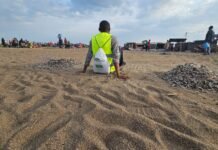



Zanzibar is seeking to transform its seaweed industry through local processing and value addition after rising production failed to translate into higher earnings for farmers, prompting President Hussein Ali Mwinyi to call for an end to the export of raw seaweed.
Speaking on November 18, 2026, during the opening of the Zanzibar Seaweed Investment Conference in Unguja, President Mwinyi said the government wanted to shift from exporting unprocessed seaweed to manufacturing finished products locally, allowing farmers and the country to benefit more from the crop.
“Our farmers cannot continue working hard and harvesting more, only for others to benefit from the added value elsewhere,” Mwinyi said, stressing the need for investment in processing facilities, technology and access to international markets.
The president’s remarks come amid concerns over the industry’s declining economic returns despite increased production. According to the latest data cited by the local media, Zanzibar produced approximately 20,075 tonnes of seaweed in 2025, compared with 19,716 tonnes in 2024.
However, the estimated value of production declined from Sh16.14 billion to Sh14.25 billion over the same period.
The figures suggest that increased output has not translated into improved economic value, reinforcing calls for the development of local processing industries.
The sector provides employment and income to more than 150,000 people, including approximately 33,000 women farmers, making it an important source of livelihoods for coastal communities.
United Nations Development Programme (UNDP) Resident Representative in Tanzania, Shigeki Komatsubara, also emphasised the importance of investing in processing and manufacturing rather than relying on raw seaweed sales.
He said the declining value of the crop despite increased production demonstrated the need to strengthen the industry’s value chain.
Meanwhile, Zanzibar Minister for Blue Economy and Fisheries, Mudrik Ramadhan Soraga, revealed that an estimated 35 per cent of harvested seaweed is lost before reaching the market, further reducing farmers’ potential earnings.
He said the government was working to address the challenge through improved harvesting and storage practices, modern farming technologies, quality seeds and farmer training.
The conference also marked the launch of Zanzibar’s first seaweed crop insurance project, which will use satellite data and weather forecasts to help compensate farmers when their crops are affected by weather-related disasters.
The initiative is expected to improve farmers’ financial security and encourage greater private-sector investment in the industry.
Beyond farming, the government is seeking investors to establish processing plants and develop products for domestic and international markets. These include seaweed-based food products, cosmetics, beauty products and industrial ingredients.
The Zanzibar Seaweed Investment Forum is targeting potential investment commitments of between $46 million and $127 million to support the sector’s transformation. However, the proposed amount represents an investment target rather than financing already secured.
The government also intends to promote deep-water farming and research into seaweed varieties capable of withstanding climate change, alongside improved planting materials and cultivation technologies.
Zanzibar First Lady Mariam Mwinyi called for greater youth participation across the seaweed value chain, including processing, trade and product development. She also highlighted opportunities to connect seaweed products with the tourism industry.
As Zanzibar seeks to position itself as a regional seaweed processing hub, the success of the initiative will ultimately depend on whether investment creates reliable markets, reduces post-harvest losses and delivers better prices and sustainable incomes for farmers.
The message from the conference was clear: Zanzibar wants to move beyond producing raw seaweed and capture a greater share of the economic benefits generated by its marine resources.