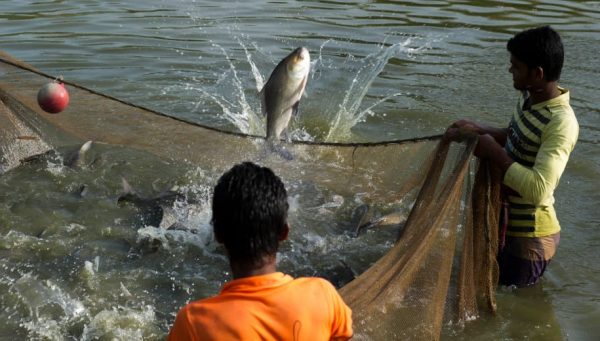



Uganda has embarked on a major investment to strengthen its aquaculture industry following the groundbreaking of a Shs60 billion fish feed manufacturing plant in Buyala Village, Muduuma Sub-county, Mpigi District.
The Masheda Aquafeeds Manufacturing Plant, being established by Masheda Foods Limited with support from the Uganda Development Corporation (UDC), is expected to reduce the country’s dependence on imported fish feeds, lower production costs and increase the competitiveness of local fish farmers.
The groundbreaking ceremony on Thursday marked 10 years of strategic partnership between Masheda and UDC in advancing Uganda’s aquaculture industry.
State Minister for Industry David Bahati, who officiated as chief guest, said the investment demonstrated government’s commitment to industrialisation, local manufacturing and value addition.
“Government, through UDC, has so far invested UGX 26 billion in Masheda. As we celebrate UDC’s 10 years, we are demonstrating to Parliament and the country that the money appropriated for investment is delivering tangible results,” Bahati said.
UDC has committed an additional Shs30 billion, bringing its total investment in the project to approximately Shs56 billion, against an estimated completion cost of Shs60 billion.
Bahati said the factory would create demand for locally produced agricultural raw materials, including maize and soybeans, while reducing reliance on imported feeds.
“What this factory is going to do is to add value and use local materials like maize, soya bean, which is a fulfilment of what General Saleh and His Excellency President Yoweri Museveni and all our heroes who fought in the bush actually fought for: building an independent, integrated and self-sustaining economy,” he said.
He urged Masheda to expand beyond Uganda and tap into regional and continental markets, embracing the philosophy of “Buy Uganda, Build Uganda; Buy East Africa, Build East Africa, but most importantly, Buy Africa, Build Africa.”
The State Minister for Fisheries, Robert Migadde Ndugwa, urged fish farmers to embrace modern aquaculture technologies and acquire practical skills through Masheda Aquafeeds.
He reaffirmed the Ministry of Agriculture, Animal Industry and Fisheries’ commitment to providing technical support, extension services, feed assessment and production guidance.
“A low-price feed is only a benefit if it provides the right nutrients and produces good results. We therefore want farmers to see improvements in fish growth, survival, feed conversion efficiency and ultimately their net earnings,” Migadde said.
He also revealed plans for the ministry to partner with Masheda in supplying quality fish fingerlings to farmers nationwide.
The factory will have an installed production capacity of eight metric tonnes per hour, producing feeds specifically formulated for tilapia and African catfish. Its annual output is expected to reach approximately 33,600 tonnes, with potential expansion to 58,000 tonnes.
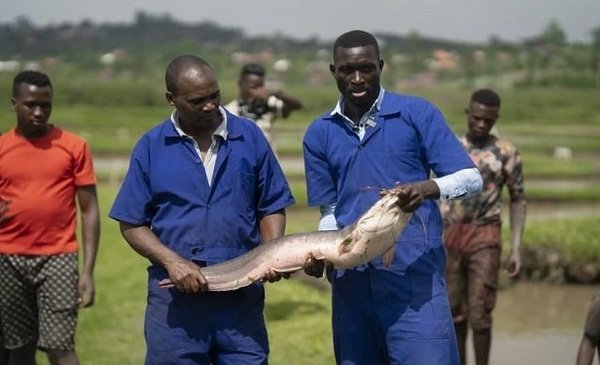
Masheda Managing Director Marvin Lwasa said feeds account for approximately 75 per cent of fish production costs, making affordability critical to the industry’s growth.
“One of the biggest issues is that all our feeds have been imported until today, to a point where in any livestock feeds, fish feeds is the most expensive in the country,” Lwasa said.
He said locally manufactured feeds could be more than 40 per cent cheaper than prevailing market prices, depending on production and market conditions.
The investment also incorporates a Black Soldier Fly production facility designed to process 30 tonnes of organic waste daily into alternative protein ingredients for animal feeds.
Masheda’s management expects the new factory to directly create at least 100 additional jobs, alongside opportunities for agricultural producers and businesses in transportation and logistics.
The company is working towards completing the facilities and commencing operations by February 2027.
The investment is expected to strengthen Uganda’s aquaculture value chain, improve food security, create employment and position the country as a competitive supplier of fish and aquaculture products in regional markets.
Photo credit: @Maaifclf