


Ma Junxin | Zhengzhou Wisdom
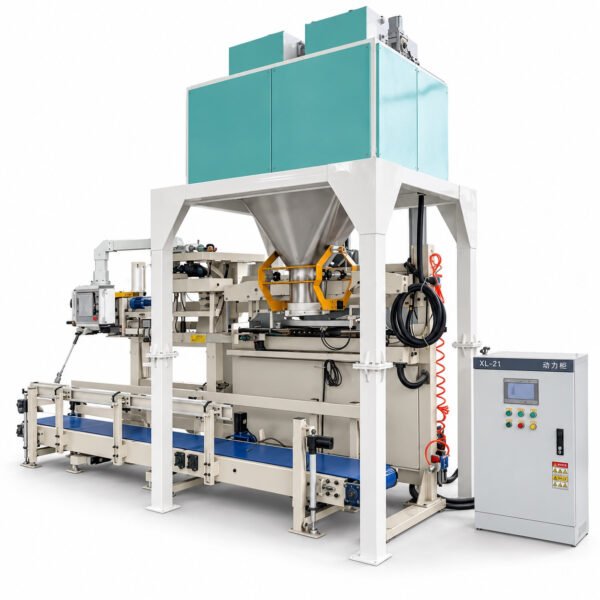
For a growing fertilizer blender or distributor, buying a bagging machine can feel like the obvious next step. Staff may be filling and sewing sacks manually while orders become harder to schedule. Yet replacing a manual station with a faster machine is not always the best first investment. A useful buying decision starts by identifying where acceptable, ready-to-ship bags are actually lost: inconsistent product feed, closing, carrying, stacking or repeated changeovers.
1. Is the fertilizer a powder, a granule or a changing blend?
Start with the products you sell, rather than a demonstration of somebody else’s material. Fine powders may create dust and need different feeding and dust-handling arrangements from free-flowing granules. Granular blends can contain a mix of particle sizes and fines; the composition and flow at the bottom of a hopper may not remain identical throughout a run. Ask equipment suppliers which characteristics they need to test and whether they can show a trial with your own product.
2. What happens when the product picks up moisture?
Storage and climate matter. Some fertilizers absorb moisture, become sticky or cake, and may then discharge unevenly from a hopper [1]. Before blaming the scale, check whether the feeder receives a steady material stream. Compare freshly produced material with stock held in storage, and record lumps or flow interruptions. Any investigation of bridged material in bulk bins must follow the site’s authorized safety procedures; general bin guidance is not a substitute for a site-specific safety assessment [2].
3. What sack and closure will customers receive?
Agree on the bag size, material, liner if used and closing method before buying a filler. A machine that delivers the target mass still needs a bag that opens consistently, holds its shape and can be closed securely. If you sell more than one format, ask how bag guides, closing equipment and pallet patterns are changed. Test finished sacks, not just empty samples. Their shape and seam location affect the next conveyor and the stack on a pallet.
4. Where do finished sacks go?
Draw the route from weighing to closure, inspection, storage and truck loading. Are operators carrying every filled sack? Do bags bunch up at the sewing station? Are pallets brought in manually, and who removes the full load? A conveyor or assisted stacking arrangement may resolve the immediate bottleneck before a factory needs a fully robotic line. The right sequence depends on labour, floor space, product variety, service support and the real pattern of interruptions—not on a universal rule.
5. What will staff still do after automation?
Automation changes work rather than removing every task. Someone still has to supply empty bags, monitor product flow, replace thread or other closure consumables, clear rejected bags, move pallets and restart after faults. Before placing an order, identify who performs each task and what training, guarding, maintenance and spare parts are required. Ask for a simple handover plan covering installation, trial runs, service contacts and the people authorized to reset equipment safely.
Compare useful output, not just rated speed
When reviewing quotations, ask suppliers to explain where they measure output. ‘Bags filled’ is not necessarily the same as ‘bags correctly closed and accepted’ or ‘bags ready for dispatch’. An illustrative calculation can help plan capacity: at 25 kg per sack, 10 tonnes of saleable product would require 400 accepted sacks. This arithmetic is not a claim about the hourly capacity of any particular machine. Actual achievable output must be tested under agreed operating conditions, including stops and product changes where relevant.
A short site checklist is enough to make an enquiry more useful: product and moisture condition; bag dimensions and closure; available space and power; intended flow of finished bags; current manual tasks; locally available service and parts; and how the first trial will be judged. A supplier who asks those questions is helping you define the problem. A buyer who can answer them is in a stronger position to compare competing proposals fairly.
It is also useful to ask suppliers what they will need from the buyer before a site visit: recent product samples, photos or measurements of the current work area, a list of bag sizes, and a description of local power and maintenance support. Agree who will supply these items and who will sign off the acceptance trial. These simple preparations may prevent expensive misunderstandings even when a plant starts with a modest semi-automatic system.
For smaller fertilizer businesses, the goal is not to buy the most automated line on paper. It is to move from variable manual handling toward a reliable process that produces correctly filled, closed and identifiable sacks for delivery.
Ma Junxin works with Zhengzhou Wisdom in China, focusing on technical communication and enquiries for weighing, bagging and palletizing equipment used with dry bulk products. His articles address practical questions that factory teams and buyers should resolve before selecting machinery, including material behaviour, packaging formats, equipment interfaces and downstream handling.
Selected sources
[1] Yara, Physical Properties of Fertilizers: https://www.yara.us/crop-nutrition/fertilizer-handling-and-safety/physical-properties-of-fertilizers/
[2] Fertilizer Canada, Bin Storage Guidance (bulk dry-fertilizer storage bins only; not applicable to bagged fertilizer storage): https://fertilizercanada.ca/bin-storage-guidance/