


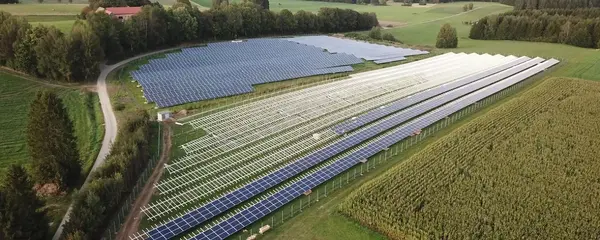
Credit: Samuel Faber/ Pixabay
Global greenhouse gas emissions must fall sharply over the next two decades to limit temperature overshoot and return warming to 1.5°C by 2100, according to a new United Nations Environment Programme (UNEP) report.
The Emissions Gap Report 2026: The Point of Return warns that global temperatures are set to exceed the 1.5°C threshold above pre-industrial levels, underscoring the need for urgent and sustained climate action to limit the extent and duration of the overshoot.
The report outlines a pathway that could limit peak warming to between 1.7°C and 1.8°C around mid-century before bringing temperatures back to or below 1.5°C by 2100, with approximately a 50 per cent probability.
Achieving this scenario would require global greenhouse gas emissions to decline by 18 per cent by 2030, 45 per cent by 2035 and 69 per cent by 2040, compared with 2025 levels.
However, the report finds that even the full implementation of countries’ Nationally Determined Contributions (NDCs), which outline their climate commitments under the Paris Agreement, would deliver emissions reductions of only 5–8 per cent by 2030 and 11–15 per cent by 2035.
UN Secretary-General António Guterres said exceeding 1.5°C should not be seen as a reason to abandon efforts to limit global warming.
“Overshoot is not surrender. We can still keep it as small and as short as possible – and bring temperatures back below 1.5 degrees by the end of the century,” Guterres said.
He called for countries to accelerate emissions reductions to avoid more severe climate impacts.
Warming projections remain alarming
Under current policies, global temperatures could rise by 2.8°C this century and continue increasing thereafter, the report warns.
If countries fully implement their existing climate pledges and maintain similar efforts, warming could be limited to 2.6°C. Even under the most optimistic scenario, in which all NDCs and additional net-zero targets are achieved, temperatures would still rise by approximately 2.1°C.
The report attributes the worsening projections partly to the United States’ withdrawal from the Paris Agreement and revised estimates of historical emissions. New climate commitments submitted since the previous report have made little difference to the overall outlook.
UNEP Executive Director Inger Andersen warned that every additional fraction of a degree and every year of warming above 1.5°C would intensify climate risks, including floods, heatwaves and wildfires.
She urged governments to implement policies capable of delivering rapid and sustained emissions reductions, noting that a return to 1.5°C remains possible.
The report also highlights the scale of carbon removal required under the lowest-overshoot scenario. Approximately 320 gigatonnes of carbon dioxide would need to be removed from the atmosphere and permanently stored during this century, an undertaking complicated by technological and socioeconomic challenges.
Renewable energy offers hope
Despite the alarming projections, the report identifies growing opportunities to accelerate climate action.
Since the adoption of the Paris Agreement, renewable energy has expanded rapidly, while coal and oil supply have grown more slowly than previously projected. Climate policies have also helped reduce emissions in several countries and sectors.
An assessment of more than 220 policy evaluations found that electricity-sector policies reduced emissions by an average of 9 per cent. Economic measures, including carbon taxes and emissions trading schemes, achieved reductions of between 5 and 13 per cent across sectors during the periods evaluated.
However, UNEP says these successes remain concentrated in particular countries and industries and must be expanded and sustained globally.
Countries urged to strengthen climate targets
The report calls on governments to build on commitments made during the first Global Stocktake by setting clearer, more ambitious targets for 2035 and 2040.
These include tripling renewable energy capacity, improving energy efficiency, reducing fossil fuel dependence, cutting methane emissions and halting deforestation.
By 2040, global coal-fired electricity generation would need to be effectively phased out, while methane emissions would have to fall by at least 40 per cent from 2025 levels.
The report concludes that the world still has opportunities to avoid the worst climate outcomes, but the window for action is narrowing. Governments must translate existing commitments into measurable emissions cuts to limit peak warming and restore the 1.5°C pathway before it becomes unattainable.