


For generations, North African agricultural heritage was trapped in low-margin white-label supply chains. By leveraging Temu’s marketplace infrastructure, a 60-year-old Tunisian family business is bridging the gap between African soil and global consumer tables.
Across Africa, small and medium-sized enterprises (SMEs) play a vital role in local economies, supporting livelihoods and bringing locally produced goods to market. Yet, expanding beyond established customer bases can be challenging, particularly when businesses face high marketing costs, limited access to new customers and the complexities of cross-border trade.
For family-run businesses, digital marketplaces can offer an additional route to market, creating opportunities to reach new consumers and explore growth beyond traditional sales channels. In Tunisia, one family’s 60-year-old olive oil business is putting this opportunity to the test.
For years, Foued Abrouk watched his family’s olive oil business, Othena, struggle to turn a profit. With slim margins from sales as a white-label supplier and a handful of B2B customers in France, Germany and Belgium, the business was operating at near-breakeven.
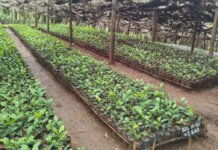
“We sold about 20 tons of olive oil a year but that barely made ends meet,” said Abrouk, 70, who lives in Brussels. The oil is harvested from the family’s groves in Monastir, Tunisia.
Abrouk is eyeing the broader European market to expand his business. In August 2025, he joined online marketplace Temu to leverage its vast consumer base. This gave him access to new sales channels and connected Othena with buyers across Belgium.
“All my Temu orders came from natural traffic,” he said. “It is a strong start and gives me real confidence in growing Othena’s reach.”
Othena’s initial struggle highlights the challenges for Europe’s small and medium-sized enterprises (SMEs) — which account for 99.8% of all EU firms — in navigating market fragmentation and high barriers to cross-border sales.
High costs of cross-border advertising and competitive European markets also made it difficult for businesses like Othena to expand overseas.
Temu, which launched in Belgium in May 2023 and opened to local sellers in November 2024, offers a new, low-barrier channel that gives merchants direct access to consumers nationwide.
It also allows sellers to expand beyond Belgium by opening storefronts in other European markets, creating new opportunities to export and broaden their reach.
“Temu is very popular in Europe right now. The user base is large and people are talking about it,” Abrouk said.
Expansion plans
Previously, Abrouk had tried listing Othena’s products on other major e-commerce marketplaces, but found the platforms too complex for small businesses, especially with their high commission fees and insufficient support.
His experience with Temu, however, was different. He said the onboarding process was smooth and staff provided practical feedback on matters such as choice of photos — support he had not received from other platforms.
With the encouraging start, Abrouk plans to launch Temu storefronts in France, Germany, and Turkey soon. He is confident in the quality of Othena’s additive-free olive oil, which has been tweaked to suit the tastes of European buyers.
“Our goal for the coming year is to reach thousands of orders through our Temu storefronts, and we are confident we can achieve it,” he said.
For African entrepreneurs looking to grow beyond established markets, Othena’s journey offers a practical example of how digital commerce can complement traditional business channels.