

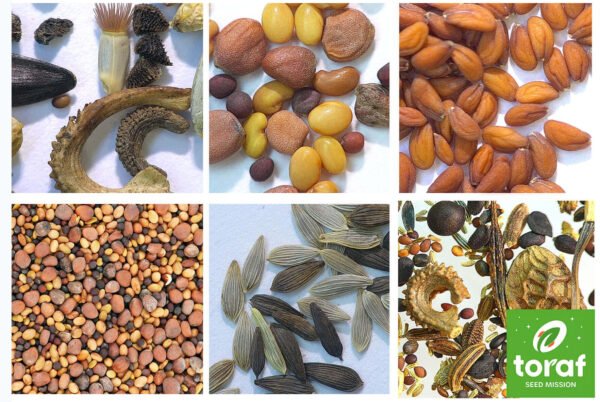
A rocket flight is not a normal step in the seed production process. For Polish seed producer TORAF, however, one group of seeds has now gone through exactly that before returning to the laboratory for germination testing. In November 2025, around half a million seeds were carried aboard the Polish PERUN research suborbital rocket. After the flight, selected samples were tested by TORAF and compared with seeds from the same material that had remained on the ground.
It was the first stage of a programme planned around four TORAF seed flights.
The idea is relatively simple: expose dry seeds to unusual flight conditions, bring them back, germinate them under controlled conditions and compare the results with a control sample.
The first results are now available official on their web page – https://toraf.pl/blog/toraf-seed-raport-lot-suborbitalny-nasiona/
A seed producer before the research programme
TORAF is based in Maciejów near Kluczbork in south-western Poland and has been active in the seed sector for more than 35 years. The company operates more than 40 hectares of its own seed production fields, where selected vegetable and ornamental crops are grown for seed. It also prepares and packs seed material sourced from other Polish and international seed companies.
Its portfolio includes vegetable seeds, flower seeds, herb seeds and sprouting seeds. TORAF supplies garden centres, seed wholesalers, distributors and other B2B customers. The company also works with bulk seed, contract packing and private label seed projects.
TORAF seeds are already present on the Dutch market as well as in several other European countries.
The company also operates its own accredited Seed Testing Laboratory. Germination and seed quality testing are therefore part of TORAF’s regular work rather than something created specifically for the rocket programme.
That is where the connection with PERUN begins.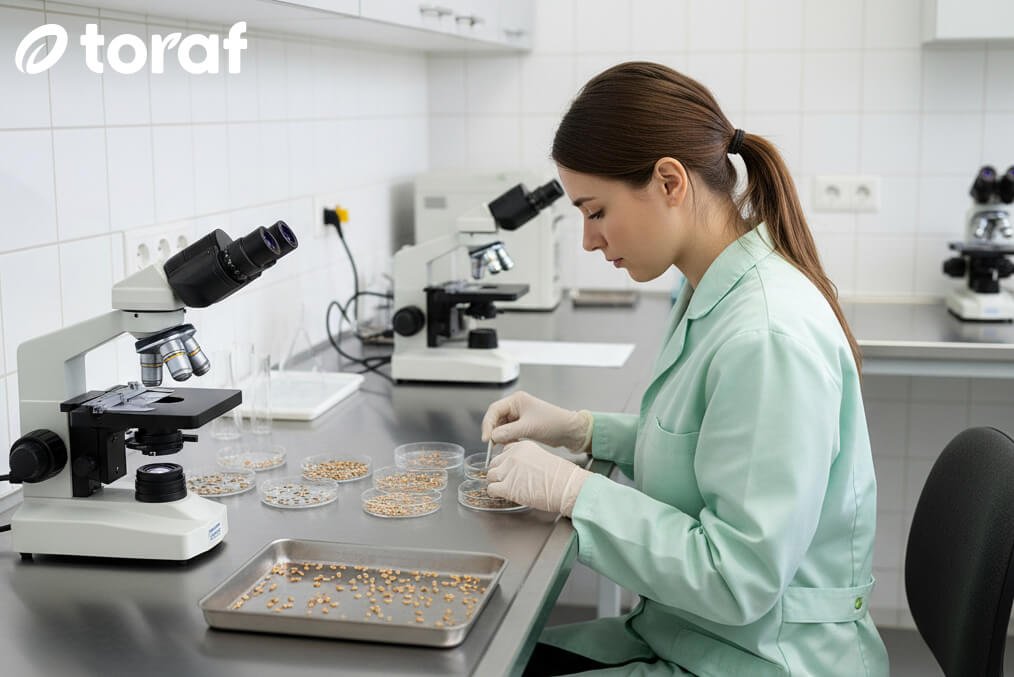
What exactly happened to the seeds?
The PERUN rocket is being developed by Polish aerospace company SpaceForest as a platform for research and technology experiments. During its test flight on 22 November 2025, the rocket carried several research payloads. TORAF’s seeds were among them. The seeds did not germinate during the flight. They travelled as dry seed material inside the payload and were recovered afterwards.
This distinction is important.
The experiment is not about growing tomatoes or radishes inside a rocket. It is about checking whether exposure to the launch and flight environment can later be associated with measurable differences when the seeds are germinated on the ground.
PERUN reached an altitude of 19.3 km during the flight. The complete mission, including descent, lasted 277.2 seconds.For the seed samples, this meant a short but unusual environmental exposure. Pressure in the payload compartment fell to approximately 70–90 hPa, while the temperature remained between 7.5 and 10°C. The payload was also exposed to vibration and changing acceleration during launch and recovery.
After landing, the rocket part of the experiment was over. The seed-testing part could begin.
One sample flew, one stayed on the ground
The easiest way to understand the experiment is to look at the two groups. One sample travelled aboard PERUN. A corresponding control sample remained on the ground.
For each species or variety included in the laboratory comparison, TORAF tested 400 post-flight seeds and 400 control seeds.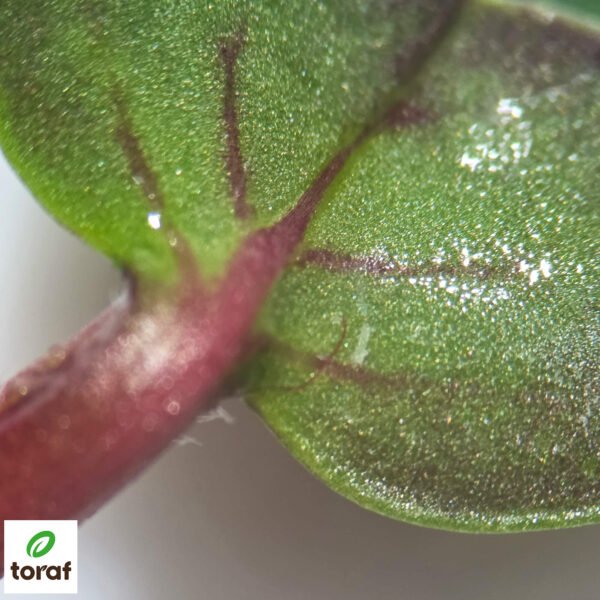
The control material was stored under monitored conditions at 10–15°C and 30–40% relative humidity. After the flight, both groups were evaluated using the same laboratory criteria.
This matters because simply recording whether a seed germinated is not enough in a professional germination test.
The laboratory also distinguishes between normal seedlings, abnormal seedlings and dead seeds. The development of structures such as the primary root and cotyledons can provide additional information about the early development of the seedling.
“The material was unusual, but the way we approached the assessment had to remain consistent,” explains Katarzyna Fireman, head of the TORAF Seed Testing Laboratory. “We applied the same evaluation criteria to the post-flight samples and to the controls.”
What did the first tests show?
There was no single response across all of the tested species. For some seeds, the post-flight and control results were almost identical.
Garden cress produced 92% normal seedlings after the flight, compared with 93% in the control. For radish ‘Flamboyant 3’, the figures were 85% after the flight and 84% in the control. Crimson clover recorded 94% normal seedlings in both groups.
Other species showed larger differences.
Tomato ‘Bajaja’ produced 80% normal seedlings in the post-flight sample and 88% in the control. The proportion recorded as dead was also higher in the post-flight sample: 9% compared with 3%. Broccoli Raab showed 88% normal seedlings after the flight compared with 94% in the control, while the proportion of dead seeds was 9% and 3% respectively. Alfalfa showed another difference, with 79% normal seedlings after the flight compared with 83% in the control.
The results therefore do not point in one direction. Some samples were almost unchanged, while others showed differences in germination performance or early seedling development.
A difference is not yet an explanation
This is also where the project requires caution. The results do not prove that the rocket flight improved or damaged the seeds.
Seeds are biological material, and some variation is expected even between samples originating from the same seed lot. A difference observed after one flight is therefore an observation, not yet evidence of cause and effect.
That is one reason why the programme was not designed around a single flight.
The November 2025 experiment was the first of four planned stages involving TORAF seed material. Subsequent flights are intended to provide additional samples that can be compared with controls and with results from previous missions.
If similar responses repeatedly appear in the same species, they may become more relevant for further investigation. If they do not repeat, that is useful information as well.
For TORAF, the first flight therefore provides a baseline rather than a final conclusion.
Looking beyond germination
The work also continues beyond TORAF’s germination tests. Researchers from Jagiellonian University Medical College and the University of Silesia are involved in further analyses connected with the project.
The University of Silesia team is working with plants including Arabidopsis thaliana and tomato, looking beyond germination towards later stages of plant development.
Researchers from Jagiellonian University Medical College are analysing sprouts grown from the material, including their phytochemical composition.
This adds another layer to the programme.
A seed may germinate normally while more subtle differences become visible later in plant development. In the same way, a difference recorded during an early germination test does not automatically mean that the mature plant will develop differently.
The four-flight programme is intended to provide more material for these comparisons.
From the laboratory to a consumer seed series
TORAF has also connected the research programme with a small range of space-themed seed products for gardening enthusiasts. The products are based on plant species associated with the TORAF Seed Mission.
One of them is the Cosmic Sprout Mix, containing alfalfa, radish, crimson clover and broccoli Raab. species that are also included in the research programme.
The company has also developed other products linked with plants used in the mission. The commercial range and the research results are separate.
The retail series gives gardeners an opportunity to grow species connected with the programme, but it should not be interpreted as a claim that rocket exposure has improved commercial seeds or changed their characteristics.
The same plant species can therefore appear in two very different contexts: as ordinary seeds grown by consumers and as research material used to investigate what happens when dry seeds are exposed to an unusual flight environment before germination.
Four flights instead of one answer
For TORAF, the programme sits alongside the company’s regular work as a Polish producer and supplier of vegetable, flower, herb and sprouting seeds.
The same laboratory that normally evaluates seed quality is now also comparing samples that have travelled aboard a research rocket.
The setting is unusual, but much of the methodology is familiar: identify the seed lot, maintain a control, use comparable samples and evaluate both groups under the same conditions.
After the first TORAF seed flight, there are already several differences worth following, as well as cases where practically no difference was recorded. Three further stages are intended to show whether any of these patterns repeat.
Only repeated observations will provide a stronger basis for answering the question behind the programme: can exposure to rocket-flight conditions produce measurable and reproducible changes in how seeds germinate and later develop?
For now, the first flight provides the starting point.
The project also reaches the classroom
The research programme has also become a practical science education project for students from ZSO im. Adama Mickiewicza secondary school in Kluczbork.
During 2026, TORAF organised four educational trips. Students visited the University of Silesia to learn about plant biology and laboratory research, and the Silesian Botanical Garden in Mikołów, where they explored seed conservation and the work of a seed bank.
They also travelled to SpaceForest, where PERUN is being developed, and the Polish Space Agency in Gdańsk to learn about rocket and satellite technologies. Another visit took them to the Military Institute of Aviation Medicine in Warsaw, where researchers study how the human body responds to acceleration and extreme conditions.
A further visit to Scanway, a Polish company developing advanced optical systems for space applications, is planned for October 2026. The programme gives students a practical view of the different fields connected with the project from seeds and plant biology to laboratory research, aerospace engineering and space technologies.
More about topic:
https://spaceforest.pl/biological-experiment-aboard-perun-rocket-research-results/
https://toraf.pl/blog/toraf-seed-raport-lot-suborbitalny-nasiona/