

For most people, their awareness of life stops beneath their knees; but if you want to understand and appreciate biodiversity – you need to look further down.
Under leaves, among flowers and bark, around ponds, through reeds and fynbos, millions of tiny lives are carrying out the busy work that keeps ecosystems functioning and our food systems productive. They pollinate plants, recycle nutrients, break down organic matter, provide sustenance for other animals and form intricate relationships with the plants around them. And yet, insects remain among the least appreciated and least understood inhabitants of our natural world.
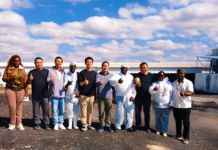
That hidden world came into focus at Wild Rescue nature reserve this Biodiversity Month, when visitors gathered for a special event on 19 September dedicated to two of its most fascinating inhabitants: beetles and moths.
The event brought together two leading national specialists. Handré (Renier) Basson, an entomologist, researcher and Senior Field Officer for the Endangered Wildlife Trust Drylands Conservation Programme, operating via Stellenbosch University, spoke about the remarkable world of beetles and their importance to our ecosystems. Hermann Staude, renowned lepidopterist and author of Southern African Moths & their Caterpillars, opened the door to the extraordinary diversity and complexity of moths and their relationships with plants.
Their presentations were followed by afternoon and nighttime field trips, giving participants the opportunity to experience these insects where they actually belong – in the living landscape.
Ancient partnerships
Insects are the most diverse animals on earth. Scientists have described around one million species, but estimates of the true number run from 5.5 up to 20 million – suggesting that most remain undiscovered.
South Africa is an especially rich place to study these species. Our insects have had an extraordinary amount of time to coevolve with our plants. Some of the oldest living lineages here date back to the Gondwana era, and the region was spared the worst of the ice ages. The result is a web of relationships that took millions of years to weave.
Beetles are among the oldest pollinators. They were visiting flowers more than 200 million years ago in the Mesozoic, long before bees or butterflies existed.
A spotlight on moths
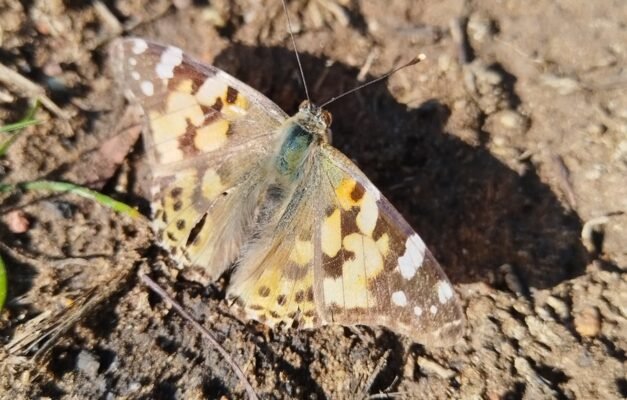
Then came the moths. Hermann reminded us that butterflies are moths, and that this group is astonishingly diverse. There are roughly 160,000 known species worldwide. All the mammals, birds and fish combined come to only about 51,000 species, or around 32 percent of the moth total.
Many moths are specialist pollinators, and certain plants depend on them entirely. As the night shift of the pollination world, they are primary pollinators. Without them, our fruit trees would go unpollinated. As the speakers pointed out, you cannot rewild an area without insects.
Moths are megadiverse and each one has its own life cycle and its own niche. In the big theatre of life, we mammals are a small sideshow – and insects are the major players.
Disappearing before we get to know them
Both speakers stressed that some of these species are already slipping away. Certain beetles are being stranded on mountain peaks as the climate warms, with ever smaller ranges and habitats. We urgently need to study them before they vanish.
That work is hampered by a lack of funding for entomology and lepidopterology in South Africa. Much of the scientific work in this field is currently done by researchers from abroad. A species cannot easily be protected if its distribution is unknown. Its decline cannot be properly assessed if there is no baseline information about its populations. And its habitat cannot be adequately managed if scientists do not understand the relationships taking place within it. When we lose a species; we lose millions of years of evolution.
Small changes, big difference – rethinking what a healthy landscape looks like
Much of the harm to insects is unintended. Vehicles driving at night with their headlights on kill many, but so do the lights we leave on at home, in our gardens and in swimming pools. Moths and fireflies in particular follow a very narrow band of light, and some artificial lighting threatens them. The solution is simple: switch lights off when they are not needed, or fit motion detectors.
Living in harmony with biodiversity also means changing how we think about our lifestyles, starting with giving up the poisons we use in our gardens. Beyond that, we need to give nature more space. Left alone, ecosystems recover through natural succession, from bio-poor to biodiverse, and the speed of this recovery is remarkable. All it needs is space and time.
Protecting insects also requires a rethink of how people manage the spaces immediately around them. A perfectly manicured garden may look tidy, but it is not necessarily biologically rich. Fallen leaves, dead branches, bare patches of soil and indigenous plants can all provide habitat and food for insects. Sometimes biodiversity benefits not from doing more, but from doing less.
Allow a patch of vegetation to grow. Reduce unnecessary pesticide use. Leave fallen branches where they can safely remain. Give indigenous plants an opportunity to return. These changes can allow ecological complexity to develop. And insects will be among the first arrivals.
A landscape cannot truly be rewilded without them.
Rule #1: Sharpen your senses
If there was one message that ran through the day, it was the speakers’ first rule: sharpen your senses every day, so you can appreciate the beauty that surrounds you.
Look closely at the flowers in your garden. Notice what lands on a leaf. Look beneath vegetation. Watch what moves after sunset. Take a photograph of something you do not recognise and try to find out what it is. There is a great deal happening just beyond our usual attention, and it takes only a little curiosity to see it.
Says Gill Simpson, founder and director of Wild Rescue, “Insects are part of the foundation of life in nature. In South Africa, insects are responsible for around 70 percent of pollination events in flowering plants, and many moths and beetles are specialist pollinators that particular plants cannot do without. Every flower, fruit tree and food chain rests on them. They are not a footnote in nature’s story but the ground floor of it, and when they disappear, the structures above them begin to fall. Look closely at almost any healthy ecosystem, and you will find insects quietly holding it together.”
Keep looking together
From 18 to 28 September, the free biodiversity-identification platform iNaturalist is running iNat Together, a global campaign inviting people to get outside with friends, family and fellow nature lovers and observe nature as a shared experience. The campaign is not a numbers game or a leaderboard.
Take a friend out to look at our rich South African biodiversity, and record what you find on the iNaturalist app. You will be adding to what we know about the species around us, and every observation helps.
South Africa is currently running its first-ever Mzansi Insect of the Year competition, hosted by the Entomological Society of Southern Africa and News24. Anyone can nominate, with up to two insects each, and a panel of experts then picks 10 finalists for a public vote. The winner will be announced on 28 October.