

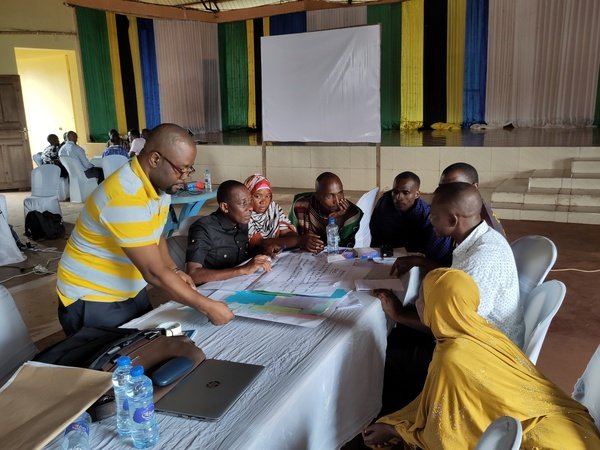
Research dissemination workshop in Nachingwea, Tanzania for the Civic Voices for Just Rural Transition project. Photo courtesy of Clim-Eat.
For decades, fertiliser subsidies intended to boost crop production, strengthen food security and support smallholder farmers, have been at the heart of agricultural policy across much of Africa, however, as climate change intensifies, soils deteriorate and public budgets come under increasing pressure, questions are growing over whether the approach still delivers value.
In this, a growing coalition of experts is now urging governments to redirect billions of dollars spent annually on fertiliser subsidies towards more climate-resilient farming systems that improve soil health, strengthen food security and help farmers adapt to increasingly unpredictable weather.
According to the High-Level Panel for a Just Rural Transition, convened through the Clim-Eat and the Voices for Just Rural Transitions initiative, Tanzania is among the countries at the centre of the panel’s initial work, which includes recent consultations with farmers and civil society organisations in Nachingwea, where participants highlighted declining soil fertility, limited access to farm inputs and increasing climate risks while sharing practical, locally driven solutions.
Dr. Sonja Vermeulen, a member of the panel and a leading global expert in sustainable agriculture, climate adaptation and systems innovation, says the debate is no longer simply about whether fertiliser is important, but whether current subsidy programmes represent the best use of scarce public resources.
“Inorganic fertilizers come with a heavy environmental cost, relying on fossil fuel-intensive processes to produce, followed by high-emitting shipping to supply the world’s farmers,” she says. “Fertilizer production alone accounts for 1.3 per cent of global CO2 emissions.”
She notes that continued reliance on imported fertilisers has also exposed countries to global supply chain disruptions.
“Ongoing subsidies for fertilizers have also created a dependency that has been exposed by the disruption in the Strait of Hormuz, where a third of the world’s fertilizer travel to reach farmers,” Dr. Vermeulen says.
Rather than eliminating public support, she argues that governments should rethink how it is delivered.
“At more than US$800 billion annually, and dwarfing agricultural ODA sixty-fold, public support for agriculture is one of the most powerful financial leverage points in our food systems. Redirecting even a fraction of it would achieve what aid alone never could.”
The case for reform is strengthened by declining soil health across many farming regions. While fertiliser remains an important productivity tool, degraded soils are becoming less responsive to repeated applications.
“Declining soil health certainly makes ongoing fertilizer subsidies and use somewhat less effective,” explains the sustainable agriculture expert. “Other factors that have undermined subsidies include climate extremes and late application.”
Need to respond to farmers’ diverse realities
The climate adaptation and systems innovation expert believes current programmes often fail because they treat agriculture as uniform, tying assistance to specific crops or inputs instead of responding to the diverse realities farmers face.
“A more effective application of such public support would be to decouple them from crops and inputs and instead empower farmers to apply regenerative practices that improve both soil health and yields,” Dr. Vermeulen says.
The panel also argues that heavy spending on fertiliser subsidies is crowding out investments that could deliver broader and longer-lasting benefits for farming communities.
“Existing subsidy programmes leave little room for incentives that improve nutrition and dietary diversity, which is often a challenge in cash crop-based farming systems,” she says. “They also fail to protect the ecosystems that secure long-term farming, nor do they help farmers adapt to climate shocks and trends.”
Instead, she recommends directing more public investment towards rural infrastructure, including small-scale irrigation schemes, weather forecasting linked to agro-advisories, roads and improved market access. Where subsidies remain, farmers should be offered greater flexibility to choose from a wider range of inputs, including seeds and soil health interventions.
Climate change is making such reforms increasingly urgent. Across Eastern Africa, erratic rainfall and more frequent droughts are raising the financial risks associated with heavy investments in inorganic fertilisers.
“The increasing unpredictability of rainfall patterns across Eastern Africa creates a higher risk of crop failures, which undermines the economic case for subsidizing fertilizers,” Dr. Vermeulen says.
She argues that governments should instead support adaptation measures such as rainwater harvesting, conservation agriculture and crop diversification to reduce farmers’ exposure to climate-related losses.
Diversifying production beyond maize is another priority identified by the panel.
“Crop diversification is a fundamental strategy for improving climate resilience. Growing different crops, especially nitrogen-fixing legumes, can improve soil health and boost overall yields. Crop diversification can also support more diverse and nutritious diets,” she says.
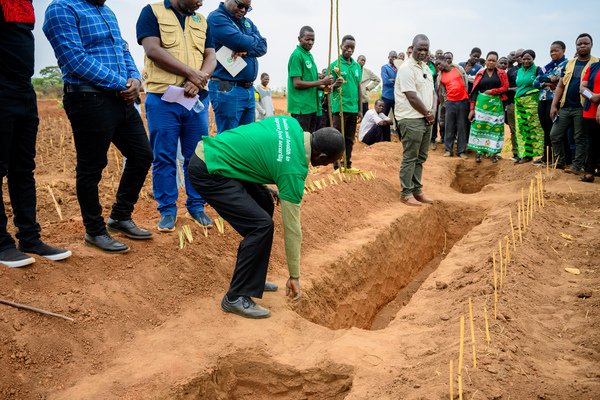 Incentives for Soil Health in Africa – Lessons for Repurposing Public Support Workshop in Lilongwe, Malawi. Photo courtesy of Clim-Eat.
Call for flexible subsidy systems and private sector participation
The panel is also advocating more flexible subsidy systems that give farmers greater decision-making power such as voucher-based or direct cash support, which Dr. Vermeulen argues would allow producers to select the most suitable inputs for their own farming conditions rather than being restricted to predetermined fertiliser packages.
She also sees an important role for the private sector in strengthening domestic supply chains through incentives that encourage local production of fertilisers, seeds and other agricultural inputs.
Expanding domestic fertiliser manufacturing, she says, would reduce dependence on imports while lowering emissions associated with long-distance transportation.
“One way to help farmers access more affordable and sustainable fertilizers is to invest in domestic fertilizer production and markets. The homemade Mbeya fertilizer in Malawi, for example, is reducing reliance on imports while also reducing emissions.”
Lessons emerging from Tanzania and also from Malawi where a soil health payments system that rewards sustainable farming practices while supporting climate adaptation, mitigation and diversified farmer incomes is developed, offer useful guidance for countries reviewing agricultural support policies.
In Tanzania, authorities have begun broadening the fertiliser subsidy programme by introducing less soil-acidifying fertiliser blends as the country grapples with soil erosion and one of Africa’s highest rates of forest loss.
Looking ahead, Dr. Vermeulen identifies three reforms that could transform agricultural support across the continent: introducing payment-for-soil-health schemes that reward regenerative farming, decoupling subsidies from specific crops and inputs, and investing in local infrastructure, markets and domestic fertiliser production to build more resilient agricultural systems.