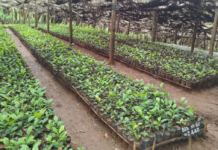


A new University of Pretoria study has warned that climate pressure on South Africa’s food system extends beyond the farm gate. Agri-processing businesses are contending with heat, floods, water constraints, unstable agricultural inputs, and rising costs, while many lack the climate information and practical guidance needed to prepare effectively.
Agri-processing connects farms to markets by turning raw commodities into food through milling, preservation, drying, packaging, and storage. The sector contributes about 25% of South Africa’s manufacturing output and supports more than 300,000 direct jobs. Its ability to adapt affects food availability, employment, and supply reliability.
Wynand Deyzel, Commercial Sales Manager at air treatment technology specialist Solenco, says resilience planning must include the environment inside production facilities.
“Manufacturers cannot assume that conditions will remain stable because production takes place indoors,” he says. “Temperature is closely monitored in many facilities, but humidity often receives less attention, even though it can change drying times, product moisture, packaging performance, equipment efficiency, and energy use.”
Based on 113 agri-processing enterprises in Gauteng, the study found that these businesses face climate pressures affecting the availability and use of resources. Operators identified water shortages, rising temperatures, irregular agricultural inputs, and increasing production costs. Participation in agri-processing did not significantly predict climate adaptation, suggesting that operating beyond the farm gate does not automatically make a business more resilient.
Humidity is particularly influential where raw materials absorb moisture or water is removed during processing. Excessive humidity in cured-meat production can increase mould and spoilage risk, while nuts can absorb moisture from the air. In grain milling, unstable humidity can cause clumping and inconsistent flour moisture.
Grain drying presents another environmental-control challenge. Deyzel says a recent discussion with a silo division manager highlighted the limitations of relying solely on heated air, where temperature can affect the end use of the grain.
“With canola, drying temperatures need to be considerably lower when the crop is intended for seed than when it will be used for oil extraction. Malting barley also needs careful temperature control because the grain must retain its ability to germinate,” he says. “The objective is not simply to remove moisture quickly, but to do so without compromising quality or commercial value. In appropriate applications, controlling humidity provides another way to remove excess moisture without relying on excessive heat.”
Canola Council guidance recommends drying canola intended for seed between 45°C and 50°C and warns that high temperatures, restricted airflow, and debris can increase quality and fire risks. North Dakota State University similarly cautions that excessive heat can reduce germination in malting barley.
Deyzel says recent work at Biltong Den in Randfontein shows how the same principle applies in a different process. Its drying cabinets were releasing moisture into the production area, while high ambient humidity was contributing to mould growth, spoilage, and financial losses.
“Once an 85-litre commercial dehumidifier was introduced, the business saw an immediate improvement in the production environment. The lesson is that humidity control needs to be designed around the process and moisture load, rather than treated as a generic equipment purchase,” he says.
Equipment selection depends on the production environment and required humidity range. Correct sizing supports energy efficiency by avoiding excess capacity beyond what the process requires.
“Protecting the food value chain means protecting every stage between the farm and the consumer. That includes the conditions in which products are dried, milled, stored, and packed,” concludes Deyzel.