


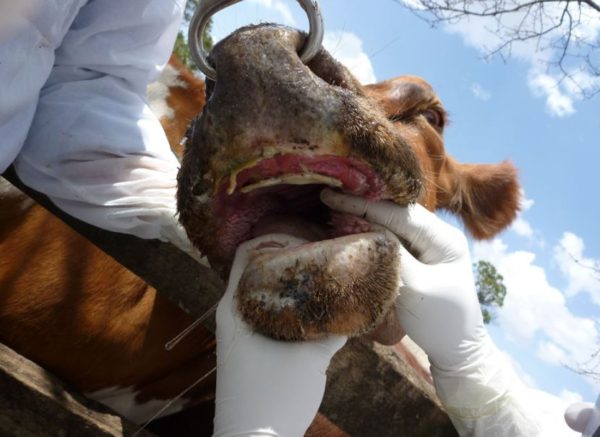
Veterinary authorities, policymakers, laboratory specialists and researchers from Africa and Asia are meeting in Lanzhou, China, to strengthen cooperation and preparedness against the growing threat of foot-and-mouth disease (FMD), as the virus continues to spread beyond its traditional geographic range.
The Asian–African Foot-and-Mouth Disease Prevention and Control Technology Workshop was convened by the Food and Agriculture Organization of the United Nations (FAO), together with the Lanzhou Veterinary Research Institute (LVRI) of the Chinese Academy of Agricultural Sciences (CAAS).
The meeting brought experts from the two regions together to examine the changing FMD risk landscape and identify practical measures to improve prevention, detection and response.
The discussions come amid growing concern over FMD virus serotype SAT1, which has historically been associated largely with sub-Saharan Africa but has recently been detected in North Africa, the Near East and East Asia.
The spread into areas where livestock populations may lack immunity has raised fresh concerns for animal health, food security, rural livelihoods and livestock trade.
In June, FAO warned that the detection of SAT1 in China and Mongolia had placed South and Southeast Asia on high alert. The organisation said commonly used FMD vaccines in the region were not suitable for the new serotype and announced emergency preparedness support for several countries to strengthen early warning, risk-based surveillance and rapid laboratory diagnosis.
According to the FAO report “Rethinking foot-and-mouth disease control in a changing risk landscape,” published on August 6, 2026, the changing epidemiology of FMD requires countries to move beyond outbreak response and develop resilient systems capable of detecting disease early, monitoring evolving risks and adapting control measures.
The report identifies surveillance and early detection as central to effective FMD control, alongside fit-for-purpose diagnostic systems, quality-assured vaccines and strong veterinary services. It also stresses that vaccination strategies must evolve as circulating virus strains change.
The Lanzhou workshop provided a platform for participants to exchange experience in surveillance, diagnostics, vaccine development and preparedness. Experts also contributed to discussions on the revision of the Global FMD Control Strategy under the Global Framework for the Progressive Control of Transboundary Animal Diseases (GF-TADs).
A key proposal emerging from the process is the development of an Africa–Asia FMD Control Alliance, which would strengthen technical cooperation, knowledge sharing and coordinated action between the two regions.
FAO said closer cooperation is particularly important because livestock movements and trade create strong links between Africa and Asia. Sharing surveillance data, laboratory expertise and technical knowledge, while harmonising approaches to diagnostics, vaccination and contingency planning, could help countries respond more quickly to emerging threats.
The workshop also marked the launch of an FAO project focused on preparedness for emerging FMD SAT1 in South and Southeast Asia. The initiative is intended to help countries strengthen their capacity to prevent, detect and respond to the virus.
As FMD risks become increasingly interconnected across regions, the meeting underscored a central message from FAO: effective control will depend not on a single intervention, but on sustained surveillance, reliable diagnostics, appropriate vaccines, capable veterinary services and stronger international cooperation.