

Long before Dipeolwana Farm produced thousands of kilograms of beef each month, there was a young boy watching his father make impossible choices.
Tumelo Lekalakala’s father never owned more than 50 cattle. He had only a primary school education, yet he understood something that shaped his family’s future: cattle were not just livestock. Whenever school fees were due, a cow would be sold.
One animal helped pay for school uniforms. Another covered university fees. Over the years, those cattle educated all four of his children.
For Tumelo, that lesson never faded. “If he could do that with just subsistence farming,” he says, “then I could do a lot more.”
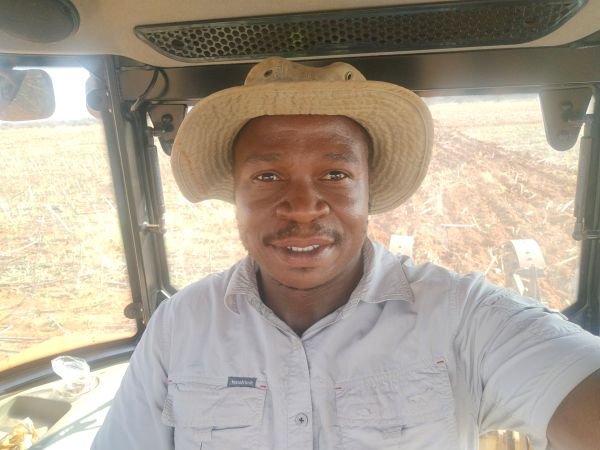
Today, that belief lives on through Dipeolwana Farm, a growing beef and grain enterprise that is steadily transforming itself from a traditional farming operation into a business that creates value at almost every stage of production.
Most people choose engineering because they dream of designing buildings, bridges or machines but Tumelo chose it because he wanted to become a farmer. He knew farming required more than passion; it required capital. “The biggest challenge for me was always to find funds to actually get a commercial farm going,” he explains.
So, engineering became his stepping stone. The profession gave him a stable income, valuable business experience and, most importantly, the ability to begin investing in the dream he had carried since childhood.
Looking back, however, the signs of entrepreneurship appeared much earlier. In primary school, Tumelo sold ice lollies to his classmates. He saved enough money to buy his first bicycle, then found another way to make it work for him. During breaks, he rented it to other children who happily paid for the chance to ride across the school grounds. “I’ve always been an entrepreneur at heart,” he laughs.
Even then, he wasn’t simply earning pocket money. He was learning how to recognise opportunities, solve problems and make his assets work harder. Those lessons would prove invaluable years later.
Tumelo started Dipeolwana in 2020. Six years later, the business combines agriculture with enterprise development consulting, but its heartbeat is unmistakably farming.
Its operations stretch across three farms. Near Cullinan, outside Pretoria, cattle are raised and finished in the feedlot. In Jericho, where Tumelo grew up, yellow maize and sunflower are planted on traditional land. He also continues to farm on the land that once belonged to his father in Limpopo.
For Tumelo, these farms represent one family’s story across generations. “We make our own feed, plant our own maize, plant our own different types of grasses, feed the cattle, send them to an abattoir, bring the meat back to the farm for processing and to sell it,” Tumelo explains.
Instead of relying entirely on outside suppliers, Dipeolwana is steadily taking greater control of the journey from farm to customer. That approach not only improves quality control but also allows the business to earn value at several stages of production rather than only when an animal is sold.
Like many South African farmers, Tumelo knows agriculture is both rewarding and unpredictable: weather patterns shift, feed prices rise, markets change and every season brings new risks.
Yet the sector also continues to demonstrate its importance to the country’s economy. Statistics South Africa reported that the agriculture, forestry and fishing sector expanded by 17.4% during 2025, making it one of the strongest-performing industries in the country that year. At the same time, the red meat industry continued to adapt to changing consumer demand, production costs and market conditions.
For entrepreneurs like Tumelo, these conditions reinforce the importance of building resilient businesses that are able to adapt rather than simply survive.
Growing some of his own feed, diversifying income through grain production and processing beef for different customers are all part of that strategy.
Like many business owners, Tumelo discovered that banks and investors don’t finance dreams alone. In the early years, he funded much of Dipeolwana’s growth himself. “What I noticed with self-funding is that the growth is relatively slow,” he says.
So, he decided to make Dipeolwana a business worth investing in. He improved financial records, strengthened business systems and began managing the farm with the same discipline expected of any growing company. “I had to look at it more as a formal business that not only looked good to myself, but also looked good to potential funders,” he says.
The effort paid off. This year, Dipeolwana secured funding for agricultural equipment. For Tumelo, the approval was confirmation that years of building systems and credibility were finally being recognised.
The story of Dipeolwana Farm isn’t really about beef, it isn’t even about engineering.
Years ago, Tumelo watched his father sell cattle so that his children could receive an education. Today, those lessons are being transformed into jobs, growing markets and a business that is steadily expanding across South Africa’s beef value chain.
His advice to aspiring entrepreneurs reflects the same quiet determination that shaped his own journey. “Don’t wait for money or somebody to hold your hand,” he says. “Just start.”
Long before Dipeolwana Farm had feedlots, maize fields or plans for its own abattoir, there was a father who believed that a small herd of cattle could change his children’s future.
Today, one of those children is proving that he was right.