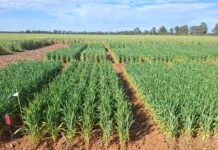



Scientists have uncovered a key genetic regulator that controls drought resilience in sorghum, offering new pathways for improving crop tolerance in increasingly arid and climate-stressed environments.
As global climate change intensifies and agricultural systems face rising water scarcity, understanding how plants protect themselves from dehydration has become central to food security research.
One of the most important natural defence systems is the plant cuticular wax layer—a hydrophobic coating that reduces water loss, shields against ultraviolet radiation and helps prevent pathogen infection.
Sorghum (Sorghum bicolor (L.) Moench), a major drought-tolerant cereal crop widely grown in semi-arid regions, is particularly valued for its thick wax layer, which enhances its ability to withstand harsh environmental conditions.
However, the genetic and molecular mechanisms controlling wax production and very-long-chain fatty acid (VLCFA) biosynthesis have remained poorly understood—until now.
A research team led by Prof. Hongwei Cai and Assoc. Prof. Jun Chen of China Agricultural University has identified a novel gene, BM-SZ, that plays a central role in regulating wax biosynthesis in sorghum.
Their findings, published in The Crop Journal, shed light on a previously uncharacterised regulatory network governing drought resilience.
Using ethyl methane sulfonate (EMS) mutagenesis, the researchers isolated a “bloomless” sorghum mutant named bm-sz, which exhibited a striking reduction in wax accumulation and increased sensitivity to drought stress.
“Using ethyl methane sulfonate (EMS) mutagenesis, we isolated the bm-sz mutant, which showed an approximately 80% reduction in total wax content and severe drought sensitivity,” explained first author Candong Xiong. “Through map-based cloning and MutMap analysis, we confirmed that BM-SZ, which encodes a putative α/β hydrolase, is the causal gene for the bloomless phenotype.”
The study’s lipidomic analysis revealed that the mutant had sharply reduced levels of VLCFAs—particularly those longer than C20—along with primary alcohols and other wax components.
This resulted in higher cuticle permeability and accelerated water loss under drought conditions, underscoring the importance of BM-SZ in maintaining protective wax barriers.
Structural modelling using AlphaFold3 further suggested that a G198R mutation disrupts the protein’s central hydrophobic catalytic pocket, likely eliminating its enzymatic or binding activity even without premature termination of the protein.
At the gene regulation level, RNA sequencing showed that BM-SZ positively controls wax and VLCFA biosynthesis by regulating key downstream genes, particularly members of the 3-ketoacyl-CoA synthase (KCS) family, which are essential for fatty acid elongation.
Interestingly, haplotype analysis across 659 sorghum accessions revealed that BM-SZ is highly conserved, with no natural loss-of-function variants identified.
This suggests the gene plays an essential and irreplaceable role in epicuticular wax formation throughout sorghum evolution.
Researchers also propose that BM-SZ may have dual functionality—acting not only as a metabolic enzyme but also potentially as a signalling receptor.
Disruption of its catalytic site may interfere with broader regulatory pathways, leading to suppression of the entire wax biosynthetic network.
The discovery provides a significant breakthrough in understanding how drought-tolerant crops regulate protective wax formation.
It also offers a promising genetic target for molecular breeding programmes aimed at developing more resilient, high-yielding crops suited for increasingly dry agricultural regions worldwide.