

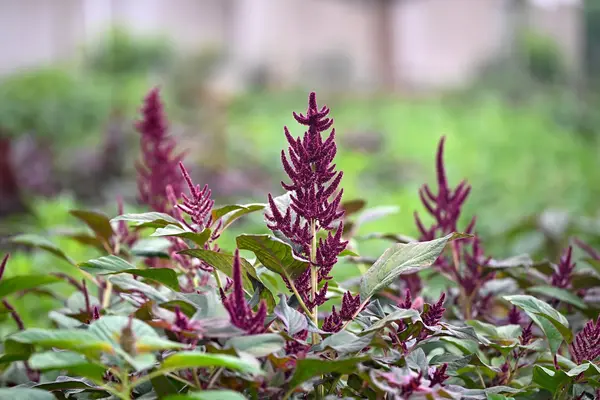
Amaranth growing in Arusha, Tanzania. Pic by Neil Palmer (WorldVeg).
An international team of scientists has developed the most comprehensive genetic map of amaranth to date, a breakthrough that researchers say could accelerate the improvement of one of the world’s most nutritious yet underutilized crops and strengthen future food systems in the face of climate change.
The study, published in the journal New Phytologist, was led by researchers from the University of York and involved collaborators from the World Vegetable Center as well as research institutions in South Africa, the United States, Belgium, and China.
Researchers unveiled the first inter-specific Amaranthus pangenome, a powerful genomic reference tool that captures genetic variation across multiple amaranth species.
The achievement provides scientists and plant breeders with a much deeper understanding of the crop’s genetic diversity and offers new opportunities to develop improved varieties with enhanced nutritional value, higher yields, disease resistance, and greater resilience to climate stress.
Amaranth is cultivated across Africa, Asia, and the Americas, where it serves both as a leafy vegetable and a grain crop. Rich in vitamins, minerals, and protein, the crop is well suited to harsh growing conditions, including high temperatures, drought, and poor soils.
Despite these advantages, amaranth has received limited attention from mainstream agricultural research and investment compared to staple crops such as maize and wheat.
One of the key challenges hindering the crop’s development has been the lack of comprehensive genetic resources. Until now, crop improvement efforts have largely relied on single reference genomes, which capture only a fraction of the genetic diversity present within a species.
According to the researchers, this limitation has constrained breeding efforts aimed at improving important traits such as productivity, adaptation to environmental stresses, and nutritional quality.
The newly developed pangenome addresses this challenge by cataloguing genetic variation within and between multiple amaranth species. Scientists say the resource will enable breeders to identify genes associated with desirable traits and apply advanced genomic selection techniques more effectively than ever before.
A significant contribution to the project came from WorldVeg, which has long promoted African traditional vegetables as important but underutilized crops capable of enhancing food and nutrition security.
WorldVeg provided technical expertise and contributed a Multi-parent Advanced Generation InterCross (MAGIC) amaranth population. This breeding resource was created by combining genes from carefully selected parent plants and generating hundreds of offspring lines that contain diverse combinations of beneficial traits.
The resulting genetic diversity makes it easier for researchers to study differences among plants and identify promising individuals with characteristics such as improved yields, better quality, and enhanced tolerance to environmental stresses.
Researchers say the pangenome will allow breeders at WorldVeg and other institutions to harness genes controlling key agronomic and nutritional traits more efficiently than traditional field-based selection methods.
This is expected to accelerate the development of vegetable and grain amaranth varieties that better meet the needs of farmers, consumers, and markets.
The WorldVeg contribution to the study was supported by Taiwan’s Ministry of Agriculture. The research also aligns with WorldVeg’s Action Areas on Climate Resilience and Healthy Diets under the organization’s Global Strategy 2026–2033.
Scientists believe the breakthrough could help elevate amaranth from a largely overlooked crop to a more prominent role in sustainable agriculture, offering a valuable tool for improving nutrition and building climate-resilient food systems worldwide.