



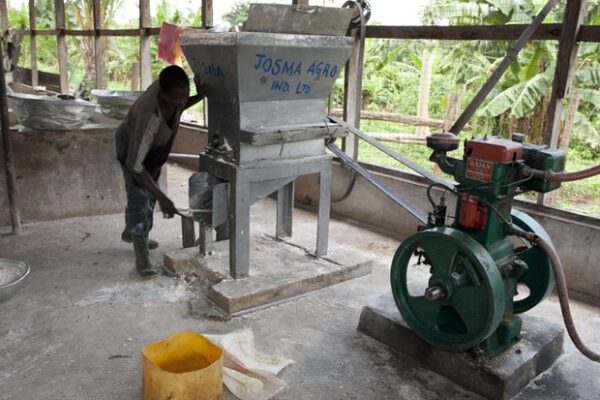
At today’s launch of the Ghana AgriConnect Compact, the International Fund for Agricultural Development (IFAD) reaffirmed its commitment to partner with the Government of Ghana, the World Bank, and other development partners to accelerate the transformation of the country’s agri-food systems and drive inclusive economic growth.
This flagship initiative sets out an ambitious, private sector-led and government-enabled approach to position agriculture as a central driver of economic transformation, job creation and resilience.
“Through AgriConnect, IFAD is deepening its commitment to end rural poverty and build resilient, inclusive food systems in Ghana. Together with partners, we are scaling investments that deliver jobs, opportunity and lasting impact for rural communities,” said Lakshmi Moola, IFAD Country Director for Ghana.
Agriculture remains a cornerstone of Ghana’s economy, contributing about 22 per cent of GDP, 24 per cent of export earnings, and employing around 38 per cent of the workforce. However, the sector continues to face structural challenges, including limited access to finance for smallholder farmers and rural enterprises, low productivity, climate variability, and weak integration into markets.
The Compact will prioritize transformation across key agricultural value chains including cocoa, oil palm, rice, maize and poultry, alongside other important sectors such as tree crops, fisheries and the forest economy. By 2030, the initiative aims to improve food and nutrition security for nearly three million people and create more than 2.6 million jobs across production, processing, aggregation and marketing activities.
IFAD’s participation in AgriConnect builds on the Fund’s ongoing portfolio in Ghana, which includes the Promoting Rural Opportunities, Sustainable Profits and Environmental Resilience (PROSPER) programme, the Affordable Agricultural Financing for Resilient Rural Development (AAFORD) project, and will soon include co-financing for the World Bank’s Food Systems Resilience Programme, all of which support smallholder farmers, rural enterprises and value chain development.
IFAD has a long-standing partnership with Ghana, focusing on increasing agricultural productivity, strengthening resilience to climate change and improving livelihoods for rural populations. Through its support to farmer organizations, access to finance and market linkages, IFAD continues to play a key role in advancing inclusive rural transformation in the country.



Dear Sir/Madam,
I hope you are doing well.
My name is Ihejirika Udoeze Kelechi, Sales Executive at Polex Properties Nig. Ltd, a Nigerian company established in 2016 and engaged in the export of quality agricultural products.
We supply and export:
Palm Oil
Palm Kernel Nuts
We are committed to providing high-quality products, competitive pricing, and reliable service to our customers.
We would be pleased to discuss your requirements and explore opportunities for business cooperation. Please feel free to contact us for inquiries or further information.
Email: polexpropertiesnig@gmail.com
Phone/Whatsapp: +234 903 720 1747
Thank you for your time and consideration. We look forward to hearing from you.
Kind regards,
Ihejirika Udoeze Kelechi
Sales Executive
Polex Properties Nig. Ltd
+234 903 720 1747
Hello,
We are interested in your products and would like to learn more about your offerings. Could you please share your latest product catalogue with us?
We would also appreciate the opportunity to schedule a Zoom meeting to discuss a project we are currently working on and explore potential collaboration.
Please let us know your availability. We look forward to hearing from you.
Kind regards,
Eleanor Sloane
Comments are closed.