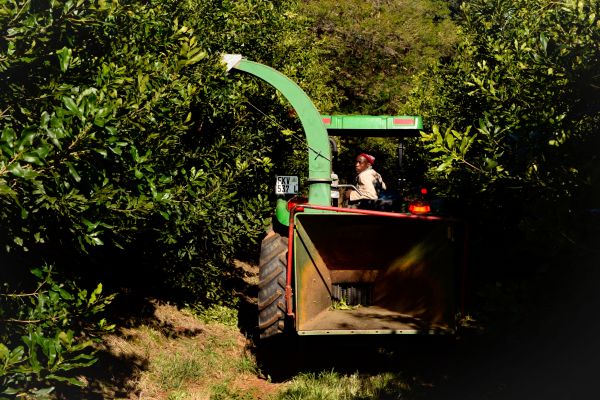
Land Reform – South Africa is currently caught in a precarious economic paradox, with the country’s food economy becoming increasingly vulnerable while, at the same time, we have not adequately confronted the fact that millions of hectares of arable land transferred through land reform remain underutilised.
We are experiencing global shocks at the moment when the country can least afford it. Rising fertiliser prices, fuel volatility, shipping disruptions and geopolitical tensions are all pushing up the cost of food production. The country is grappling with severe cost-of-living pressures driven by imported food inflation, even as the country battles food inflation and growing food insecurity. This is compounded by additional factors such as regulatory and policy uncertainty, as well as logistical and infrastructure inefficiencies.
Recent data released by Grain SA highlights the structural vulnerabilities built into South Africa’s agricultural value chain. The country currently imports more than 80% of its fertiliser, a critical production input that accounts for a massive 35% to 50% of total farming costs. This extreme dependency exposes local food production directly to global shocks, currency volatility, shifting fuel prices and geopolitical tensions. When global supply chains fracture, South African consumers pay the price at the supermarket till.
The land reform programme, with vast tracts of fertile land, continues to present immense opportunities. However, land transfer alone does not automatically translate into productive land use. Post-settlement support, affordable finance, access to markets and capacity building remain among some of the biggest challenges facing beneficiaries of the programme and these economic challenges present a double whammy for land reform beneficiaries, who must navigate the complexities of operating with limited or no capital while simultaneously absorbing severe input shocks.
Speaking about these issues, Peter Setou, Chief Executive of Vumelana Advisory Fund, a not-for-profit organisation that helps land reform beneficiaries put their land to productive use, says, “Agriculture, unlike many businesses, requires massive upfront operational capital before a single crop can be harvested or sold. When input costs spike unexpectedly, the financial shockwaves quickly alter how farmers allocate their limited resources, land, capital, water and labour, often resulting in reduced productivity and heightened risk.”
He adds that, within the context of Community Property Associations (CPAs), the impact is even worse, particularly where there are limited budgets and limited to no post-settlement support or capacity building to empower beneficiaries of land reform to deal with these risks.
Setou emphasises that the resource shock behaves asymmetrically, as it unfortunately penalises under-capacitated farming entities such as beneficiaries of land reform far more than it does to large corporate commercial enterprises. In many cases, small scale farmers and land reform beneficiaries cannot secure funding and are unable to negotiate effectively with private investors because of governance challenges, as well as the lack of deep balance sheets and collateral assets required to access loans. The beneficiaries are, in the main, barred from using restored or redistributed land as collateral, making it nearly impossible to secure funding.
“Having worked with beneficiaries of the land reform programme for 14 years, we know that what we are seeing in the current economic environment is going to impact beneficiaries of the land reform programme even more, given the existing challenges,” Setou says.
Relying solely on state-led post-settlement support is fiscally unrealisable. The current challenges require more than just collaboration, but rather a deliberate move by Business South Africa, private investors and other key stakeholders who want to see this country’s land reform programme succeed. There is an urgent need to ramp up partnership with CPAs to aggressively scale up advisory support and build private partnerships that can empower land reform beneficiaries with the technical capability to independently determine their best course forward in volatile economic circumstances.
Setou notes that there is still an opportunity to repurpose underutilised land into highly productive commercial agricultural and eco-tourism enterprises. “This is not just a socio-political imperative, it is a critical strategy for national food security and the economic resilience of our country,” he says.
Addressing South Africa’s vulnerability to food price shocks and rural stagnation requires moving beyond the historical metrics of land reform, which focus purely on the number of hectares transferred.
“We need to look toward metrics centred on yield, governance compliance and the long-term market integration of these communities and business South Africa has a crucial role to play in this ecosystem, because if land reform fails, a big part of our economy fails,” Setou says. “Immediate interventions remain necessary to support land reform beneficiaries, especially within the current economic environment. Government and private partners need to look at what can be done to support land reform beneficiaries to survive the squeeze.”